
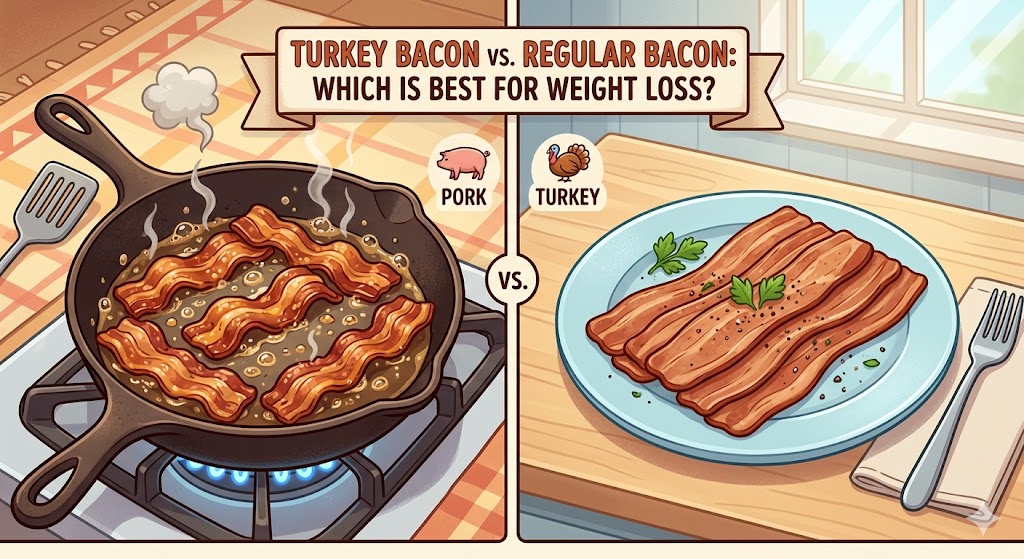
Weekend mornings are practically made for the smell of sizzling bacon wafting through the house. But if you are on a mission to shed some weight, that crispy, savory goodness can feel like a direct ticket to calorie overload. That's why many health-conscious eaters face a classic breakfast dilemma: turkey bacon vs regular bacon.
To make your weight loss journey even smoother, voice-based calorie tracking tools like VoCal let you log your breakfast simply by speaking, helping you stay accurate without the hassle of typing out endless details. But before you start sizzlin', let's dive into which of these breakfast meats actually deserves a spot on your morning plate!
The Battle of the Bird and the Pig: Pork Bacon Macros vs. Turkey Bacon
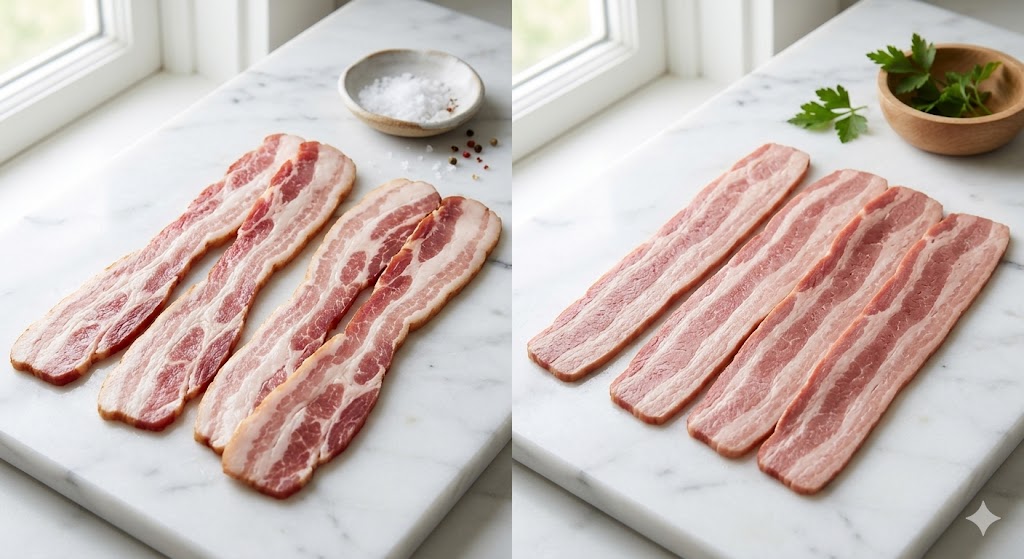
Pork bacon comes straight from the fatty underbelly of the pig, giving it that naturally rich, melt-in-your-mouth lipid profile. Turkey bacon, on the other hand, is a clever culinary creation made by blending dark and white turkey meat together and pressing it into classic bacon-looking strips.
Because of these structural differences, comparing pork bacon macros vs turkey bacon reveals two very different nutrient styles. Let's look at how they stack up per 100 grams:
Nutrient | Pork Bacon (Cooked/Cured) | Turkey Bacon (Raw/Cured) |
Energy (Calories) | 393 – 417 kcal | 226 kcal |
Protein | 12.6g – 37.0g | 15.9g – 16.0g |
Total Fat | 39.7g | 16.9g |
Saturated Fat | 13.3g | 4.5g |
Monounsaturated Fat | 17.4g | 6.2g |
Polyunsaturated Fat | 6.5g | 4.7g |
Carbohydrates | 1.3g – 1.4g | 1.9g – 2.0g |
Cholesterol | 66.0mg | 86.0mg |
Sodium | 662mg – 751mg | 1069mg |
Note: The wide range of protein in cooked pork bacon reflects how concentrated the protein becomes as water and fat are rendered out during cooking.
Bottom Line: Turkey bacon is a leaner, lighter alternative to classic pork bacon, though it contains slightly more water and less concentrated fats per serving.
Slice by Slice: Checking the Serving Sizes
Let's look at a realistic breakfast portion. When we look at turkey bacon calories per slice, a single slice of cured turkey bacon ranges from 30 to 35 calories, whereas a cooked slice of traditional pork bacon sits around 43 calories.
Here is how they stack up on a single-slice basis:
Nutrient | Pork Bacon Slice (Cooked, ~8.1g–9.1g) | Turkey Bacon Slice (Raw/Cured, ~8.1g–14g) |
Energy (Calories) | 43 kcal | 30 – 35 kcal |
Protein | 3.6g | 2.0g – 2.4g |
Total Fat | 3.1g | 2.1g – 2.5g |
Saturated Fat | 1.1g | 0.6g |
Carbohydrates | 0.04g | 0.3g – 0.5g |
Sodium | 162mg | 150mg – 164mg |
Bottom Line: On a slice-by-slice basis, turkey bacon saves you about 10 to 13 calories per strip, though pork bacon offers slightly more protein per slice.
Caloric Deficits: Can Turkey Bacon Help You Shrink Your Waistline?
If your main goal is staying in a caloric deficit, turkey bacon might feel like an easy win. Because it has roughly 25% fewer calories and 35% less saturated fat, you can enjoy more volume for fewer calories. Turkey bacon consists of about 62% water compared to pork's 44%, giving it a lower base energy density.
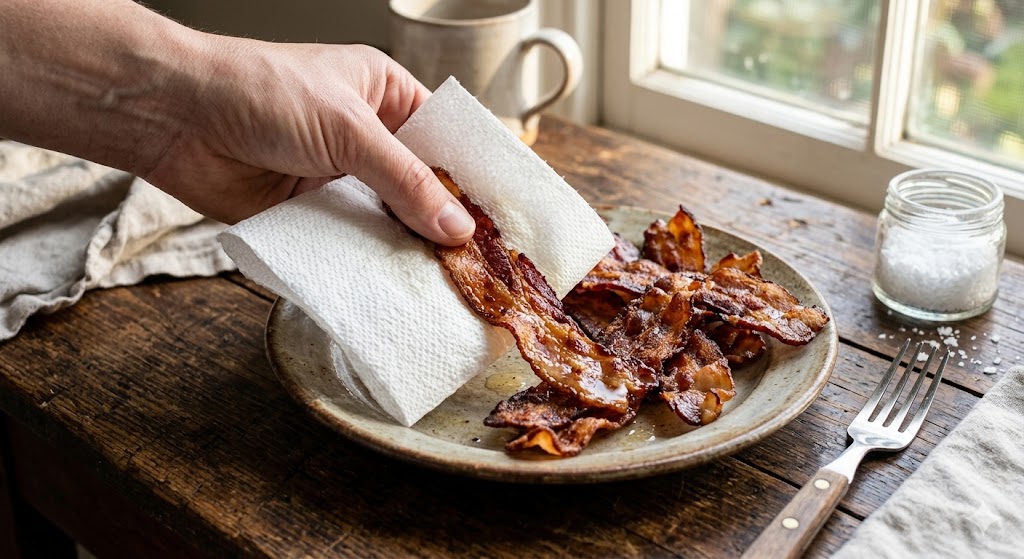
However, don't write off pork bacon just yet! When you cook pork bacon on a grill or pan, a massive amount of the fat renders out. If you blot those crispy strips thoroughly with a paper towel, you discard a lot of those extra calories, making the gap between the two much smaller than you think!
If you are looking for another lean alternative, "short-cut bacon" (cut from the pork loin) is a fantastic, protein-packed pork option that gives you 20 grams of protein and only 130 calories per 100 grams.
Bottom Line: Turkey bacon is a great tool for calorie counters because of its lower energy density, but blotting your cooked pork bacon can narrow the calorie gap significantly!
The Keto Conundrum: Is Turkey Bacon Keto Friendly?
The ketogenic diet is all about high fats, moderate proteins, and keeping carbs as close to zero as possible to stay in ketosis. So, is turkey bacon keto friendly?
The short answer is yes! Both turkey and pork bacon are naturally very low in carbohydrates, typically containing less than 1 gram of carbs per serving. This means turkey bacon fits beautifully into a low-carb lifestyle.
However, pork bacon is often considered the true "keto gold standard" because its natural fat-to-protein ratio perfectly matches ketogenic targets. If you choose turkey bacon on keto, you may need to add other healthy fats (like cooking it in butter or pairing it with avocado) to keep your macros balanced.
Watch out for the "sugar trap"! Because turkey is naturally lean, manufacturers often add sugar, corn syrup, or starches to make it taste more like pork. Be sure to check your labels and hunt down "sugar-free" or "uncured" turkey bacon brands.
Bottom Line: Turkey bacon is definitely keto-friendly, but pork bacon is the easier choice for hit-your-fat-macros keto days. Always check the label for sneaky added sugars!
How is the Bird Reconstructed? (The Science of Turkey Bacon)
Ever wonder how turkey bacon gets those perfect, alternating stripes of "fat" and "meat"? Since turkeys don't have fatty bellies like pigs, it's actually a pretty cool manufacturing process.
Most commercial turkey bacon is made by finely grinding dark and white poultry meat separately. The white meat is ground finer to mimic the fat, while the dark meat is kept coarser for a meaty chew. They are then layered, extruded together in a striped pattern, cured with salt and seasonings, smoked (or flavored with liquid smoke), and sliced into strips.
Bottom Line: Regular bacon is a simple, direct cut of pork belly, while turkey bacon is a clever culinary mosaic of ground dark and light poultry meat.
Saturated Fats, Sodium, and Nitrates: The Health Realities
Many people buy turkey bacon believing it's a "superfood" compared to pork. But let's look at the hard truth: both are processed meats, which means we should enjoy them as occasional treats rather than daily staples.
Pork bacon is higher in saturated fat, which can raise LDL (bad) cholesterol levels if eaten in excess. The American Heart Association suggests keeping saturated fats to under 6% of your daily calories.
But turkey bacon has a sodium secret. To make up for the missing pork fat flavor, manufacturers load turkey bacon with salt. Just a few slices of turkey bacon can pack a massive sodium punch—often even higher than pork bacon! Both also typically contain nitrates or nitrites as preservatives, which can form harmful compounds when cooked at high heat.
Here is how they compare on essential micronutrients per 100 grams:
Micronutrient | Pork Bacon (Cooked) | Turkey Bacon (Cured) |
Vitamin B1 (Thiamin) | 0.05 mg | 0.03 mg |
Vitamin B2 (Riboflavin) | 0.07 mg | 0.24 mg |
Vitamin B12 (Cobalamin) | 0.54 mcg | 1.20 mcg |
Iron | 0.80 mg | 1.40 mg |
Zinc | 1.70 mg | 2.50 mg |
Potassium | 109.5 mg | 349.0 mg |
Selenium | 13.9 mcg | 16.0 mcg |
Bottom Line: While turkey bacon wins on lower saturated fat, it often loses on sodium. Enjoy both sparingly to keep your heart and blood pressure happy!
Storage, Spoilage, and Quick Tracking Tips
Because bacon is processed, keeping it fresh is key to avoiding an unpleasant stomach bug. Keep your fridge at 40°F (4°C) or below, and never eat bacon that has developed a slimy surface—that's a sign of a bacterial biofilm!
State | Refrigerated (40°F / 4°C or below) | Freezer (0°F / -18°C or below) | Spoilage Indicators |
Raw, Unopened | Until sell-by date | 1 month | Sour odor, gray discoloration |
Raw, Opened | 1 week | 1 month | Slimy bacterial biofilm |
Cooked Strips | 4 – 5 days | 1 month | Mold growth, rancid smell |
Using the VoCal app makes logging your breakfast super easy. Instead of squinting at nutrition labels and manually typing in weights, you can simply voice-log: "I had three slices of baked, blotted pork bacon," or "I had two slices of low-sodium turkey bacon." VoCal takes care of the math so you can focus on enjoying your meal!
Bottom Line: Keep your bacon stored safely, cook it until it's crispy, and toss it if it looks slimy or smells off!
The Final Verdict: Which Bacon Wins?
So, who wins the ultimate weight loss battle?
Choose turkey bacon if you are counting calories, working in a tight caloric deficit, and wanting a lean, high-volume breakfast.
Choose pork bacon if you are on a strict keto diet and need those natural, healthy fats to stay in ketosis.
Whichever bacon you choose, remember that moderation is your best friend. Happy cooking, and don't forget to track your delicious breakfast effortlessly with VoCal!
FAQs About Turkey Bacon and Weight Loss
Is turkey bacon actually healthier than pork bacon?
Not necessarily! While turkey bacon is lower in calories and saturated fat, it is often higher in sodium and heavily processed. Both should be eaten in moderation.
Can I eat turkey bacon every day to lose weight?
It's best not to. Health experts recommend limiting all processed meats—including turkey bacon—to less than one serving per week due to high sodium and preservatives.
Does turkey bacon have less protein than regular bacon?
Yes, on a slice-by-slice basis, turkey bacon usually has about 20% less protein than traditional pork bacon.
How do I track my bacon macros easily?
With VoCal, you can simply speak into your phone and say, "I had two slices of cooked turkey bacon," and the app's voice-based system will log it accurately, including any hidden brand-specific carbs or sodium.
Disclaimer: This article is for informational purposes only and does not constitute professional medical advice, diagnosis, or treatment. Always consult with a qualified healthcare professional or registered dietitian before making significant changes to your diet.