
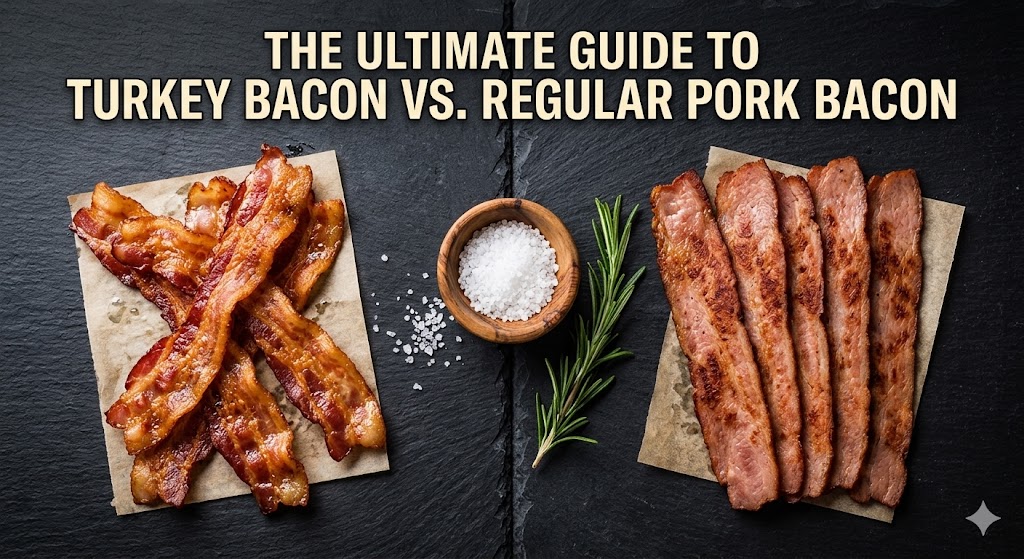
Ah, bacon. That beautiful, smoky, mouth-watering scent that can drag even the deepest sleeper out of bed on a Sunday morning. But let’s be real: as much as we love it, our hearts (and our waistlines) sometimes throw us a little side-eye when we reach for that third strip.
Enter: turkey bacon. It's often hailed as the golden child of healthy breakfast swaps. But is it really the ultimate guilt-free alternative, or are we just pulling the feathers over our own eyes? Let's dive into the great debate of turkey bacon vs regular bacon to see if this poultry transition is actually doing your body a favor.
Where Does It Come From, Anyway?
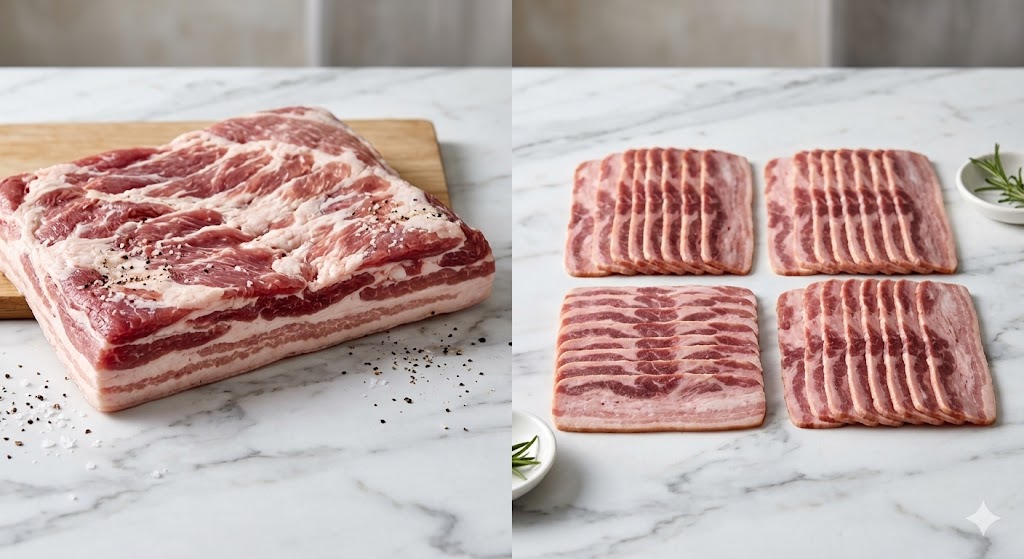
Before we look at the nutrition label, let’s talk anatomy. Regular pork bacon comes straight from the belly of a pig—meaning it is naturally layered with alternating stripes of muscle and thick fat.
Turkeys, however, do not have a belly anatomical equivalent. So, how is turkey bacon made? It’s actually a bit of a culinary magician's trick. Manufacturers take dark and light turkey meat (usually from the thighs and breasts), finely grind it, season it, and press it into a cohesive paste.
To make it look like "real" bacon, they layer the dark and light turkey meat pastes so that when it’s extruded, smoked, and sliced, it sports those familiar bacon-like stripes. While some premium brands use 100% whole-muscle turkey thighs, others use an emulsified paste of bones and cartilage. This highly processed origin introduces some surprising differences in water content and nutrients.
Pork vs. Turkey Bacon by the Numbers
Let's lay out the turkey bacon vs pork bacon nutrition details so you can see exactly what's landing on your plate.
While pork bacon is highly concentrated in protein and fat, raw turkey bacon contains about 18% more water, which directly changes how nutrient-dense it is once cooked.
Table 1: Standardized Macronutrient Comparison (per 100 g cooked portion)

Nutrient Parameter | Cooked Pork Bacon | Cooked Turkey Bacon |
Energy (Calories) | 476-548 kcal | 226-368 kcal |
Protein | 35.7-39.0 g | 15.9-29.5 g |
Total Fat | 34.1-43.3 g | 16.9-22.0 g |
Saturated Fat | 11.6-14.0 g | 4.5-5.1 g |
Monounsaturated Fat | 15.2-19.0 g | 2.6-6.2 g |
Polyunsaturated Fat | 4.9-5.6 g | 1.9-4.7 g |
Total Carbohydrates | 0.48-1.4 g | 0.0-1.2 g |
Water Content | 12.5-20.4 g | 52.4-61.8 g |
But let’s be honest: who eats bacon by the 100-gram block? You eat it by the slice! When evaluating turkey bacon calories vs regular bacon on a single-slice basis, the gap gets a lot smaller since turkey bacon slices are usually cut thicker.
Table 2: Portion-Specific Comparison (Single Cooked Slice)
Nutrient Parameter | Cooked Pork Bacon (1 Slice, ~8 g) | Cooked Turkey Bacon (1 Slice, ~14 g) |
Energy (Calories) | 43 kcal | 31.6-52.2 kcal |
Protein | 3.0-3.6 g | 2.23-4.2 g |
Total Fat | 3.1-3.4 g | 2.37-3.7 g |
Saturated Fat | 1.4 g | 0.63-1.3 g |
Cholesterol | 10.0 mg | 10.0-21.7 mg |
Sodium | 162.0-171.0 mg | 150.0-286.5 mg |
Table 3: Vitamin and Mineral Variations (per 100 g portion)
Nutrient | Cooked Pork Bacon | Cooked Turkey Bacon |
Thiamin (B1) | 0.35-0.55 mg | 0.01-0.04 mg |
Cobalamin (B12) | 1.0-1.2 mcg | 1.88-2.14 mcg |
Iron (Fe) | 1.1-1.5 mg | 2.6-2.8 mg |
Zinc (Zn) | 3.4-3.5 mg | 4.6-4.9 mg |
Potassium (K) | 525.0-539.0 mg | 666.0-678.0 mg |
Selenium (Se) | 59.0-65.1 mcg | 28.5-32.0 mcg |
As you can see, turkey bacon packs a solid mineral punch, offering more iron, zinc, potassium, and phosphorus. On the other hand, traditional pork bacon wins when it comes to thiamin (Vitamin B1) and selenium, a powerful mineral that activates antioxidant proteins.
Is Turkey Bacon Healthier Than Regular Bacon? The Cold, Hard Truth
So, is turkey bacon healthier than regular bacon? The short answer is: it's a matter of degrees, but you shouldn't let the "health halo" fool you. Here is how they stack up in the real world:
Saturated Fat and Calories
If your main goals are managing your weight or lowering your cholesterol, turkey bacon has some clear advantages. It has significantly less fat and fewer calories than pork bacon. But dietitians warn against a major psychological trap: because we think turkey bacon is healthy, we often end up eating twice as much! Two slices of pork bacon contain about 86 calories, but if you eat four slices of turkey bacon thinking you’re being good, you’ve actually eaten more calories and fat than if you had just enjoyed the real deal!
The Sodium Trap
This is where turkey bacon loses its angel wings. Since turkey is naturally much leaner and milder than pork, food manufacturers have to load it up with sodium to give it that intense, savory flavor. In fact, if you don't buy a reduced-sodium variety, turkey bacon can actually have more sodium than regular pork bacon! Just a couple of slices can easily chew through your daily recommended sodium limit, leading to bloated water weight, fluid retention, and extra strain on your heart.
The Cured Meat Reality
At the end of the day, both pork and turkey bacon are highly processed, cured meats. The World Health Organization (WHO) classifies processed meats as Group 1 carcinogens. That means eating them regularly is linked to an increased risk of colorectal cancer. Both utilize nitrates and nitrites as preservatives, which can form cancer-causing compounds in your stomach.
The Dietitian’s Verdict
Treat turkey bacon just like pork bacon: as a delicious treat to be enjoyed in moderation. Keep your bacon intake to less than one serving per week to keep your heart and kidneys happy.
If You Choose Turkey Bacon, Follow These Tips for the Healthiest Outcome:

Want to keep the flavor while protecting your health? Keep these simple preparation tips in mind :
Choose Reduced-Sodium: Always check the package and opt for lower-sodium varieties.
Don't Add Salt: Both pork and turkey bacon are already cured with plenty of salt, so skip the salt shaker while cooking.
Ditch the Frying Pan: Since turkey bacon has very little natural fat, it has a tendency to stick and burn in a dry pan. Try baking it on a wire rack in the oven or using an air fryer to get it perfectly crispy without needing to add extra butter or cooking spray.
Blot the Grease: Always drain your cooked bacon on a paper towel to absorb any excess surface oil and cut down on extra calories.
Low-Carb, Keto, and Tracking It All Without the Stress
Are you currently rocking a low-carb or ketogenic lifestyle? Both bacons can easily fit into your routine, but they play very different roles :
Pork Bacon is a ketogenic dream. Its high fat-to-protein ratio keeps your body happily burning fat for fuel (ketosis) and stimulates satiety hormones to keep you full for hours.
Turkey Bacon is great if you want high protein and low carbs, but because it's so lean, it won't help you hit those high-fat keto targets on its own. You'll pair it with healthy fats like sliced avocado or eggs cooked in olive oil.
No matter which one you choose, tracking your daily calories, fat, and sodium shouldn't feel like a part-time job. Who wants to spend 15 minutes typing, weighing, and searching through clunky databases just to log breakfast?
That’s where VoCal comes to the rescue! VoCal is a voice-activated calorie and macro tracking app that lets you log your food just by speaking naturally :
"I had three slices of baked turkey bacon, two eggs scrambled in olive oil, and a half of an avocado."
In less than 15 seconds, VoCal's smart AI identifies each food item, adjusts for your cooking methods, estimates portion sizes, and logs your calories and macros with over 95% accuracy. It’s hands-free, stress-free tracking that helps you stay consistent and hit your health goals without the headache.
Frequently Asked Questions
Does turkey bacon contain pork?
Most commercial turkey bacon is made from 100% poultry meat. However, some brands do add pork fat or binders for extra moisture and flavor. If any pork is included, manufacturers are legally required to list it on the label. If you have dietary restrictions, look for certified Halal, Kosher, or "Pork-Free" packages.
Is turkey bacon safe for individuals with high blood pressure?
Eat it with caution. Turkey bacon is highly cured and often contains as much as (or more than) 1,900 milligrams of sodium per 2-ounce serving. If you have hypertension, it's best to stick to reduced-sodium versions and limit your portion sizes strictly.
What is the difference between cured and uncured turkey bacon?
It’s mostly a marketing trick! "Cured" bacon uses synthetic sodium nitrites as a preservative, while "uncured" bacon uses natural sources of nitrites, like celery powder or sea salt. Once digested, both behave similarly in your body, so moderation is still key.
Disclaimer: This article is for informational and educational purposes only and does not replace professional medical advice, diagnosis, or treatment. Always consult a physician, registered dietitian, or qualified healthcare professional before starting a new diet or making major changes to your existing nutritional regimen.