

Ah, bacon. That crispy, smoky, morning-making magic. But if you are managing high blood pressure, your doctor has probably pointed a stern finger at your beloved breakfast meats.
In your search for a heart-healthy swap, you might have reached for a package of turkey bacon. It is made of poultry, so it has to be better for you than pork, right? Well, before you load up your frying pan, let’s look at what is actually inside that package.
Is turkey bacon a genuine heart-hero, or is it just pork bacon in a feather suit? Let's dive into the salty truth.
Quick Read: Fast Facts on Turkey Bacon
Lower in Fat: Turkey bacon has less total fat and fewer calories than traditional pork bacon, making it popular for weight management.
Salty Business: Despite being leaner, turkey bacon often contains just as much—and sometimes more—sodium than pork bacon.
The "Health Halo": Because people assume turkey bacon is healthy, they are prone to eating larger portions, which can quickly spike daily sodium levels.
Blood Pressure Risks: For individuals with hypertension, the high sodium content can trigger fluid retention and stress the cardiovascular system.
What is Turkey Bacon, Anyway?
First things first: turkeys do not have a "belly" to slice bacon from.
To make turkey bacon, food processors take light and dark turkey meat, grind up the poultry, season it with salt and spices to mimic pork flavor, and then press it into striped ribbons that look like real bacon. Think of it as a turkey sausage dressed up like bacon.
Because it is a processed meat product, it goes through a heavy curing process using salt and preservatives to keep it fresh and give it that signature smoky flavor.
Turkey Bacon vs. Regular Bacon: The Nutritional Showdown
When comparing turkey bacon vs regular bacon, it is easy to see why turkey looks like the winner at first glance. It is leaner and lighter on calories.
However, when you look closer at the actual numbers, the competition gets much tighter—especially in the salt department.
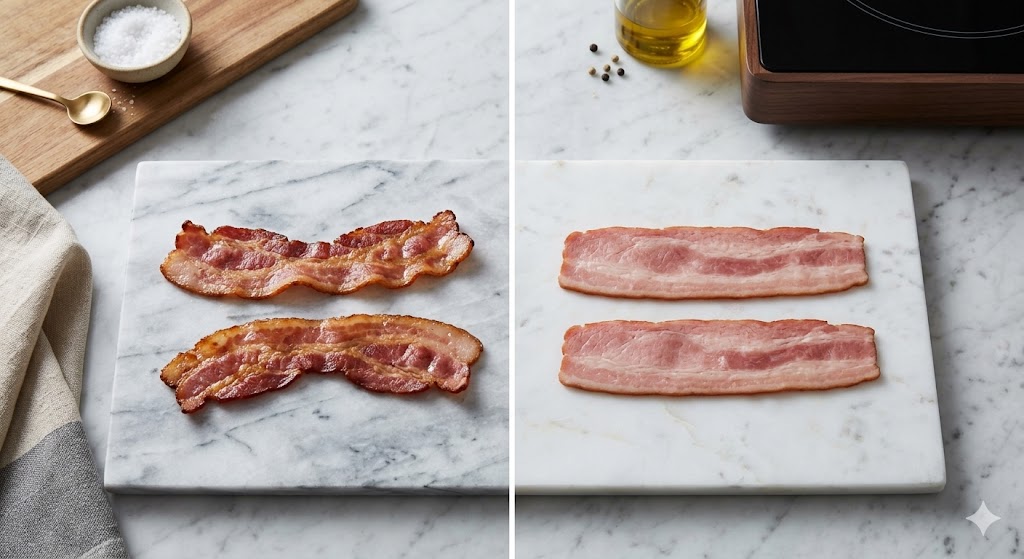
The table below compares the nutritional values of prepared pork bacon and turkey bacon across two standard serving sizes.
Nutrient | Pork Bacon (2 oz / 57g) | Turkey Bacon (2 oz / 57g) | Pork Bacon (1 Slice / 9.1g) | Turkey Bacon (1 Slice / 8.1g) |
Calories (kcal) | 268 | 218 | 43 | 30 |
Protein (g) | 20.0 | 17.0 | 3.6 | 2.4 |
Total Fat (g) | 22.0 | 14.0 | 3.1 | 2.1 |
Saturated Fat (g) | 8.0 | 4.0 | 1.1 | 0.6 |
Sodium (mg) | 1,300 | 1,900 | 162 | 164 |
Cholesterol (mg) | 38 | 48 | 10 | 15 |
While turkey bacon saves you some fat and calories, a standard two-ounce serving actually packs more sodium and cholesterol than traditional pork bacon. On a single-slice basis, the difference in salt is practically non-existent.
The Salty Truth About Turkey Bacon Sodium Content
So, why is the turkey bacon sodium content so high?
Turkeys are naturally very lean, which means they do not have the natural moisture-retaining fats that make pork belly so juicy. To make up for this, food manufacturers inject the meat with sodium-heavy brines, phosphates, and preservatives.
All of this added salt means standard turkey bacon is definitely not a low-sodium food. A single serving can contain up to 1,900 milligrams of sodium—which is more than the 1,500-milligram daily limit recommended for adults with high blood pressure by the American Heart Association (AHA) and CDC.
To show you how sodium varies by brand, here is how popular turkey bacon options stack up in US grocery stores:
Brand and Product Variety | Serving Size | Calories (kcal) | Protein (g) | Sodium (mg) |
Butterball Original Turkey Bacon | 1 Slice (14g) | 30 | 2.0 | 135 |
Butterball Lower Sodium Turkey Bacon | 1 Slice (14g) | 30 | 2.0 | 80 |
Applegate Naturals Uncured Turkey Bacon | 1 Slice (12g) | 30 | 5.0 | 150 |
Oscar Mayer Original Turkey Bacon | 1 Slice (14g) | 40 | 3.0 | 140 |
Trader Joe's Uncured Turkey Bacon | 1 Slice (14g) | 45 | 6.0 | 200 |
John F. Martin & Sons Turkey Bacon | 1 Slice (14g) | 40 | 5.0 | 200 |
Good & Gather Applewood Smoked | 1 Slice (14g) | 35 | 3.0 | 210 |
Even "uncured" or "natural" varieties use celery powder or sea salt, which still keep the sodium levels high.
Keep in mind that "reduced sodium" simply means a product has 25% less sodium than the brand's regular version—it does not mean the food is legally "low sodium" (which requires 140 milligrams or less per serving).
Turkey Bacon and Hypertension: What Happens Inside Your Body

If you are dealing with high blood pressure, eating too much sodium is like pouring fuel on a fire. To understand why, we can look at a simple medical formula:
BP = CO * SVR
In this equation, blood pressure (BP) is determined by cardiac output (CO), which is the volume of blood pumped by the heart, and systemic vascular resistance (SVR), which is how stiff or narrow your blood vessels are.
Here is how high sodium ruins this balance:
Fluid Retention: When you consume too much salt, your kidneys hold onto excess water to balance things out.
Volume Spike: This extra water expands your total blood volume, which raises your cardiac output (CO) and forces blood to pump harder against your arterial walls.
Endothelial Damage: Cured meats often contain chemical preservatives like sodium nitrites. When cooked at high heat, these can form compounds that damage the delicate inner lining of your blood vessels. This damage leads to arterial stiffness, which increases systemic vascular resistance (SVR) and elevates the risk of turkey bacon hypertension complications.
Low Sodium Bacon Alternatives and Breakfast Wins
The good news is that you do not have to settle for boring breakfasts. There are plenty of fantastic, low sodium bacon alternatives and fresh proteins that can satisfy your savory cravings without sending your blood pressure through the roof.
Fresh, Unprocessed Proteins
Choosing unprocessed, fresh foods is the easiest way to avoid hidden sodium.
Fresh Chicken or Turkey Breast: Naturally incredibly low in sodium, fresh chicken breast has only around 64 milligrams of sodium per serving—compared to the 1,900 milligrams found in processed bacon.
Wild-Caught Salmon: A breakfast-friendly option rich in omega-3 fatty acids, which help lower vascular resistance and reduce inflammation.
Lean Sirloin Steak: Paired with eggs, sirloin provides a satisfying, high-protein, low-sodium start to the day.
Plant-Based Bacon Swaps

If you love the smoky crunch of bacon, you can easily make healthy plant-based versions at home:
Mushroom Bacon: Thinly slice shiitake or portobello mushrooms, toss them in a little olive oil, liquid smoke, and a dash of low-sodium soy sauce, then bake until crispy. Mushrooms are packed with potassium, which naturally helps lower blood pressure.
Eggplant Bacon: Thinly sliced eggplant marinated in a smoky-sweet blend and baked provides a high-fiber, low-calorie alternative.
Tempeh Bacon: Fermented tempeh provides a satisfying, high-protein crunch with zero cholesterol.
Practical Tips for Reducing Sodium at Breakfast
If you decide to enjoy turkey bacon as an occasional treat, here are some helpful ways to keep it as heart-healthy as possible:
Scrutinize the Labels: Look for certified "Low Sodium" brands (containing 140 milligrams or less per serving) instead of just "Reduced Sodium" labels.
Skip the Frying Pan: Bake your turkey bacon on a metal wire rack over a baking sheet at 400°F. This allows the excess sodium-rich fats and brines to drip away.
Avoid Extra Salt or Oils: Do not add salt, salted seasonings, or butter to your eggs or bacon during cooking.
Blot the Grease: Press your cooked bacon firmly between paper towels to soak up residual grease and surface salt.
Eat Potassium-Rich Sides: Pair your breakfast with potassium-rich foods like fresh spinach or half an avocado to help your body flush out excess sodium.
Tracking Your Breakfast Easily
If you are trying to stay under a strict daily limit of 1,500 milligrams of sodium, tracking your food is essential.
Using a voice-activated nutritional tracker like VoCal can be a game-changer. Instead of typing out complicated ingredient details, you can simply speak into the app: "Log two slices of homemade mushroom bacon and two egg whites." The app instantly calculates your daily sodium, protein, and calories, helping you manage your heart-healthy diet completely hands-free.
Summary
While turkey bacon is a leaner alternative to pork bacon, it is still a processed meat that contains high amounts of sodium and chemical preservatives. For people managing high blood pressure, regular consumption of turkey bacon can lead to water retention, increased blood volume, and arterial stiffness.
To protect your heart, opt for fresh, unprocessed proteins or naturally seasoned, homemade plant-based alternatives
Frequently Asked Questions
Is turkey bacon high in sodium?
Yes, standard turkey bacon is highly processed and contains a substantial amount of sodium. A two-ounce serving of standard turkey bacon can pack up to 1,900 milligrams of sodium, which is more than the recommended daily limit for people managing high blood pressure.
Can a person with high blood pressure eat turkey bacon?
It is best to limit or avoid standard turkey bacon if you have high blood pressure. If you do eat it, try to restrict it to less than once a week, keep your portions small, and choose certified low-sodium options.
How much sodium is in a slice of turkey bacon?
The sodium content in a single slice ranges from 80 milligrams in lower-sodium varieties up to over 210 milligrams in standard store brands.
What are the best low-sodium alternatives to bacon?
Great alternatives include fresh, unprocessed lean proteins like skinless chicken breast, wild-caught salmon, or lean sirloin steak. You can also make low-sodium plant-based alternatives like mushroom, eggplant, or tempeh bacon seasoned with liquid smoke at home.
Disclaimer: This article is for informational purposes only and does not substitute for professional medical advice. Always consult your doctor or a registered dietitian before making major changes to your diet or blood pressure treatment plan.