

Let's be real: bacon makes everything better. The sizzle in the pan, the rich aroma, and that perfect, salty crunch are basically culinary magic. But if you are watching your calories or saturated fat, traditional pork bacon can feel like a one-way ticket to dietary guilt.
Enter turkey bacon—the savior of Sunday morning. It’s marketed as a lean, heart-healthy alternative that lets you have your bacon and eat it too. If you are using a voice-based calorie tracker like Vo-cal.com, logging "two slices of turkey bacon" is incredibly quick. But what are you actually putting into your body when you eat those processed poultry strips?
Let’s lift the lid on this breakfast bird, dive into the ingredients list, and find out if turkey bacon is truly a clean-eating superstar or just a clever piece of food marketing.
Turkey Bacon vs. Regular Bacon: The Great Plate Debate
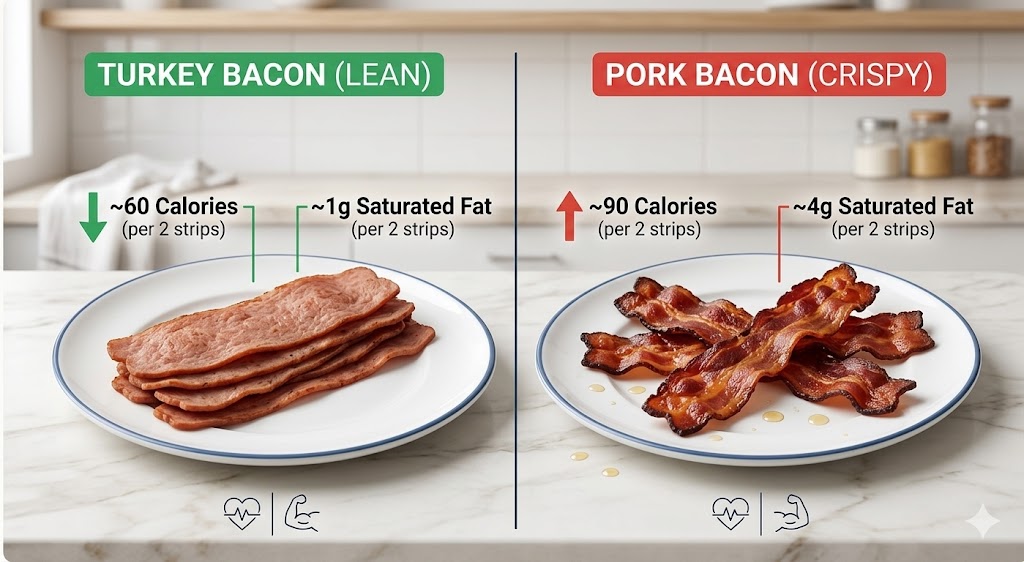
Pork bacon is pretty straightforward: it is sliced directly from a pig’s belly. It is naturally marbled, undeniably fatty, and minimally processed. Turkey bacon, on the other hand, is more of an industrial craft project.
Because turkeys don’t have fatty bellies to slice up, manufacturers have to build bacon from scratch. They take light and dark turkey meat, grind it up, add flavorings and preservatives, and press it into molds to mimic those classic pork strips.
Here is how 100 grams of turkey bacon vs regular bacon stack up nutritionally, according to the USDA :
Nutrient (per 100g serving) | Turkey Bacon | Pork Bacon |
Calories (kcal) | 226 | 417 |
Protein (g) | 15.90 | 12.60 |
Total Fat (g) | 16.93 | 39.69 |
Saturated Fat (g) | 4.52 | 13.30 |
Water Content (%) | 61.83% | 44.24% |
Cholesterol (mg) | 100+ | 80+ |
At first glance, turkey bacon looks like a clear winner for the calorie-conscious crowd. It contains about 25% fewer calories and 35% less saturated fat. However, because turkey is naturally lean, it lacks the rich mouthfeel of pork. To make up for this, manufacturers often sneak in added sugars to boost the flavor.
The sodium profile is another major catch. Many people switch to poultry thinking it is better for their blood pressure, but both options are loaded with salt. Two slices of turkey bacon pack roughly 328 mg of sodium, which is about 14% of your daily recommended limit.
What’s Actually Inside Your Turkey Bacon?
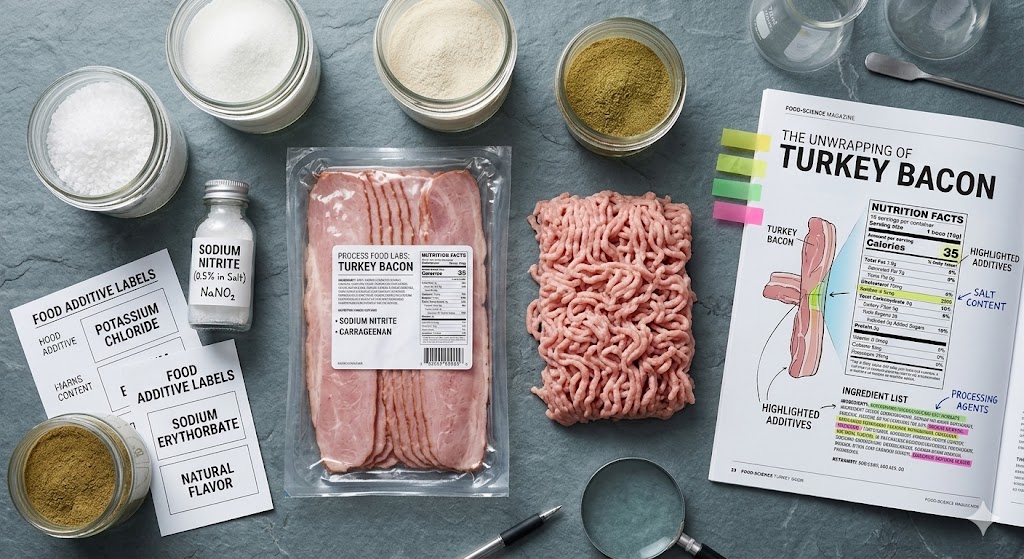
If you take a close look at a conventional turkey bacon ingredients list, you might find it reads more like a chemistry exam than a simple breakfast recipe.
Many mass-market brands use "mechanically separated turkey" as their primary ingredient. This is a paste-like product made by forcing poultry bones and residual muscle tissue through a high-pressure sieve to capture every last bit of meat.
Because this lean mixture lacks the natural structure of pork belly, food processors add sodium phosphates to trap water, and autolyzed yeast extract to mimic the savory, umami flavor of real pork fat.
Let’s look at how two major commercial brands compare to a cleaner organic option:
Brand & Product Type | Primary Ingredients | Calories (per slice) | Sodium (per slice) | Protein (per slice) | Binders & Preservatives |
Oscar Mayer Original Cured | Turkey, Salt, Sugar, Potassium Lactate, Potassium Chloride, Sodium Phosphates, Sodium Ascorbate, Autolyzed Yeast Extract, Sodium Nitrite, Soy Lecithin | 45 | 220 mg | 3 g | Sodium Phosphates, Sodium Nitrite |
Butterball Original Cured | Mechanically Separated Turkey, Turkey, Water, Salt, Sugar, Canola/Sunflower Oil, Sodium Phosphate, Potassium Acetate, Acetic Acid, Sodium Erythorbate, Sodium Nitrite | 30 | 140 mg | 2 g | Sodium Phosphate, Sodium Nitrite |
Applegate Organic Uncured | Organic Turkey, Water, Sea Salt, Celery Powder, Organic Onion Powder | 30 | 150 mg | 5 g | Celery Powder (No synthetic binders) |
Uncured Turkey Bacon vs. Regular Turkey Bacon: Cured or Confused?
When you walk down the breakfast aisle, you'll see a lot of packages proudly bragging that they are "uncured" or contain "no added nitrates". The debate between uncured turkey bacon vs regular turkey bacon is a major source of consumer confusion.
Traditional cured turkey bacon is preserved using synthetic sodium nitrite, which keeps the meat pink and prevents dangerous bacteria from growing. Uncured turkey bacon avoids synthetic chemicals by using natural nitrate sources instead, such as celery powder or celery juice.
However, the science tells us this distinction is mostly a marketing illusion. When celery powder is mixed with meat, its natural nitrates are converted into nitrites by bacteria during processing. Once digested, synthetic nitrites and celery-derived nitrites act exactly the same way in your gut, combining with stomach acids to form cancer-linked compounds called nitrosamines.
Because uncured meats are still preserved, the USDA enforces strict safety and labeling guidelines :
Preservative limits: Synthetic sodium nitrite is strictly capped at 120 ppm for pumped bacon and 200 ppm for dry-cured bacon.
The fine print: Products using natural nitrates must display a disclaimer stating: "no nitrates or nitrites added except for those naturally occurring in...".
Handling warnings: Uncured meats must carry a visible front-of-pack instruction: "Not Preserved, Keep Refrigerated Below 40 degrees At All Times" unless they have been dried or heavily salted.
Safe storage: The USDA recommends keeping uncured products in the fridge for no more than 3 weeks, or in the freezer for up to 6 months.
Carrageenan and Binders in Turkey Bacon: Sticky Business
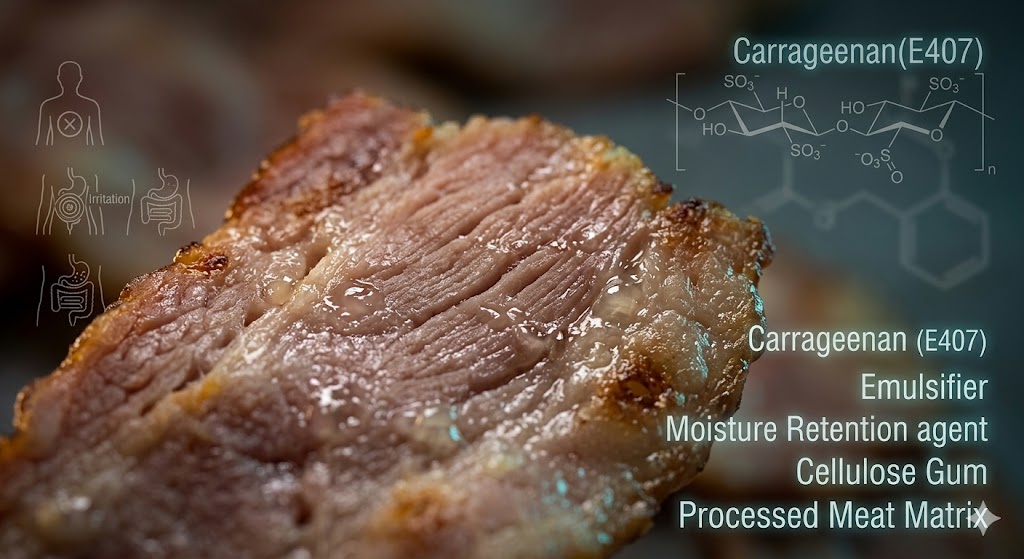
To prevent a lean, ground-up turkey strip from crumbling to pieces in your frying pan, food companies rely on binders—the culinary glue of the processed food world. The most common binder you'll spot on the label is carrageenan, a key player in carrageenan and binders in turkey bacon.
Carrageenan is a soluble fiber extracted from red seaweed. When mixed with meat, it forms a gel network that traps water inside, keeping the turkey juicy and sliceable.
While the FDA marks food-grade carrageenan as safe, researchers have raised serious concerns about what this additive does to your digestive tract. Studies published in journals like Nutrients indicate that carrageenan can trigger stomach irritation by:
Disrupting the microbiome: It has been shown to decrease beneficial gut bacteria like Akkermansia muciniphila, which help maintain your intestinal lining.
Weakening the gut barrier: It degrades the protective mucus layer of your intestines, potentially contributing to a "leaky gut".
Sparking inflammation: Carrageenan can directly activate your cells' TLR4 receptors, triggering the pro-inflammatory pathway NF- kappa B and releasing inflammatory cytokines.
Other binders to look out for on packaging include maltodextrin (a highly processed corn starch that spikes blood sugar) and cellulose.
Is Turkey Bacon Clean Eating?
If you are committed to a whole-food diet, you are probably asking yourself: is turkey bacon clean eating?
Unfortunately, the answer is mostly no. Because it is a highly processed, emulsified, and chemically preserved meat, the World Health Organization (WHO) and the International Agency for Research on Cancer (IARC) classify it as a Group 1 carcinogen.
The Colorectal Cancer Risk: Eating 50 grams of processed meat daily (roughly 3 to 4 slices of turkey bacon) is linked to an 18% increase in the relative risk of colorectal cancer. This increases your absolute lifetime risk from about 4.5% to 5.2%.
The Carcinogenic Compounds: Nitrites in cured meats convert to N-nitroso compounds during digestion, while high-temperature frying creates DNA-damaging heterocyclic amines (HCAs) and polycyclic aromatic hydrocarbons (PAHs).
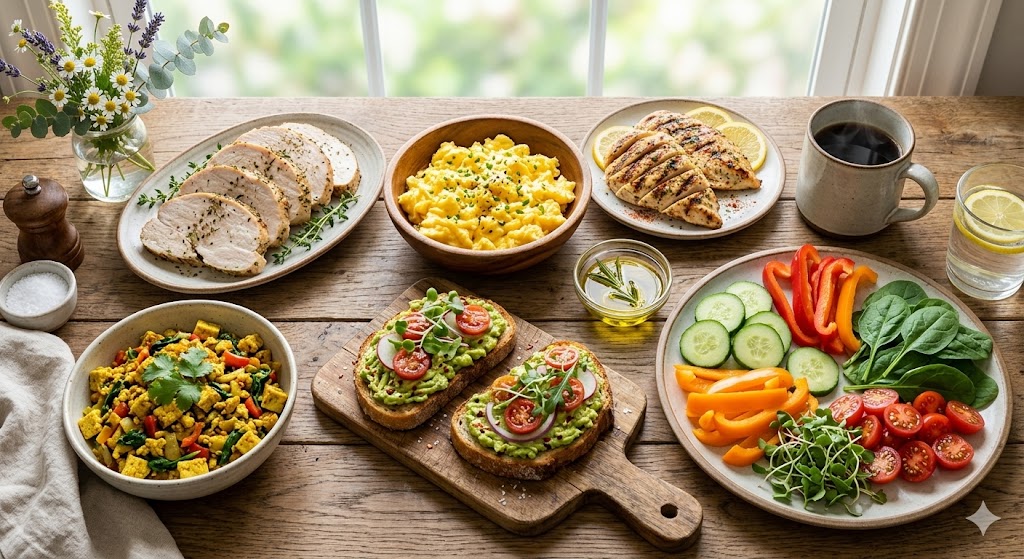
While certified organic, simple-ingredient turkey bacon is a much better choice than mass-market options, clinical nutritionists recommend swapping processed meats for whole-food proteins :
Whole-Food Protein Swaps | Nutritional Benefits | Best Culinary Uses |
Roasted Turkey Breast | High protein, low fat, minimal sodium, zero chemical preservatives | Sliced for sandwiches, wraps, or breakfast hashes |
Pasture-Raised Eggs | High-quality protein, healthy fats, vitamins B12 and D | Scrambled, poached, or baked into frittatas |
Fresh Grilled Chicken | Lean protein, zero additives, low sodium when fresh | Morning breakfast bowls or sliced on toast |
Tofu or Tempeh | Plant-based protein, rich in fiber, zero heme iron or nitrites | Skillet-crisped with smoked paprika and sea salt |
Summary: The Final Sizzle
Turkey bacon can certainly help you cut down on calories and saturated fat, making it a handy tool for weight management. However, it is still a processed meat that is high in sodium and chemical binders. Think of it as an occasional breakfast treat rather than a daily health food.
If you are logging your breakfast using a voice tracking app like VoCal, remember to specify the exact brand! Because conventional turkey bacon containing added sugars and phosphates has a very different nutritional impact than a clean, organic version, being specific helps keep your nutrition tracking incredibly accurate.
FAQs
Is turkey bacon healthier than regular pork bacon?
Turkey bacon has fewer calories and less fat, which can help with weight loss goals. However, because it contains similar sodium levels and chemical preservatives, it is not a universally healthy alternative.
Does "uncured" turkey bacon contain nitrates?
Yes. Although uncured products do not use synthetic sodium nitrite, they are cured with natural nitrate sources like celery powder. Once digested, these naturally occurring nitrates behave exactly like synthetic preservatives in your stomach.
What does carrageenan do in turkey bacon?
Carrageenan is a seaweed-derived stabilizer used to bind water and hold lean ground turkey together. It gives the meat a plump, sliceable texture but has been linked to gut inflammation and digestive irritation.
Can you eat turkey bacon on a clean diet?
Mass-market commercial brands do not qualify as clean foods. If you want to include turkey bacon in a clean diet, look for certified organic options made with simple, whole-food ingredients like turkey thighs, sea salt, and basic spices.
Disclaimer: This article is for informational purposes only and does not substitute for professional medical advice, diagnosis, or treatment. Always consult with a qualified healthcare professional or registered dietitian before making significant changes to your diet.