

A warm slice of golden toast slathered with creamy butter and sweet fruit jam is the ultimate quick morning comfort food. It feels light, simple, and completely harmless.
However, if you are keeping an eye on your daily intake, toast with butter calories can bring a unexpected plot twist. While plain bread starts out reasonable, generous swipes of butter and jam can easily double or triple your calorie count before you take your first bite. Let's break down the math layer by layer so you can enjoy your morning toast without hidden calorie surprises!
Deconstructing the Slice: Layer-by-Layer Breakdown

Here is how each ingredient stacks up based on verified USDA FoodData Central data:
1. The Bread Base
Your calorie total starts with the slice you choose:
White Bread: Standard slice (29g) sits at 75 calories, 13g carbs, and less than 1g fiber. Refined flour digests fast, which can lead to quick energy spikes and dips.
Whole Wheat Bread: Standard slice (33g) provides 81 calories, 13g carbs, 4g protein, and over 2g fiber to keep you full longer.
Artisanal Sourdough or Thick Bakery Slices: Thicker slices (45g–65g) yield 120 to 180 calories and up to 32g carbs.
2. The Butter Layer
Butter is pure dietary fat packing 9 calories per gram—more than double the calorie density of carbs or protein (4 calories per gram). Because butter melts into warm bread, visual guesses usually underestimate portions by half:
Light Scrape (1 tsp / 5g): 36 calories and 4.1g fat.
Standard Table Spread (1 tbsp / 14g): 102 calories and 11.5g fat.
Generous Cafe Portion (1.5 tbsp / 21g): 150+ calories from fat alone.
3. The Sweet Jam Topping
Fruit jams bring fast-acting simple sugar. A standard tablespoon (20g) delivers roughly 56 calories and 14g sugar.
Component | Standard Portion | Mass (g) | Calories (kcal) | Carbs (g) | Protein (g) | Fat (g) | Sugars (g) |
White Bread | 1 slice | 29 | 75 | 13.0 | 2.0 | 1.0 | 1.5 |
Whole Wheat Bread | 1 slice | 33 | 81 | 13.0 | 4.0 | 1.0 | 1.5 |
Sourdough Bread | 1 thick slice | 50 | 140 | 26.0 | 5.0 | 1.0 | 1.0 |
Butter (Light Spread) | 1 teaspoon | 5 | 36 | 0.0 | 0.0 | 4.1 | 0.0 |
Butter (Standard) | 1 tablespoon | 14 | 102 | 0.1 | 0.1 | 11.5 | 0.0 |
Fruit Jam (Light) | 1 teaspoon | 7 | 18 | 4.5 | 0.0 | 0.0 | 4.0 |
Fruit Jam (Standard) | 1 tablespoon | 20 | 56 | 14.0 | 0.0 | 0.0 | 13.0 |
Bottom Line: Plain whole wheat toast is 81 calories, but adding a full tablespoon of butter and jam bumps it to 239 calories per slice.
What Happens When Fat Meets Carbs?
Fats Tame Glucose Spikes: Eating plain jam toast causes a quick blood sugar spike. However, the fats in butter delay stomach emptying, which can blunt peak blood sugar surges by up to 25%.
The Satiety Trap: Butter and jam create a hyper-palatable combo, but because toast lacks high protein content, it won't keep you full as long as an egg or yogurt breakfast.
Real-World Scenarios: How Portion Creep Happens
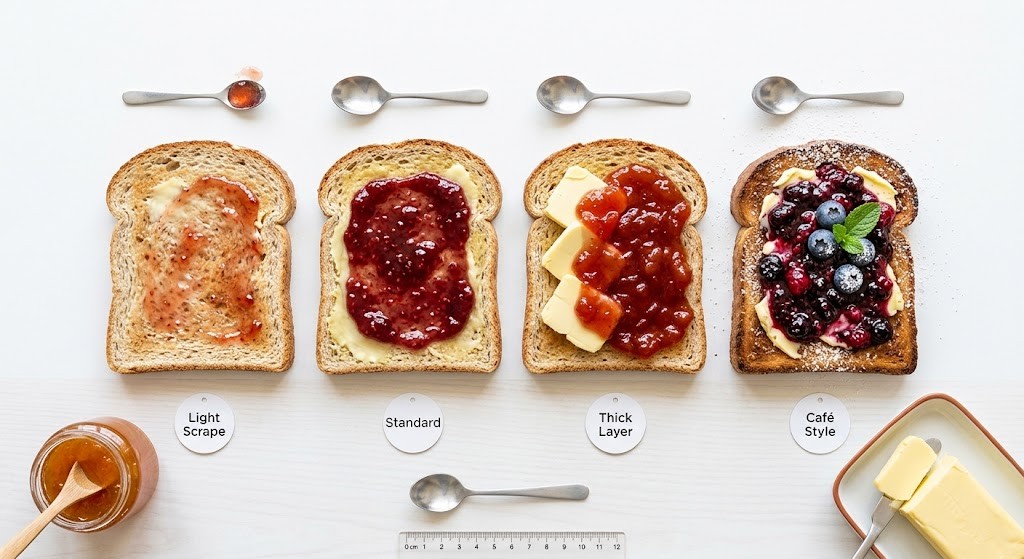
Unmeasured dabs of butter and jam build up fast. Here is how real-world meal choices compare:
Breakfast Configuration | Detailed Preparation Breakdown | Total Energy (kcal) | Carbs (g) | Fat (g) | Protein (g) | Sugar (g) |
Minimalist Light Slice | 1 slice Whole Wheat + 1 tsp Butter + 1 tsp Jam | 135 | 17.5 | 5.1 | 4.0 | 5.5 |
Standard Home Toast | 1 slice Whole Wheat + 1 tbsp Butter + 1 tbsp Jam | 239 | 27.1 | 12.5 | 4.1 | 14.5 |
Everyday Double Slice | 2 slices Whole Wheat + 1.5 tbsp Butter + 2 tbsp Jam | 427 | 54.2 | 19.3 | 8.2 | 27.5 |
Cafe-Style Bakery Meal | 2 thick Sourdough Slices + 2 tbsp Butter + 2 tbsp Jam | 596 | 80.0 | 25.0 | 10.0 | 27.0 |
Moving from a light slice to a bakery double-slice jumps the total by 461 calories—adding as many calories as a full lunch, but with only 10 grams of protein!
Quick Upgrades for a Balanced Plate
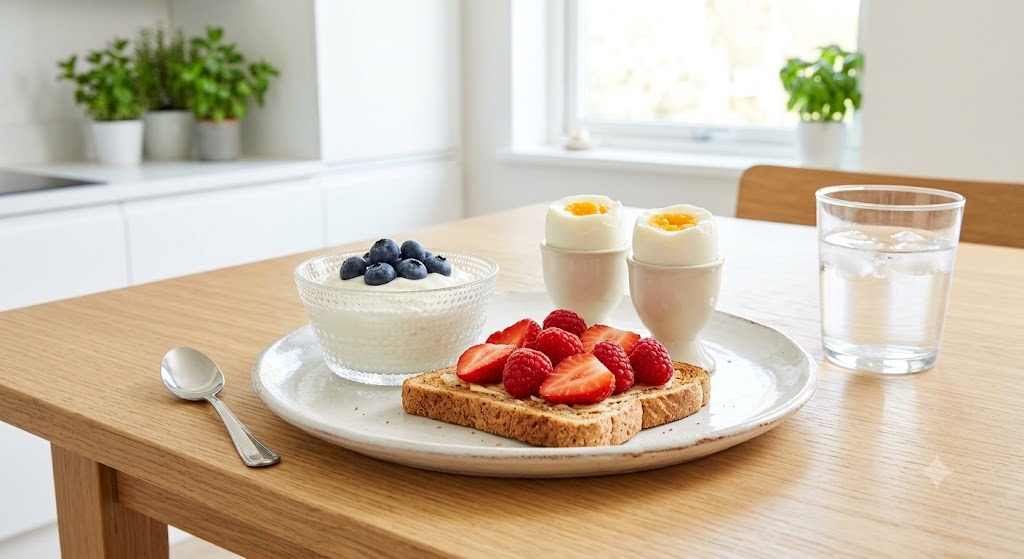
Choose Fiber-Rich Bread: Pick 100% whole wheat or sprouted grain with at least 3g fiber per slice.
Add Lean Protein: Pair toast with hard-boiled eggs or unsweetened Greek yogurt to boost fullness.
Swap Jam for Fresh Fruit: Top buttered toast with mashed raspberries or strawberries to cut added sugar while adding vitamins and fiber.
Track Effortlessly: Speak your meal into VoCal so spread calories never catch you off guard.
Why Voice Tracking Beats Photo Apps for Toast
Manual tracking apps make logging multi-item meals tedious, while photo apps struggle with melted spreads. A camera cannot see whether butter absorbed into warm toast is 5 grams or 15 grams, creating tracking errors of over 100 calories.
Enter VoCal: Just Say It!
With VoCal, logging your meal takes seconds without manual typing.
Tap the mic and speak naturally:
"I had two slices of whole wheat toast with a tablespoon of butter and strawberry jam."
VoCal parses your sentence, maps ingredients to verified USDA databases, and logs your calories, carbs, fats, and protein instantly!
Take Home Message
Portion sizes convert a light slice of toast into a 240-to-600 calorie meal. By selecting high-fiber bread, pairing meals with protein, and using low-friction tracking tools like VoCal, you can enjoy classic morning toast while staying completely aligned with your fitness goals!
Frequently Asked Questions (FAQs)
1. How many calories are in 1 slice of toast with butter and jam?
A slice of whole wheat toast with 1 tablespoon of butter and 1 tablespoon of jam contains about 239 calories. A light spread (1 tsp each) brings it down to 135 calories.
2. Is toast with butter and jam good for weight loss?
It can fit into any calorie goal, but because butter and jam are calorie-dense and low in protein, measuring portions or pairing toast with eggs helps maintain fullness longer.
3. Does butter reduce blood sugar spikes from jam?
Yes. Fat delays stomach emptying, which slows down carbohydrate absorption and blunts post-meal glucose spikes by up to 25% compared to plain jam toast.
4. How do I log buttered toast in VoCal?
Open VoCal, tap the mic, and say what you ate, such as: "One slice of whole wheat toast with a teaspoon of butter and raspberry jelly." The app handles the rest!
Disclaimer: This content is for informational purposes only. For medical advice, diagnosis, or personalized dietary planning, please consult a qualified healthcare professional or registered dietitian.