
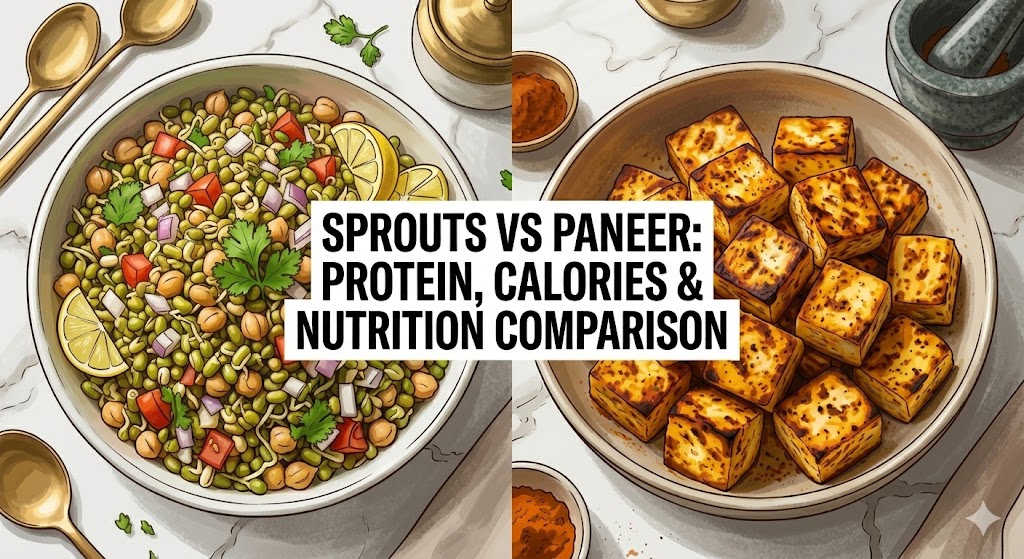
In the red corner, we have the "Living Food"—crunchy, fresh, and budget-friendly Sprouts. In the blue corner stands the "Dairy King"—creamy, satisfying, and every vegetarian's muscle-building go-to, Paneer. If you are trying to up your "sprouts vs paneer protein comparison india" game, you aren't alone. As India faces a rise in lifestyle-related health goals, everyone from gym-goers to busy moms is asking: which one should actually be on my plate?
This isn't just about calories; it’s about what these foods do for your body, from your gut to your bicep. Let's break down the ultimate vegetarian protein showdown using data from the Indian Food Composition Tables (IFCT 2017).
The "Living Food" Magic: Why Sprouts are Weight Loss Superstars
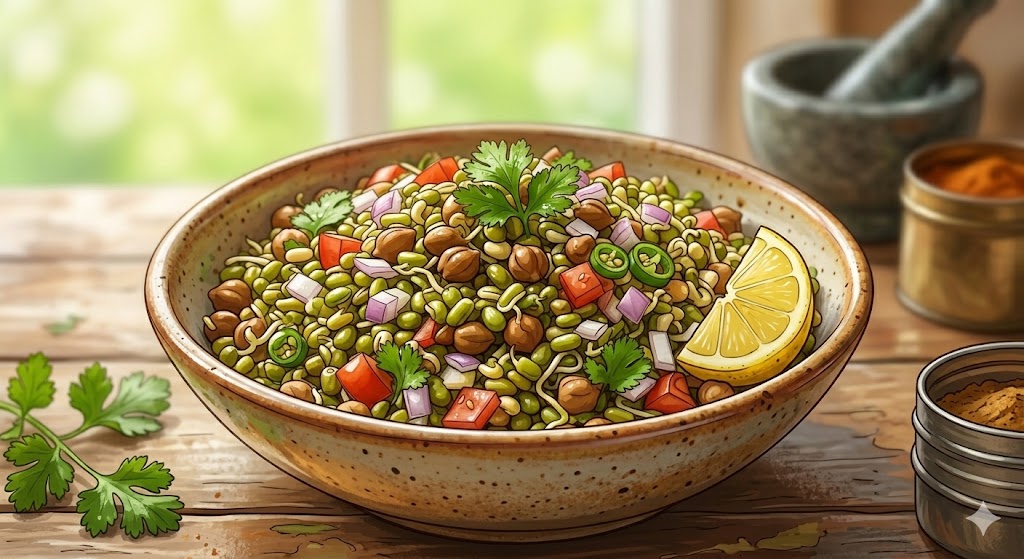
Think of sprouts as seeds on a mission. When you soak and germinate legumes like moong or chana, they undergo a "metabolic makeover." This process actually "pre-digests" the plant, making it easier for your stomach to handle while boosting vitamin levels by up to several hundred percent.
Sprouts are the ultimate "high-volume, low-calorie" food. You can eat a massive bowl and still stay well within your calorie budget.
Sprout Variety (per 100g Raw) | Energy (kcal) | Protein (g) | Total Fat (g) | Carbohydrates (g) | Fiber (g) |
Moong (Green Gram) | 30 | 3.04 | 0.2 | 5.9 | 1.8 |
Chana (Chickpea) | 46 | 8.86 | 1.2 | 9.0 | 2.5 |
Matki (Moth Bean) | 36 | 6.0 | 0.4 | 7.5 | 2.2 |
Soybean Sprouts | 120 | 13.0 | 6.0 | 10.0 | 1.5 |
Lentil Sprouts | 45 | 8.96 | 0.5 | 8.0 | 1.9 |
The Fun Fact: Sprouting kills the "anti-nutrients" that usually cause gas and bloating. So, if you love dal but it doesn't love you back, sprouts are your new best friend!
The Dairy Pillar: Why Paneer is Muscle Gold
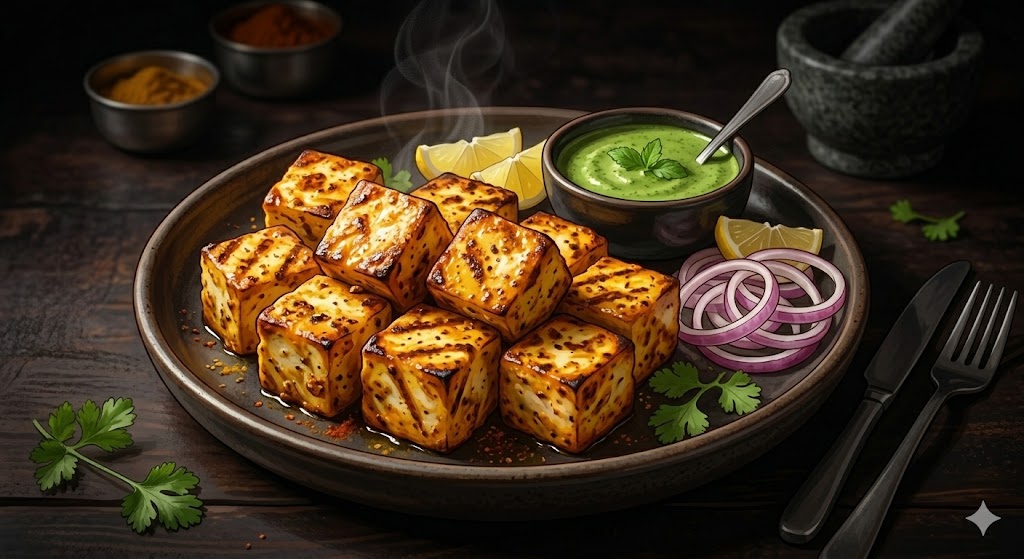
If sprouts are the "light and airy" choice, paneer is the "heavy hitter." Paneer is a concentrated source of milk protein and calcium, making it a staple for anyone focused on strength or bone health.
The secret weapon in paneer is Casein. This is a "slow-digesting" protein. When you eat it, it forms a gel in your stomach and releases amino acids into your blood slowly over several hours. This makes it the perfect dinner food—it repairs your muscles while you sleep!
Paneer Type (per 100g) | Energy (kcal) | Protein (g) | Total Fat (g) | Calcium (mg) |
Full-fat (Malai) Paneer | 321 | 25 | 25 | 407 |
Standard Commercial Paneer | 265 | 18 - 20 | 20 | 700 - 800 |
Low-fat (Skimmed) Paneer | 180 - 225 | 20 - 23 | 4 - 10 | 480 - 700 |
Homemade (Cow Milk) | 250 | 18 | 20 | 200 - 300 |
The Pro-Tip: If you’re watching your waistline, go for low-fat or homemade paneer. You get the same muscle-building punch with half the "fat baggage."
The Protein Quality Showdown: Leucine is the Key
When we talk about protein, quality matters just as much as quantity. To build muscle, your body needs a specific amino acid called Leucine to "flip the switch" on muscle growth.
Paneer: A "complete" protein. It contains all nine essential amino acids in perfect proportions. Just 100g of paneer hits the "leucine threshold" needed to trigger muscle repair.
Sprouts: While sprouting significantly improves their protein quality, they are still slightly "incomplete." To get the same muscle-building effect as a small piece of paneer, you'd have to eat a mountain of sprouts!
Essential Amino Acid (mg/100g) | Paneer | Moong Sprouts | Chana Sprouts |
Leucine | 2500 | 180 - 280 | 500 - 650 |
Lysine | 1800 | 170 - 250 | 450 - 550 |
Valine | 1500 | 135 - 200 | 350 - 450 |
Isoleucine | 1300 | 130 - 210 | 300 - 400 |
Satiety: Which One Keeps the Hunger Monster Away?
Both of these foods are great for weight management, but they work in different ways:
Sprouts fill you up through "volume." They are 80-90% water and packed with fiber. This physically stretches your stomach, telling your brain, "Hey, we're full!"
Paneer fills you up through "hormones." The high protein and fat content trigger satiety hormones that slow down your digestion, keeping you satisfied for hours.
The Winner? If you want a big, crunchy snack that feels like a lot of food for zero guilt, choose sprouts. If you need a meal that will keep you from reaching for cookies three hours later, go for paneer.
Safety First: Don't Forget the "Indian Factor"
In our humid Indian climate, food safety is non-negotiable.
Sprouts: Raw sprouts are a playground for bacteria like Salmonella. The Fix: Lightly steam or sauté them for 5 minutes. It kills the germs but keeps the crunch!
Paneer: Beware of adulteration in local markets. The Fix: Try making paneer at home with fresh milk and lemon—it’s easier than you think and much safer!
Tracking with VoCal: Say it, Don't Type it!
Let’s be honest: tracking Indian food is a headache. Is it a "bowl" of sprouts or "three spoons" of salad? Did the paneer have malai or was it low-fat?
This is where VoCal, the voice-based calorie tracking app, changes the game. Instead of searching through endless databases, you just tap the mic and say, "I had two scoops of moong sprout chaat with a bit of lemon" or "Five cubes of grilled paneer."
VoCal uses AI specifically trained on Indian regional dishes—it knows the difference between a Chana Salad and a Paneer Bhurji, helping you stay consistent without the stress.
The Final Verdict: Who Wins?
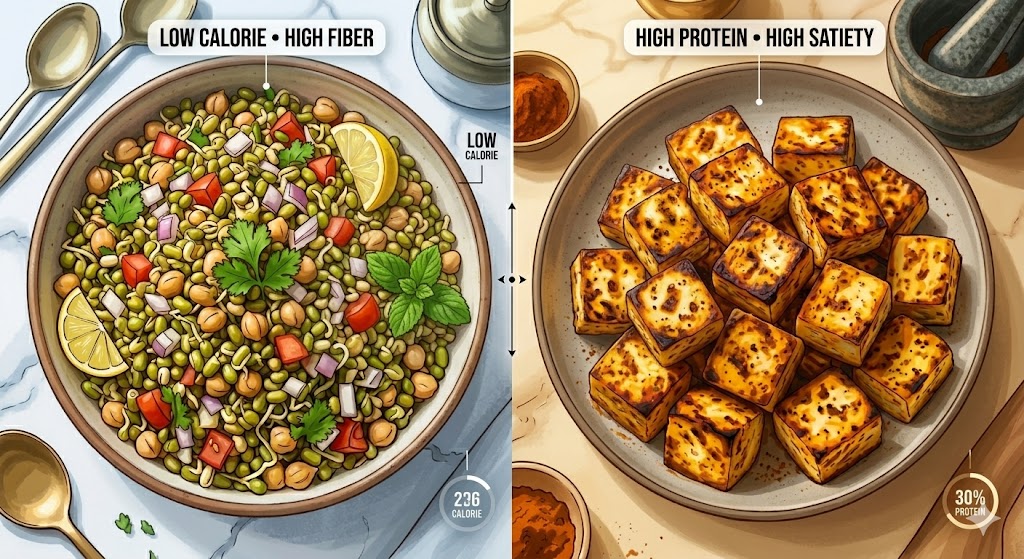
Why choose? The smartest health strategy is to use both:
For Breakfast: A bowl of steamed moong sprouts for fiber and a morning energy boost.
For Dinner: Grilled paneer to support muscle repair while you sleep.
By combining the metabolic benefits of sprouts with the structural strength of paneer, you're not just eating—you're fueling.
FAQs
Is 100g of sprouts enough protein for the day?
Not usually. 100g of moong sprouts only gives you about 3g of protein. While it's very healthy, you should pair it with other sources like paneer, curd, or dal to meet your daily needs.
Can I eat paneer at night while trying to lose weight?
Yes! Paneer is a slow-digesting protein that prevents muscle breakdown at night and keeps you full, reducing late-night snack cravings. Just watch the portion size!
Why do sprouts cause less gas than raw beans?
The sprouting process breaks down complex sugars (oligosaccharides) that are usually hard to digest, making them much lighter on your stomach.
What is the best way to cook sprouts?
Lightly steaming for 3-5 minutes is the sweet spot. It ensures safety from bacteria while preserving most of the sensitive vitamins like Vitamin C.
Is homemade paneer better than store-bought?
Usually, yes. Homemade paneer allows you to control the fat content (by using toned milk) and ensures there are no preservatives or adulterants.
Disclaimer: This article is for educational and informational purposes only and is not a substitute for professional medical advice, diagnosis, or treatment. Always seek the advice of your physician or a registered dietitian before making significant changes to your diet or starting a new fitness routine.