
Struggling to fit into your favorite pair of jeans? You’re not alone. Many of us grew up on a "carb-heavy" diet of white rice and refined flour, which often leaves us reaching for a snack by 11 AM. But here is the good news: you don't have to give up your favorite Indian flavors to lose weight!
By switching to a high-protein, low-calorie breakfast, you can trick your body into feeling fuller for longer, effectively putting an end to those mid-morning "hangry" episodes. Recent updates from the National Institute of Nutrition (NIN) suggest that simply reorganizing our traditional food groups can give us a massive metabolic edge.
The Science of Not Being "Hangry"
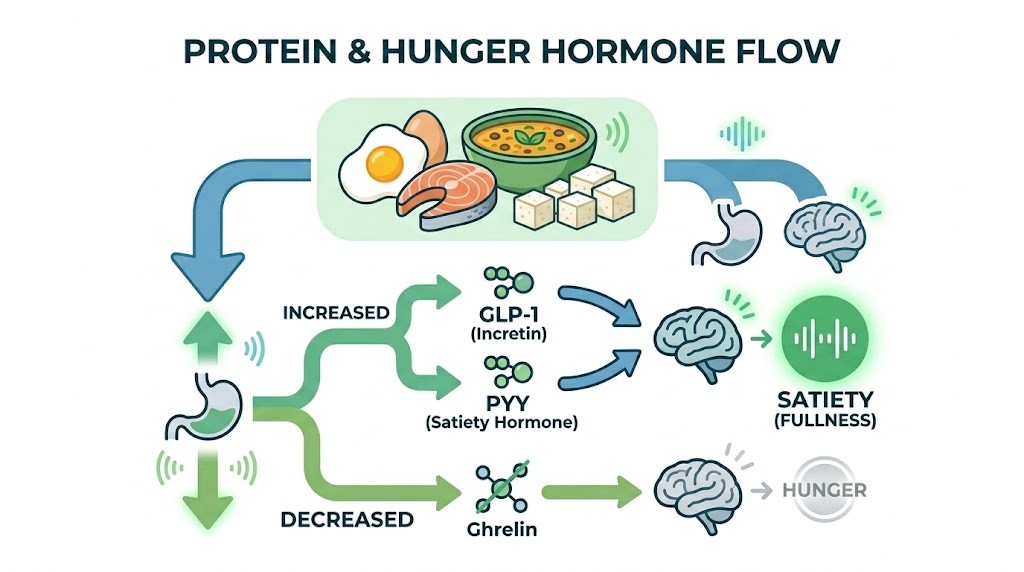
Why does protein work like magic? It’s all about the "Satiety Cascade." When you eat protein-rich foods like lentils or paneer, your body releases hormones like GLP-1 and PYY that tell your brain, "Hey, we're full!". At the same time, it shuts down Ghrelin, the pesky hormone responsible for that "rumbling tummy" feeling.
Plus, protein has a high Thermic Effect of Food (TEF). This means your body actually burns 20% to 30% of the calories you eat just to digest the protein itself. Talk about a metabolic workout!
Hormone | Effect of High-Protein Intake | Impact on Weight Loss |
Ghrelin | Significant Reduction | Decreases physical hunger and mid-morning cravings |
Peptide YY (PYY) | Significant Increase | Enhances feelings of fullness and reduces subsequent meal size |
GLP-1 | Sustained Increase | Improves glucose metabolism and slows digestion |
Insulin | Controlled Secretion | Prevents the rapid fat-storage phase associated with high-sugar meals |
5 Tasty Recipes to Kickstart Your Weight Loss
Ready to transform your mornings? These five recipes are expert-approved for being low in calories but high in muscle-building protein.
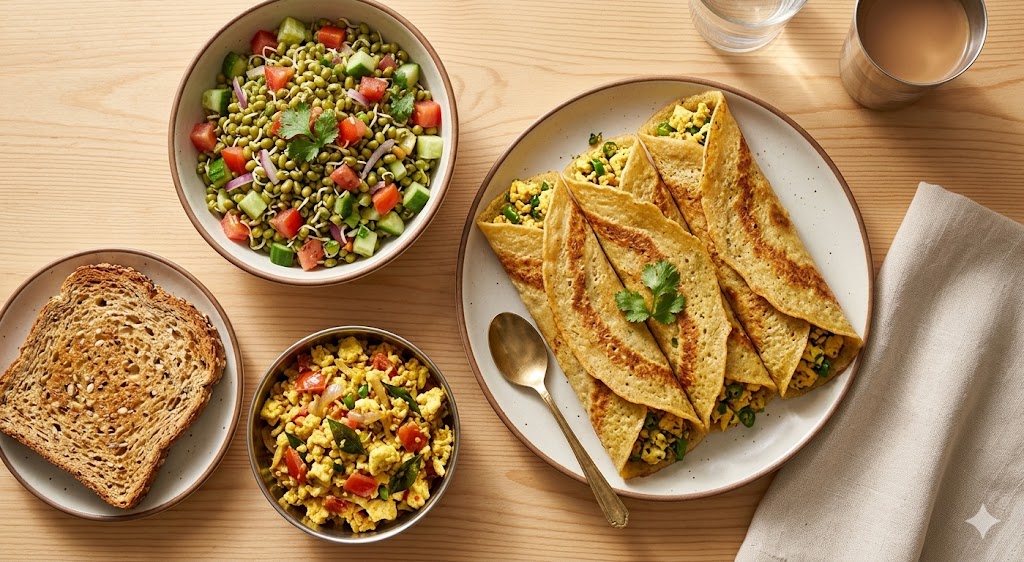
1. Moong Dal Chilla with Paneer Stuffing (20-25g Protein)
Often called the "Indian Omelet," this green gram pancake is a weight-loss legend.
The Secret: Stuff it with 50g of crumbled low-fat paneer to hit that 25g protein goal.
Calories: ~280 kcal per serving.
Pro Tip: Use a non-stick pan to cook with less than a teaspoon of oil to keep the calorie count low.
2. Sprouted Moong Salad with Roasted Peanuts (24g Protein)
If you're in a hurry, this "no-cook" option is a lifesaver. Sprouting the moong beans actually makes the protein easier for your body to absorb.
The Mix: 1 cup sprouted moong, tomatoes, cucumbers, lime juice, and 1 tbsp of roasted peanuts for crunch.
Calories: ~332 kcal.
3. Paneer Bhurji with Multigrain Toast (20g Protein)
Who needs eggs when you have paneer bhurji? It's flavorful, spicy, and incredibly satisfying.
The Swap: Pair it with a single slice of fiber-rich multigrain toast instead of a white pao.
Calories: ~250-280 kcal.
4. Ragi Dosa with Vegetable Sambar (15g Protein)
Ragi (finger millet) is the "super-grain" of 2024. It has a low Glycemic Index (GI), which means no blood sugar spikes and no energy crashes.
The Pairing: Serve it with a thick, lentil-heavy sambar for a complete amino acid profile.
Calories: ~200-220 kcal.
5. Quinoa Upma with Soya Chunks (18-22g Protein)
Traditional rava upma can be a carb trap. Swapping rava for quinoa and adding tiny soya chunks creates a "complete protein" powerhouse.
The Edge: Soya chunks are virtually fat-free but packed with protein.
Calories: ~250 kcal per bowl.
A 7-Day Indian Weight Loss Breakfast Plan
Day | Breakfast Option |
Monday | Vegetable Poha with roasted peanuts and lemon |
Tuesday | Moong Dal Chilla with mint chutney and curd |
Wednesday | Oats Upma with mixed vegetables |
Thursday | Ragi Dosa with coconut chutney and sambar |
Friday | Besan Chilla stuffed with paneer and vegetables |
Saturday | Sprouted Moong Salad with roasted peanuts |
Sunday | Paneer Bhurji on whole wheat toast |
Source: Generalized estimates based on NIH and Mayo Clinic energy expenditure models.
Smart Swaps for a Leaner You
According to the 2024 ICMR-NIN guidelines, Indians should limit cereal intake to no more than 45% of total energy. Most of us are currently at 70%! Here is how to fix it:
Swap Rice for Millets: Use Jowar, Bajra, or Ragi. They have more fiber and keep you full longer.
The 3:1 Rule: Try to maintain a ratio of 3 parts cereal to 1 part pulse (dal) to improve the quality of protein you're getting.
Volume Eating: Add 100g of spinach or carrots to your batters. It increases the portion size without adding significant calories.
The "VoCal" Advantage: Tracking Made Easy
One of the biggest hurdles to weight loss is the "math." Manual logging can be a chore, especially with complex Indian recipes. This is where VoCal steps in. Instead of typing every ingredient, you can simply use your voice: "I had two paneer chillas and a bowl of curd."
The AI does the heavy lifting, calculating your macros based on expert standards. This "frictionless" tracking keeps you mindful and consistent, which is the real secret to long-term success.
Frequently Asked Questions
Can I eat these breakfasts if I am vegan?
Absolutely! Just swap paneer for tofu or extra soya chunks. Most chillas (moong and besan) are naturally vegan.
How much protein should I aim for?
For weight loss, aim for 15 to 25 grams of protein in your first meal. This triggers those "fullness" hormones early in the day.
Is it okay to eat roti for breakfast?
Yes, but keep it small and make sure it’s a whole-grain or millet roti. Pair it with a huge portion of protein-rich dal or tofu.
Disclaimer: This content is for informational purposes and not medical advice. Always consult a healthcare professional before making major dietary changes.