
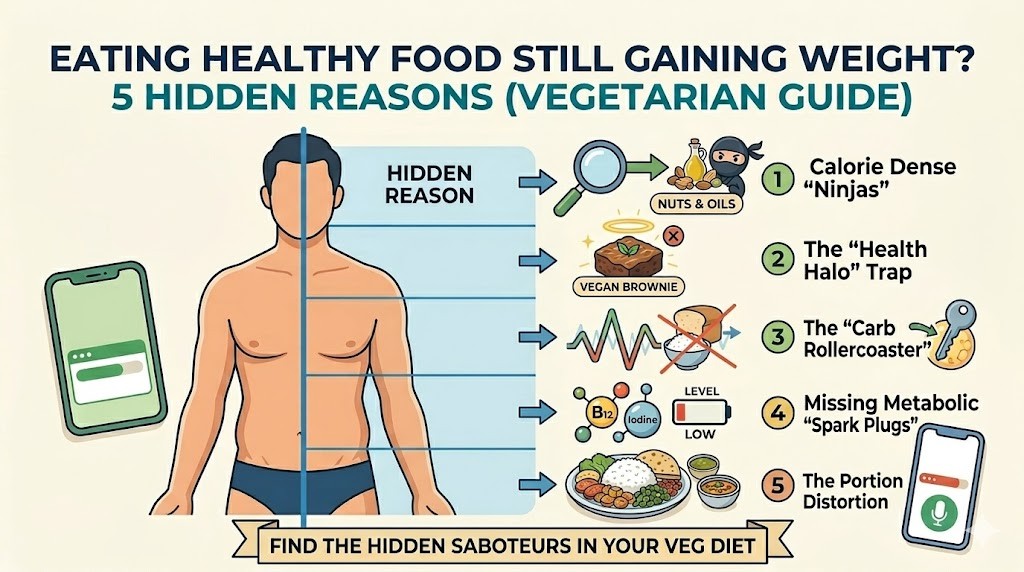
So, you’ve traded the chicken for chickpeas and the burgers for beets. You’re doing the "healthy" thing, yet your favorite jeans are suddenly acting like they’ve shrunk in the wash. If you find yourself searching for why you're eating healthy food still gaining weight veg style, you aren't alone!
It’s one of the most frustrating paradoxes of the wellness world: the "Healthy Veggie Scale Creep." The truth is, vegetarian diets are amazing for your heart and the planet, but they aren't magic weight-loss pills . From "calorie ninjas" hiding in your salad to the "health halo" that makes us overeat, here is why your green diet might be seeing red on the scale.
1. The "Calorie Ninja" Problem (Energy Density)
At the end of the day, your body still follows the laws of physics. If you eat more energy than you burn, your body saves it for later as fat.
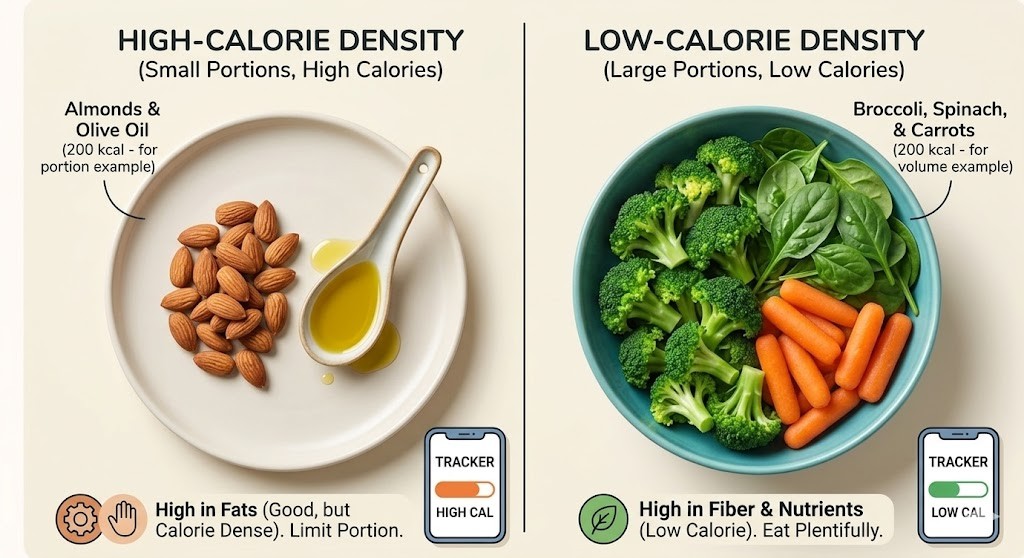
Many vegetarian staples are "calorie dense," meaning they pack a huge punch of energy into a tiny serving. Take nuts or olive oil—they are super healthy, but they are the "ninjas" of the food world. They sneak hundreds of calories into your meal without adding much volume to your plate.
Check out how much the calorie count can change based on what’s on your plate:
Food Category | Examples | Calories per 100g | Primary Macronutrient |
Non-starchy Vegetables | Broccoli, Spinach, Carrots | 16–49 | Fiber/Water |
Fresh Fruits | Apples, Berries, Bananas | 18–89 | Carbohydrates |
Starchy Vegetables | Potatoes, Corn, Peas | 71–94 | Complex Carbs |
Whole Grains (Cooked) | Quinoa, Brown Rice, Oats | 71–120 | Complex Carbs |
Legumes (Cooked) | Lentils, Chickpeas, Beans | 116–164 | Protein/Fiber |
Plant-Based Proteins | Tofu, Tempeh, Seitan | 150–230 | Protein |
Flour-Based Products | Whole Grain Bread, Pasta | 149–280 | Carbohydrates |
Dried Fruits | Dates, Raisins, Apricots | 240–299 | Sugars |
Nuts and Seeds | Walnuts, Almonds, Chia | 486–654 | Healthy Fats |
Plant-Based Oils | Olive Oil, Coconut Oil | 884–900 | Fats |
2. The "Health Halo" Trap
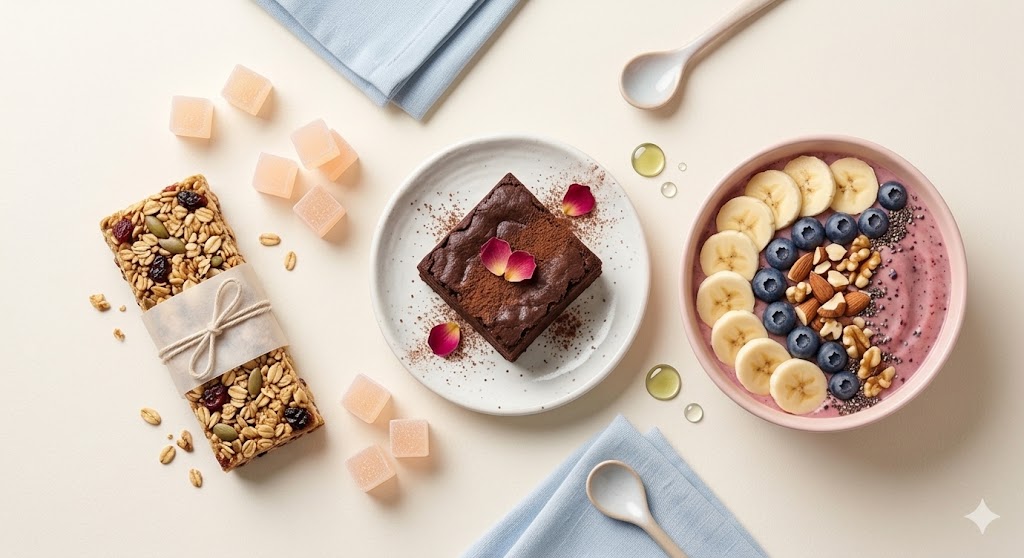
Ever bought a "vegan" brownie and felt like you could eat the whole tray because it’s "plant-based"? That’s the Health Halo at work.
We often subconsciously believe that if a food is labeled "organic," "vegan," or "all-natural," it must be low-calorie. In reality, a vegan cookie is still... well, a cookie. Marketing claims can be sneaky saboteurs of your weight loss goals.
Marketing Claim | Perceived Benefit | Potential Pitfall |
"Vegan" / "Plant-Based" | Lower calories, weight loss | High in refined oils and sugars. |
"Organic" | More nutrients, healthier | Often calorie-dense; leads to underestimation. |
"All Natural" | Unprocessed, safe | Can still be very high in sugar (e.g., agave). |
"Gluten-Free" | Better digestion | Often uses high-GI rice or potato starch. |
"Fruit-Sweetened" | No added sugar | Highly concentrated sugars with low fiber. |
3. The Carb Rollercoaster (Insulin)
Vegetarian diets can sometimes turn into "carbatarian" diets. If you’re filling up on white rice, white bread, and sugary "healthy" juices, you’re sending your blood sugar on a wild ride.
When your blood sugar spikes, your body releases insulin. Think of insulin as a key that opens your fat cells to store energy. If you have too much "quick" energy (high-GI carbs) and not enough fiber to slow it down, your body goes into "storage mode" rather than "burn mode".
High Glycemic Index (Weight Gain Risk) | Low Glycemic Index (Weight Loss Support) |
White Rice, Jasmine Rice | Brown Rice, Quinoa, Farro |
White Potatoes, Instant Mash | Sweet Potatoes, Yams |
White Bread, Bagels | Sprouted Grain Bread, Whole Wheat |
Fruit Juices, Soda | Whole Fruits (Apples, Berries) |
Refined Cereals | Steel-cut Oats, Barley |
4. Missing Your "Metabolic Spark Plugs"
Sometimes weight gain isn't about what you’re eating, but what you’re missing. Certain nutrients act like spark plugs for your metabolism. If you’re low on Vitamin B12 or Iodine (common in veg diets), your metabolic engine can start to stall, leaving you feeling tired and making it easier to gain weight.
Nutrient | Role in Metabolism | Potential Deficiency Impact | Recommended Veg Sources |
Vitamin B12 | Fatty acid/amino acid breakdown | Fatigue, anemia, slow metabolism. | Fortified milks, B12 supplements. |
Iodine | Thyroid hormone production | Reduced BMR, weight gain, lethargy. | Iodized salt, Nori, Kelp. |
Vitamin D | Insulin sensitivity | Increased fat storage, bone loss. | Fortified cereals, sunlight. |
Iron | Oxygen transport | Inability to oxidize fat efficiently. | Lentils, spinach, pumpkin seeds. |
Zinc | Carbohydrate metabolism | Impaired glucose regulation. | Legumes, nuts, seeds, tofu. |
5. The Portion Distortion
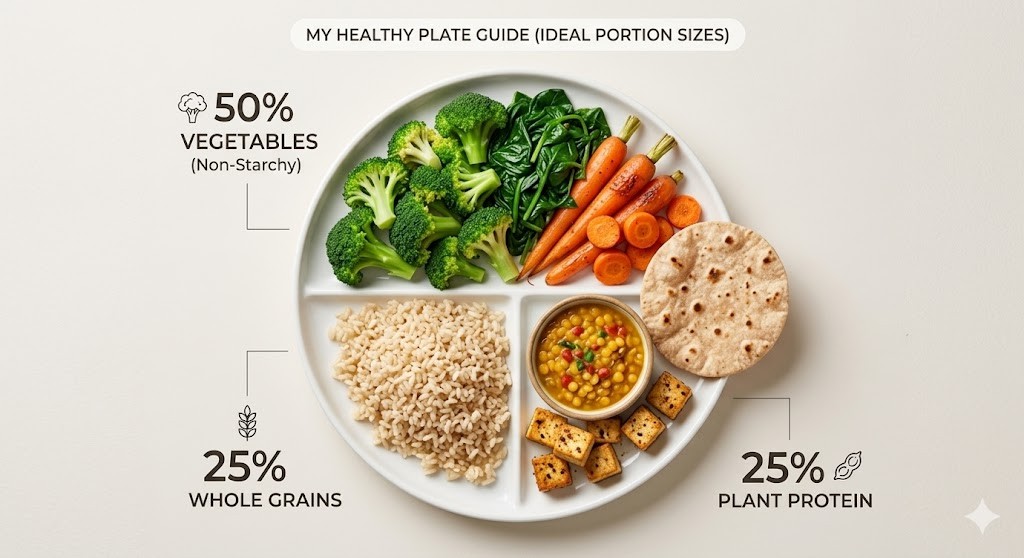
Finally, let's talk about the plate. It is very easy to overdo it on the "good stuff". Filling half your plate with non-starchy veggies is the golden rule, but many of us accidentally fill half the plate with rice or pasta instead .
Food Group | Recommended Daily Serving (2,000 Cal Diet) | Weight Management Tip |
Vegetables | 2.5 Cups | Fill half your plate with non-starchy varieties. |
Fruits | 2 Cups | Choose whole fruits over juices to gain fiber. |
Grains | 6.5 Ounces | Prioritize whole grains; limit to 1/4 of the plate. |
Protein | 3.5 Ounces | Focus on legumes and soy; avoid breaded/fried versions. |
Healthy Oils | 27 Grams | Use measuring spoons; avoid pouring directly from the bottle. |
Tracking the Easy Way: Meet VoCal
We get it. Between the complex dals and the sneaky calories in your home-cooked meals, manual tracking is a nightmare. Most apps make you search for 15 minutes just to log one meal.
That’s why we recommend VoCal. Instead of tapping and searching, you just speak.
Log in 15 seconds: Just say, "I had a bowl of lentil curry, two rotis, and a side of spinach."
Built for Real Food: Our AI understands regional dishes and cooking methods (like "sautéed" vs "deep-fried") that other apps miss .
Zero Friction: No photos, no barcodes, no stress. Just speak and move on with your day .
The Bottom Line
Eating healthy food and still gaining weight in a veg diet is usually a sign of hidden calories or hormonal shifts, not a failure of your willpower. By focusing on whole foods, watching those "hidden" oils, and using a simple tool like VoCal to keep an eye on the numbers, you can finally see the results your hard work deserves .
FAQs
Why am I gaining weight on a vegetarian diet when I eat so many vegetables?
While vegetables are low in calories, weight gain often comes from the "extras" like cooking oils, dressings, or large portions of grains (rice/bread) eaten alongside them.
Can I get enough protein on a vegetarian diet without gaining weight?
Absolutely! Focus on high-fiber proteins like lentils, beans, and tofu. Avoid "mock meats" that are breaded, fried, or loaded with sodium and saturated fat.
How does VoCal handle complex home-cooked meals?
VoCal uses AI trained on over 100,000 regional foods. It understands natural descriptions, so you don't have to break down every single ingredient of a home-cooked recipe .
Disclaimer: This article is for informational purposes only and does not constitute medical advice, diagnosis, or treatment. Always seek the advice of your physician or other qualified health provider with any questions you may have regarding a medical condition or dietary changes.