
Table of Contents
what exactly are they
calories & macronutrients
the protein powerhouse-muscle building
vitamins &minerals
heart health and digestion
Culinary Uses and Preparation Methods
tracking your macros effortlessly
summary
Frequently Asked Questions (FAQs)
If you are a vegetarian or looking to eat more plant-based meals, you’ve likely faced the ultimate kitchen showdown: Paneer vs. Tofu. Both look like soft, white cubes of goodness, both absorb flavors like a sponge, and both are superstars in the protein world. But which one should actually land on your plate?
While they might look like twins, paneer and nutrition-wise, they are very different. Whether you are trying to lose a few inches, bulk up at the gym, or just eat a bit healthier, choosing the right "cube" can make all the difference.
What Exactly Are They?
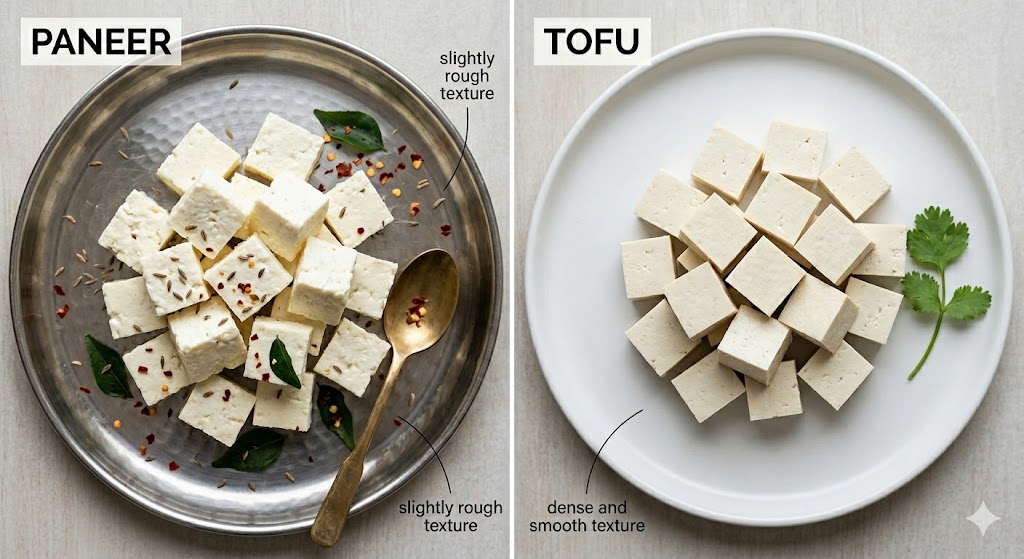
Before we dive into the numbers, let’s look at the "birth certificates" of these two foods:
Paneer: This is a fresh cheese made by curdling cow or buffalo milk with an acid like lemon juice or vinegar. It is a dairy staple in Indian households, known for its rich, creamy texture.
Tofu: Also known as "bean curd," tofu is completely plant-based. It is made by curdling fresh soy milk and pressing it into solid blocks. It is a vegan hero that comes in various textures, from silky to extra-firm.
Calories & Macronutrients: The Weight Loss Factor
If you are counting calories, this is where the two part ways. Paneer is far more energy-dense than tofu because it is made from whole milk, meaning it carries more fat.
The Verdict: If weight loss is your main goal, tofu is usually the winner. It has significantly fewer calories and much less fat, allowing you to eat a larger portion without breaking your calorie budget.
The Protein Powerhouse: Muscle Building
Both paneer and tofu are "complete proteins," meaning they contain all nine essential amino acids your body needs but can't make on its own.
Paneer for Gains: Paneer is famous for its high protein content. It is rich in casein, a slow-digesting protein that provides a steady release of amino acids to your muscles over several hours. This makes it a favorite for recovery and building strength.
Tofu for Lean Muscle: While tofu has less protein per gram than paneer, it is excellent for building lean muscle without the added saturated fat or cholesterol.
Vitamins & Minerals: The Hidden Benefits
The "battle of the cubes" continues into the world of micronutrients. Depending on what your body needs, one might have a slight edge over the other.
Bone Health: Both are great for your bones. Paneer is a natural source of calcium, but tofu can actually have more calcium if it is prepared with calcium sulfate.
Anemia Defense: Tofu is a clear winner for iron. It contains significantly more iron than paneer, which is vital for maintaining healthy blood and energy levels.
The B12 Edge: Paneer provides Vitamin B12, which is essential for nerve health and is naturally missing from plant-based foods like tofu.
Heart Health and Digestion
Cholesterol: Tofu is 100% cholesterol-free and low in saturated fat, making it a very heart-friendly option.
Lactose Intolerance: If dairy makes your stomach unhappy, tofu is your best friend. It is naturally lactose-free.
Fiber: Tofu contains dietary fiber, which helps with digestion and keeps you feeling full. Paneer, like most dairy, contains no fiber.
Culinary Uses and Preparation Methods
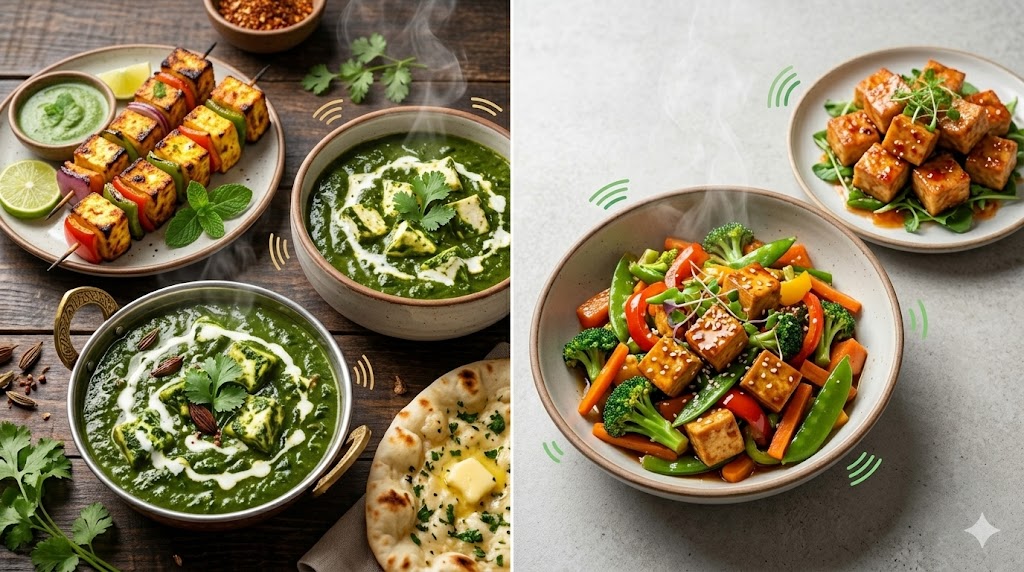
Getting the best out of these proteins requires a bit of kitchen "know-how." While they are often interchangeable, they behave differently under heat.
Mastering Paneer: The Non-Melting Star
Paneer is famous for its ability to hold its shape. Because it doesn't melt, it is the perfect candidate for high-heat cooking like grilling or pan-frying.
Indian Classics: It is the soul of dishes like Paneer Tikka, Palak Paneer, and Shahi Paneer.
Pro Tip: If your store-bought paneer feels a bit tough, soak the cubes in warm water for about 10 minutes before adding them to your gravy. This makes them incredibly soft and spongy!
Browning: Sautéing paneer in a little ghee or oil creates a delicious golden crust that adds a rich, milky flavor to your meals.
Mastering Tofu: The Flavor Sponge
Tofu is much more porous than paneer, meaning it can absorb marinades deep into its core.
The "Press" Secret: Most tofu comes packed in water. To get that chewy, "meat-like" texture, you must press it! Wrap the block in a clean towel and place something heavy on top for 15–30 minutes to squeeze out the moisture.
Texture Matters: Use Silken tofu for creamy smoothies and desserts, and Firm or Extra-Firm tofu for stir-fries, baking, or air-frying.
Marinating: Since tofu is neutral-tasting, let it sit in your favorite sauce (like soy, ginger, or garlic) for at least 30 minutes. It will soak up every drop of flavor.
Tracking Your Macros Effortlessly
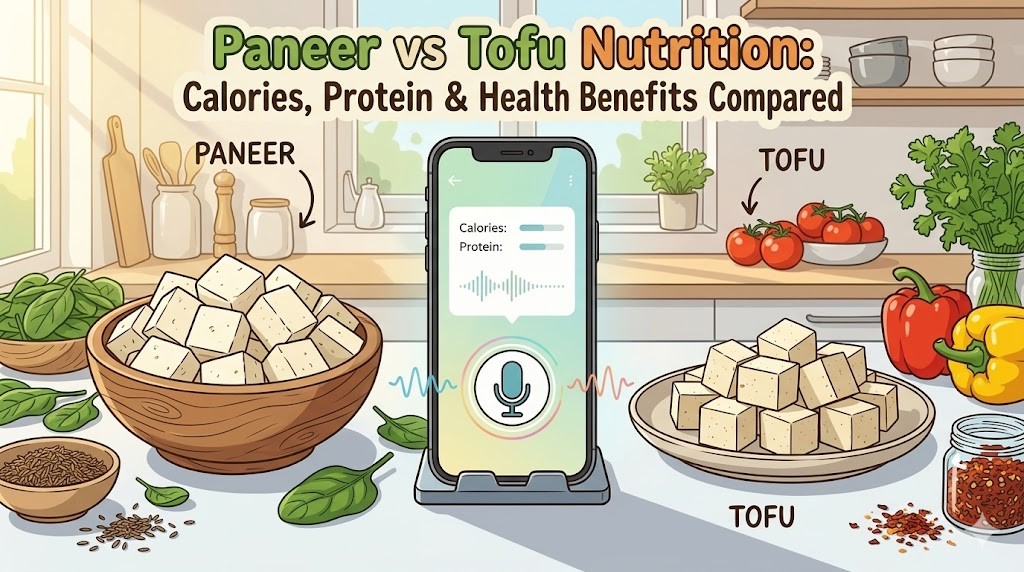
Whether you choose paneer for its richness or tofu for its lean profile, staying consistent with your health goals is key. This is where modern tech like the VoCal comes in. Instead of fumbling with your phone and typing in "50g of firm tofu," you can simply say it out loud.
Voice-activated tracking uses AI to instantly log your meals, reaching up to 98% accuracy for calories and 93% for protein. It removes the "friction" of dieting, helping you focus on the food rather than the paperwork.
Summary: Which Cube Should You Choose?
Choose Paneer if: You want to build muscle, need more calories for energy, or want a natural source of Vitamin B12.
Choose Tofu if: You are aiming for weight loss, monitoring your heart health/cholesterol, or are lactose intolerant.
The best part? You don’t have to pick just one! Alternating between paneer and tofu is a great way to get the benefits of both dairy and plant-based protein while keeping your meals exciting.
Frequently Asked Questions (FAQs)
Which has more protein, paneer or tofu?
Paneer generally has more protein per 100g (about 18-21g) compared to firm tofu (8-17g). However, because tofu is lower in calories, you can eat more of it to reach your protein goals.
Is tofu better than paneer for weight loss?
Yes, tofu is usually better for weight loss because it is significantly lower in calories and fat while still being very filling.
Is tofu a complete protein?
Yes! Tofu contains all nine essential amino acids, making it an excellent high-quality protein source for vegetarians and vegans.
Can I use voice AI to track my paneer intake?
Absolutely. Using an app like Vo-cal allows you to log your paneer or tofu intake hands-free, making it much easier to stay consistent with your diet.
Disclaimer: This article is for informational purposes only and does not constitute professional medical advice. Always consult a healthcare professional before making significant dietary changes.