

We have all heard the old barroom legend: ordering a pint of Guinness is basically ordering a loaf of bread in a glass. With its deep ruby-black color, velvety texture, and thick, creamy head of foam, Ireland's most famous dry stout certainly looks like a heavy treat.
If you are counting calories or watching your waistline, you might be tempted to skip the tap handle and settle for a watery light lager instead. But appearances can be deceiving.
When you check the nutritional numbers behind the beer calories guinness delivers, this classic dark brew is surprisingly light on its feet. A standard 12-ounce pour of Guinness Draught actually packs fewer calories than regular Budweiser, Heineken, or a simple glass of 2% milk.
Whether you are catching trivia night at the local Irish pub, watching the weekend game, or keeping tabs on your daily macros, here is the complete scoop on Guinness calories, carbs, and glass sizes.
Guinness Nutrition at a Glance (12 oz Serving)
Calories: 125 kcal
Carbohydrates: 10 grams
Protein: 1 gram
Fat: 0 grams
Sugar: Less than 1 gram
Alcohol by Volume (ABV): 4.2%
Standard Drink Units: 0.8
How Many Calories Are in Guinness? (12 oz vs. 16 oz vs. Pint)
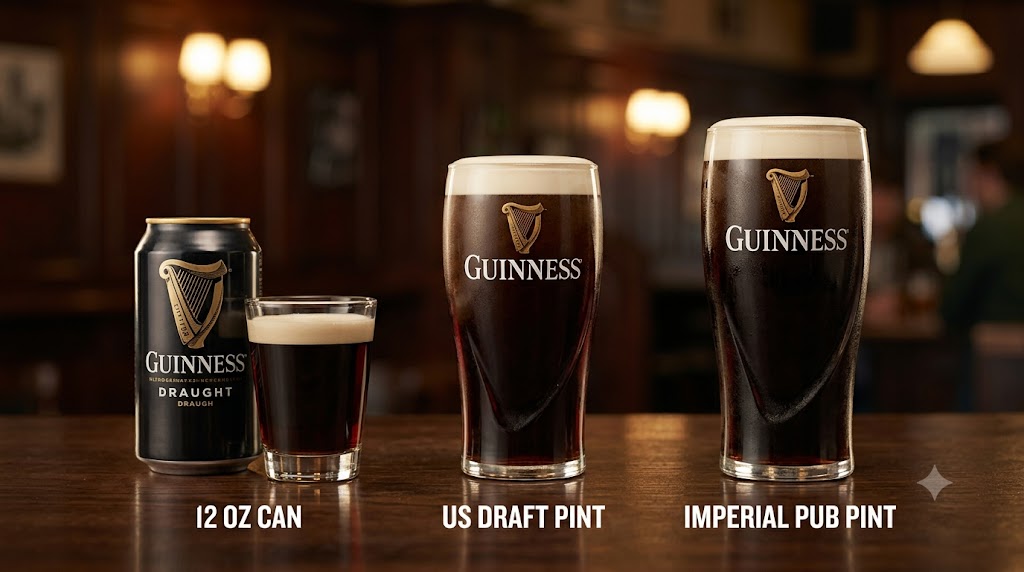
One of the biggest hurdles when logging drinks is assuming every pint glass holds the exact same amount of liquid. In grocery stores, packaged beer is sold in standard 12-ounce bottles and cans. But at the bar, what you get depends entirely on the glassware.
Most American bars serve draft beer in a 16-ounce shaker pint glass. Traditional Irish and British pubs, on the other hand, pour an Imperial pint measuring 20 imperial fluid ounces—giving you 25% more beer in a single round.
Because calories increase along with volume, knowing your glass size makes all the difference. Here is how the numbers break down across pours of classic Guinness Draught:
12 oz Bottle or Can (355 ml): For a baseline guinness beer calories 12 oz serving, you take in roughly 125 calories and 10 grams of carbs.
14.9 oz Nitro Draught Can (440 ml): The taller widget can found in supermarkets delivers approximately 155 calories and 12.4 grams of carbs.
16 oz US Draft Pint (473 ml): Order a draft pint at an American sports tavern and you receive a 16-ounce pour with about 167 calories and 13.3 grams of carbs.
20 oz Imperial Pub Pint (568 ml): In authentic pubs, full guinness beer calories pint orders tally around 210 calories and 17 grams of carbohydrates.
Calorie & Carb Breakdown Across the Guinness Lineup
Not every Guinness bottle shares the exact same recipe. While classic Draught keeps its alcohol level at an easygoing 4.2% ABV, other options in the lineup feature higher alcohol levels, which noticeably bumps up the calorie count.
Guinness Variety | Serving Format | Volume | Calories | Carbs | ABV |
Guinness Draught | Standard Bottle / Can | 12 fl oz (355 ml) | 125 kcal | 10.0 g | 4.2% |
Guinness Draught | Nitro Draught Can | 14.9 fl oz (440 ml) | 155 kcal | 12.4 g | 4.2% |
Guinness Draught | US Draft Pint | 16.0 fl oz (473 ml) | 167 kcal | 13.3 g | 4.2% |
Guinness Draught | Imperial Pub Pint | 20.0 fl oz (568 ml) | 210 kcal | 17.0 g | 4.2% |
Guinness Extra Stout (US) | Standard Bottle | 12 fl oz (355 ml) | 180 kcal | 11.0 g | 5.6% |
Guinness Extra Stout (US) | US Draft Pint | 16.0 fl oz (473 ml) | 240 kcal | 14.7 g | 5.6% |
Guinness Foreign Extra Stout | Standard Bottle | 12 fl oz (355 ml) | 194 kcal | 15.0 g | 7.5% |
Guinness 0.0 (Non-Alcoholic) | Standard Bottle | 12 fl oz (355 ml) | 60 kcal | 13.5 g | 0.0% |
Guinness 0.0 (Non-Alcoholic) | Nitro Draught Can | 14.9 fl oz (440 ml) | 75 kcal | 16.7 g | 0.0% |
Guinness 0.0 (Non-Alcoholic) | Imperial Pub Pint | 20.0 fl oz (568 ml) | 97 kcal | 21.6 g | 0.0% |
Notice the jump in Guinness Extra Stout? Brewed in Latrobe, Pennsylvania for the US market, it features a punchier 5.6% ABV, lifting a single 12 oz bottle to 180 kcal. On the flip side, the alcohol-free Guinness 0.0 cuts total energy down to just 60 calories per 12 oz, even though it keeps a similar carbohydrate profile.
Where Do the Calories Come From? Carbs vs. Alcohol
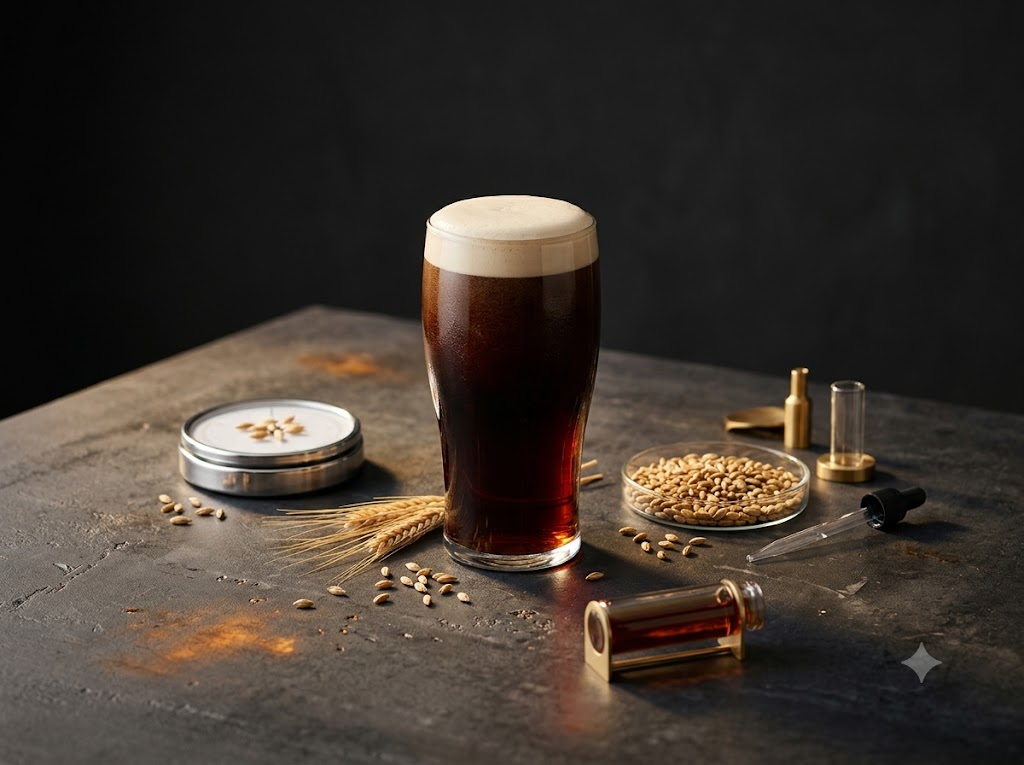
When breaking down guinness beer calories carbs only tell part of the story. Beer calories originate from two main nutrients: residual carbohydrates and pure ethanol.
Alcohol packs 7 calories per gram, making it nearly as energy-dense as dietary fat (9 calories per gram). Carbohydrates and proteins contribute only 4 calories per gram.
In a standard 12 oz bottle of Guinness Draught:
Alcohol: Supplies 11.2 grams of ethanol, which equals roughly 78 calories—accounting for over 62% of the total energy in the bottle.
Carbohydrates: Roughly 10 grams of unfermented grain sugars add about 40 calories.
Protein: Around 1 gram of residual barley protein adds 4 calories.
Fat: Exactly 0 grams.
Because Guinness Draught has a modest 4.2% ABV, it contains noticeably less pure alcohol than standard craft ales or European imports, which keeps its overall caloric tally surprisingly low.
The Takeaway: More than 60% of the calories in Guinness Draught stem from alcohol, not heavy starch or sugar. Its lower 4.2% ABV keeps it lighter than most draft favorites.
Guinness vs. Other Beers: How Does It Stack Up?
To see why Guinness is often considered a great pick for health-conscious beer lovers, compare a standard 12 oz pour against other common bar staples:
Beer Style | Brand Example | Serving Size | Calories | Carbs | Typical ABV |
Dealcoholized Stout | Guinness 0.0 | 12 fl oz (355 ml) | 60 kcal | 13.5 g | 0.0% |
Ultra-Light Lager | Michelob Ultra | 12 fl oz (355 ml) | 95 kcal | 2.6 g | 4.2% |
Standard Light Lager | Bud Light | 12 fl oz (355 ml) | 110 kcal | 6.6 g | 4.2% |
Dry Irish Stout | Guinness Draught | 12 fl oz (355 ml) | 125 kcal | 10.0 g | 4.2% |
Standard American Lager | Budweiser Regular | 12 fl oz (355 ml) | 145 kcal | 10.6 g | 5.0% |
European Pale Lager | Stella Artois | 12 fl oz (355 ml) | 150 kcal | 13.1 g | 5.0% |
Hard Apple Cider | Commercial Hard Cider | 12 fl oz (355 ml) | 190 kcal | 23.0 g | 5.0% |
American Craft IPA | Typical Hazy IPA | 12 fl oz (355 ml) | 220 kcal | 18.0 g | 7.2% |
Craft Imperial Stout | Bourbon Barrel Stout | 12 fl oz (355 ml) | 340 kcal | 24.0 g | 12.0% |
Guinness Draught has only 15 more calories than Bud Light and 30 more than Michelob Ultra, while beating regular Budweiser, Stella Artois, hard ciders, and IPAs. If you swap out a 220-calorie double IPA for a Guinness Draught, you save almost 100 calories per glass.
Why Does Guinness Taste So Rich If It Is Low in Calories?

If Guinness is so light on calories, why does it feel so thick and filling? The secret lies in a clever brewing mechanism: nitrogen gas.
Most draft beers are carbonated exclusively with carbon dioxide (CO2). Carbon dioxide forms larger bubbles and creates carbonic acid, giving crisp lagers their bright, biting sting on your tongue.
Guinness Draught, however, is poured using a mixed-gas blend of 75% nitrogen and 25% carbon dioxide. Nitrogen does not dissolve easily in beer. When pushed through the tiny holes of a draft tap's restrictor plate or released by an internal can widget, it bursts into millions of microscopic bubbles.
These micro-bubbles create a silky head and a pillowy texture. Your palate senses that smooth creaminess and interprets it as heavy body—tricking your brain into thinking you are drinking a rich, calorie-laden stout when the actual liquid is light and crisp.
Can You Drink Guinness on a Low-Carb or Keto Diet?
Whether a pint fits your nutritional goals depends on the type of carbohydrate targets you follow:
Strict Ketogenic Diets (20g to 50g carbs/day): Ketogenic protocols restrict total daily carbs to between 20 and 50 grams to maintain ketosis. A single 12 oz Guinness Draught takes up 10 grams of carbs—consuming 20% to 50% of your daily limit. A 20 oz Imperial pint uses 17 grams, which can quickly pull you out of ketosis. While an occasional bottle can fit, it leaves little room for veggies, nuts, or dairy.
Moderate Low-Carb Diets (60g to 130g carbs/day): On a liberal low-carb plan permitting 60 to 130 grams of carbs daily, fitting in a 12 oz or 16 oz Guinness Draught is easy. Paired with a lean protein dish and green vegetables, it can sit comfortably within your daily numbers.
How Alcohol Pauses Fat Burning
Keep in mind that the liver cannot store alcohol. Whenever ethanol enters your bloodstream, your liver immediately pauses fat oxidation to metabolize the alcohol first.
While the 125 calories in a Guinness can fit cleanly inside a calorie deficit, high-fat pub appetizers eaten at the same time (such as fried wings or loaded fries) are more likely to be diverted into fat storage while your metabolism is busy clearing alcohol.
Track Your Pub Pints Without the Manual Work
Liquid calories from beer, cocktails, and wine are among the most undercounted items in modern diets.
When you are out enjoying happy hour, nobody wants to open a complex calorie app, tap through cluttered search menus, and guess how many ounces were in that specific draft pour.
That friction is the main reason people stop tracking when dining out.
This is where a voice-first app like VoCal solves the problem. Instead of typing and searching, you simply speak into your phone naturally:
"I had a sixteen-ounce draft pint of Guinness and a grilled chicken sandwich."
Using natural language processing, VoCal recognizes the pour size, logs the exact nutritional metrics (167 calories and 13.3 grams of carbs), and updates your daily totals in seconds. You stay accountable to your nutrition goals without spending your evening staring at your phone.
Frequently Asked Questions
Does Guinness have more calories than regular beer?
No. Standard Guinness Draught contains 125 calories per 12 oz, which is lower than common macro lagers like Budweiser (145 calories) and Stella Artois (150 calories).
How many calories are in a 20 oz Imperial pint of Guinness?
A 20 oz Imperial pub pint of Guinness Draught contains about 210 calories and 17 grams of carbohydrates. If your local bar serves 16 oz US draft glasses, that pour has roughly 167 calories.
Is Guinness considered a "healthy" beer?
While the historic 1920s slogan claimed "Guinness is Good for You," it remains an alcoholic beverage and should always be consumed in moderation. However, it does contain antioxidant polyphenols from dark roasted barley, trace minerals like silicon and folate, zero fat, and fewer calories than most craft ales.
Does Guinness 0.0 have calories?
Yes. Although Guinness 0.0 is dealcoholized, it still contains unfermented grain carbohydrates. A 12 oz bottle contains about 60 calories and 13.5 grams of carbs, making it an excellent lower-calorie option if you want the roasted stout flavor without the alcohol.
Disclaimer: This article is for informational and educational purposes only and is not intended as individual medical or dietary advice. Adults who choose to drink should do so in moderation—defined by US Dietary Guidelines as up to two drinks per day for men and one drink per day for women.