

Picture this: You are assembling the ultimate lunchtime sandwich. You have turkey breast, crisp lettuce, juicy sliced tomatoes, and two golden slices of whole-wheat bread. But right before pressing those slices together, you reach into the fridge door for the jar. A generous swipe of creamy mayonnaise later, your meal is ready to eat.
Mayonnaise is a classic flavor hero, but it is also one of the sneakiest condiments in the kitchen. If you have ever wondered about mayo calories and how much extra energy that spread brings to your plate, you are not alone.
Let’s break down the exact numbers, compare regular versus light options, and see how simple voice logging with VoCal keeps your daily nutrition on track.
The Mayo Calories Breakdown: Standard vs. Light Spreads
At its core, standard mayonnaise is a creamy emulsion of vegetable oil, egg yolks, and vinegar or lemon juice. Because oil is the main ingredient, about 95% of regular mayo's energy comes straight from dietary fats.
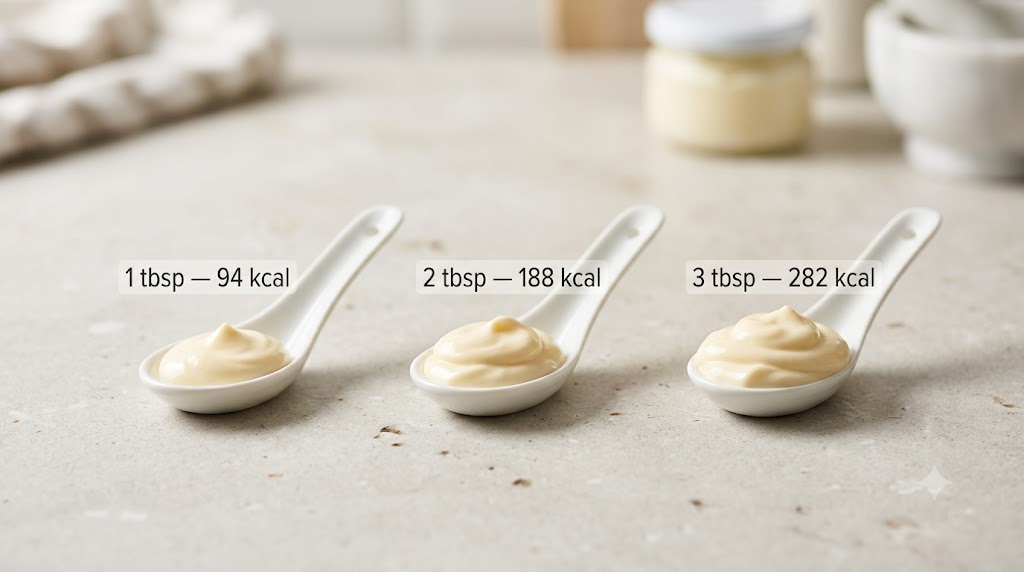
According to the USDA FoodData Central database, a standard reference tablespoon (14 grams) of regular mayonnaise packs 94 calories and 10.3 grams of total fat.
Here is how different mayo varieties stack up per tablespoon:
Mayonnaise Variety (1 Tbsp / 14–16g) | Energy (kcal) | Total Fat (g) | Saturated Fat (g) | Carbohydrates (g) | Sodium (mg) | Primary Base |
Regular Mayonnaise | 94 | 10.3 | 1.6 | 0.08 | 87.6 | Soybean / Canola Oil, Egg Yolk |
Sriracha Mayonnaise | 90 | 9.0 | 1.5 | 1.0 | 110.0 | Soybean Oil, Chili Paste, Egg |
Light / Reduced-Fat Mayo | 35 | 3.5 | 0.5 | 1.4 | 124.1 | Water, Oil, Corn Starch, Egg |
Avocado Oil Mayonnaise | 90 | 10.0 | 1.5 | 0.0 | 85.0 | Avocado Oil, Egg Yolk |
Fat-Free Mayo-Style Spread | 13 | 0.43 | 0.1 | 2.5 | 126.1 | Water, Modified Starch, Sugar |
The Real Impact: How Many Calories Mayo Adds to a Sandwich
Here is the catch: when was the last time you used a measuring spoon before spreading mayo on your sandwich?
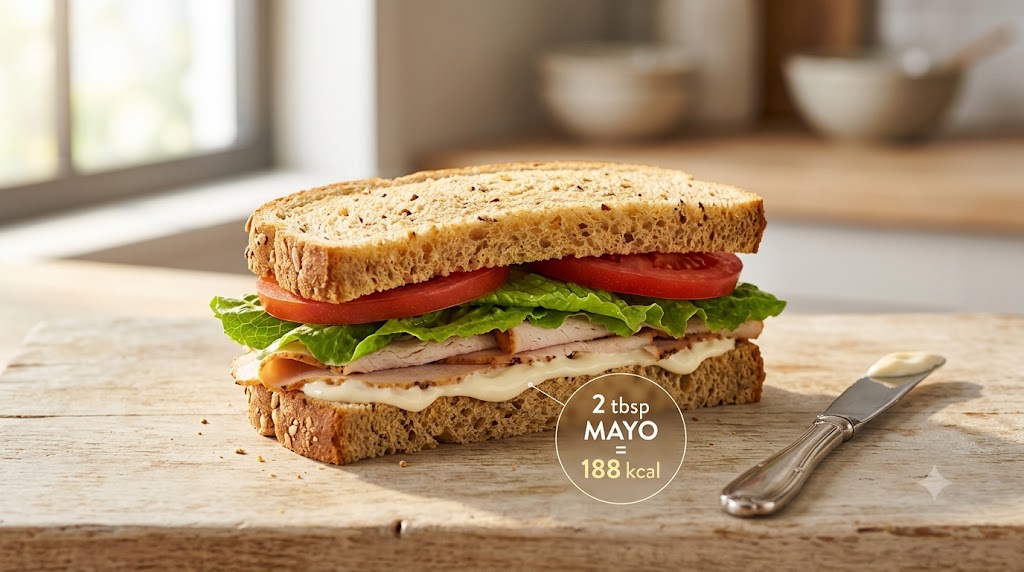
Most of us dip a butter knife directly into the jar. Because commercial sliced bread is porous, those tiny microscopic air pockets soak up liquid spreads instantly. A quick coat across both slices of bread usually turns into 2 or 3 tablespoons rather than just 1 tablespoon.
The exact calories mayo adds to sandwich preparations escalate fast:
Single-Slice Light Dab (~1 Tbsp): Adds 94 calories.
Dual-Slice Standard Spread (~2 Tbsp): Adds 188 calories.
Dual-Slice Heavy Spread (~3 Tbsp): Adds 282 calories.
When mixed into deli salads like tuna or egg salad, mayonnaise transitions from a topping to a main ingredient. Check out how the calories mayo adds to sandwich recipes alter total meal numbers:
Sandwich Type | Base Components | Base Energy (No Mayo) | Added Mayo Portion | Final Energy Content | Mayo Calorie Share (%) |
Turkey & Swiss Sub | 3oz Turkey, 1oz Swiss, Whole Wheat | 340 kcal | 2 Tbsp Regular (28g) | 528 kcal | 35.6% |
Tuna Salad Sandwich | 3oz Canned Tuna in Water, Celery, Bread | 220 kcal | 2.5 Tbsp Regular (35g) | 455 kcal | 51.6% |
Egg Salad Sandwich | 2 Hard-Boiled Eggs, White Bread | 290 kcal | 2 Tbsp Light (30g) | 361 kcal | 19.6% |
Garden Veggie Slice | Hummus, Cucumber, Tomato, Rye Bread | 210 kcal | 1 Tbsp Regular (14g) | 304 kcal | 30.9% |
What Mayo Does Behind the Scenes: Fats, Blood Sugar, and Satiety
It is not just about raw numbers—it is also about how your body processes high-density spreads:
Zero Glycemic Impact: Regular mayonnaise has virtually zero carbohydrates, so its Glycemic Index is practically zero. Adding fats to high-carb white bread can even slow gastric emptying, blunting post-meal blood sugar spikes.
Saturated Fat Awareness: The American Heart Association recommends keeping daily saturated fat intake under 6% of total calories (about 13 grams per day on a 2,000-calorie diet). Two tablespoons of regular mayo contain 3.2 grams of saturated fat, using up nearly 25% of that daily limit.
The Mastication Factor: Because mayo acts as a smooth lubricant, it reduces chewing time. Eating faster often leads to finishing your lunch before your brain registers satiety signals from the stomach.
Delicious Mayo Swaps & Smart Kitchen Hacks
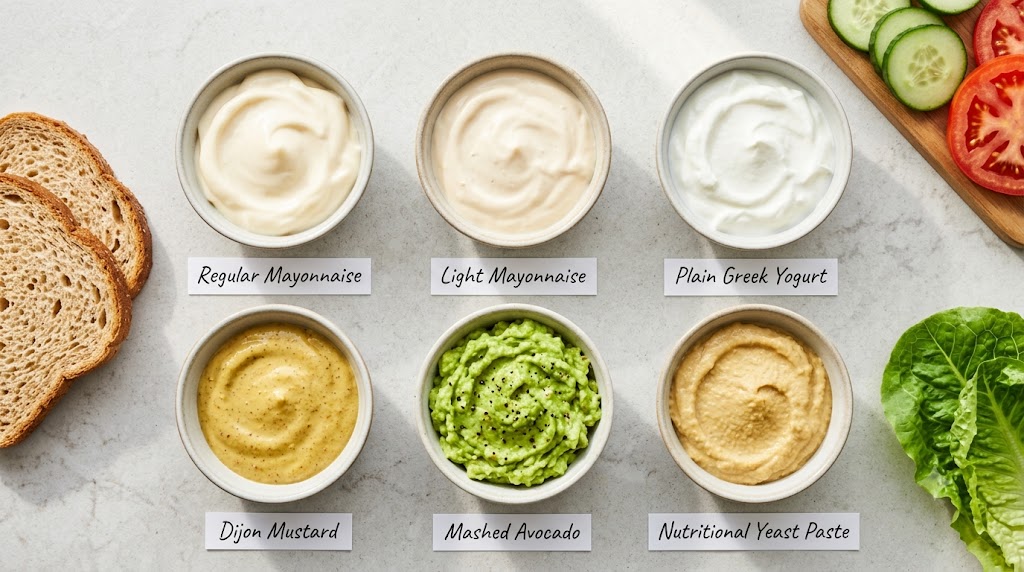
If you want to keep your sandwiches flavorful while managing total intake, try these practical swaps:
Alternative Spread Option | Energy / Tbsp (kcal) | Fat / Tbsp (g) | Protein / Tbsp (g) | Calorie Savings vs Regular Mayo (%) | Standout Feature |
Regular Mayonnaise | 94 | 10.3 | 0.1 | Baseline | Rich texture, blunts glucose spikes |
Light Mayonnaise | 35 | 3.5 | 0.0 | -62.8% | Creamy texture, 62% fewer calories |
Plain Non-Fat Greek Yogurt | 11 | 0.0 | 1.5 | -88.3% | High protein, gut-friendly probiotics |
Yellow or Dijon Mustard | 5–10 | 0.2 | 0.5 | -92.5% | Tangy kick, zero saturated fat |
Mashed Avocado | 23 | 2.1 | 0.3 | -75.5% | Packed with fiber & monounsaturated fats |
Nutritional Yeast Paste | 20 | 0.3 | 2.5 | -78.7% | Cheesy, savory flavor loaded with B-vitamins |
Quick Portion Hacks:
The Single-Slice Rule: Apply mayo to just one slice of bread instead of both to instantly cut condiment energy by 50%.
The Yogurt Dilution: Blend equal parts regular mayo with non-fat plain Greek yogurt to retain the rich taste with half the fat.
Track Condiments Hands-Free with VoCal
Measuring out every spread on a digital scale during a busy workday can feel like a hassle. And manually searching complex app databases for "1.5 tablespoons of light mayo" creates unnecessary friction.
That is where VoCal transforms your routine. With voice-activated tracking, logging lunch takes just a few seconds.
Simply speak into your phone:
"Turkey sandwich on whole wheat bread with two tablespoons of light mayo."
VoCal’s natural speech processing cross-references verified data from sources like USDA FoodData Central and logs your complete macro breakdown automatically. No manual searching, no missing condiments, and no unlogged energy intake!
Frequently Asked Questions (FAQs)
How many calories does mayo add to a sandwich on average?
A single tablespoon of regular mayonnaise adds 94 calories. However, spreading mayo on both slices of bread typically uses 2 to 3 tablespoons, adding 188 to 282 calories to your sandwich.
Is light mayo better for weight management?
Light mayo cuts energy density by roughly 62% (down to ~35 calories per tablespoon) by replacing some oils with water and thickeners. It offers a great way to reduce overall intake while retaining creaminess.
Does mayonnaise spike blood sugar?
No. Regular mayonnaise contains less than 0.5 grams of carbohydrate per serving, giving it a near-zero glycemic impact.
Why are condiment calories frequently unlogged?
Condiments are added quickly during meal prep without standard measuring tools. Because they seem small, people often forget to log them, leading to an untracked surplus of 150 to 300 calories per day.
Disclaimer: This is for informational purposes only. For medical advice or diagnosis, consult a professional.