

Picture this: It is Friday evening, happy hour is in full swing, and you are standing in front of the tap list or glancing over a wine menu. You want to unwind with a drink, but you also want to keep your fitness and health goals on track.
When you are keeping tabs on your daily intake, choosing between calories beer or wine can feel like a tricky guessing game. Is a crisp craft lager lighter than a glass of Cabernet? Does red wine actually deserve its healthy reputation? And what happens to your metabolism after that second round?
Whether you are counting carbs, managing your weight, or just curious about what is in your glass, here is the complete, science-backed comparison between beer and wine—minus the confusing jargon.
The Calorie Math: Why Alcohol Packs a Punch
Before comparing pints and stems, it helps to understand where the calories in your drink actually come from.
Most people know that carbs and protein provide 4 calories per gram, while dietary fats pack 9 calories per gram. But alcohol sits in its own category: pure ethanol delivers 7 calories per gram. That puts it closer to pure fat than to carbohydrates!
Every alcoholic drink gets its caloric total from two main components:
The alcohol content (ABV): The higher the alcohol by volume (ABV), the more calories from ethanol are in your glass.
Residual carbohydrates: During winemaking, yeast ferments nearly all the grape sugars into alcohol, leaving very few carbs behind in dry table wines. Beer brewing, on the other hand, relies on grains like barley and wheat, which leave behind unfermented starches and dextrins—essentially liquid carbs.
Because alcohol delivers 7 calories per gram, a drink with a higher ABV will almost always pack a bigger caloric punch, regardless of whether it is made from hops or grapes.
Beer vs. Wine: Standard Pours Head-to-Head

According to the United States Department of Agriculture (USDA) and the National Institute on Alcohol Abuse and Alcoholism (NIAAA), one standard drink in the U.S. contains exactly 14 grams (0.6 fluid ounces) of pure ethanol.
Because beer and wine have different strengths, a standard drink looks quite different in your glass:
Beer: 12 fluid ounces (about 5% ABV)
Table Wine: 5 fluid ounces (about 12% ABV)
Here is how common types of beer and wine stack up based on official nutritional databases from MedlinePlus and the USDA:
Beverage Classification | Standard Serving Size | Alcohol by Volume (%) | Total Energy (kcal) | Total Carbohydrates (g) | Residual Sugars (g) |
Regular Commercial Beer | 12 fl oz (355 mL) | 5.0% | 153 | 12.6 | 0.0 |
Light Commercial Lager | 12 fl oz (355 mL) | 4.2% | 103 | 5.9 | 0.3 |
Craft India Pale Ale (IPA) | 12 fl oz (355 mL) | 7.0%–9.0% | 200–300 | 15.0–22.0 | 1.0–4.0 |
Dry Red Table Wine | 5 fl oz (148 mL) | 12.5%–14.0% | 125 | 3.8 | 0.9 |
Dry White Table Wine | 5 fl oz (148 mL) | 11.5%–13.5% | 121–128 | 3.8–4.0 | 1.4 |
Brut Sparkling Wine / Champagne | 4 fl oz (118 mL) | 12.0% | 85–95 | 1.5–2.5 | 1.0–2.0 |
Sweet Dessert / Port Wine | 3.5 fl oz (103 mL) | 18.0%–20.0% | 165 | 14.0 | 8.0–12.0 |
So, What's Got More Calories: Beer or Wine?
When asking what's got more calories beer or wine, the real answer comes down to whether you compare a standard glass or look at the drink ounce-for-ounce.
Per Standard Glass: Regular Beer Wins the Calorie Contest
If you compare a standard 12-ounce can of regular commercial beer (153 calories) to a standard 5-ounce pour of dry wine (around 121 to 125 calories), regular beer delivers roughly 30 more calories per serving. That difference comes almost entirely from beer's leftover grain carbohydrates.
However, if you swap regular beer for a light lager (103 calories), the tables turn: a light beer has about 20 fewer calories than a standard glass of red or white wine.
Per Fluid Ounce: Wine Is Twice as Dense
While beer has more calories per standard serving, wine is much more concentrated:
Wine: roughly 24 to 25 calories per fluid ounce
Regular Beer: roughly 13 calories per fluid ounce
Because wine is so concentrated, heavy pours can rapidly derail your daily calorie budget. If a restaurant server fills your oversized wine glass with an 8-ounce pour instead of a standard 5-ounce measure, you are drinking around 200 calories in a single glass.
The Craft Beer Danger Zone
If you are a fan of craft beer, standard calorie rules go out the window. A hazy double IPA or rich imperial stout can easily reach 8% or 9% ABV and retain dense malt sugars, pushing a single 12-ounce pour to 250 or 300 calories. Order a full 16-ounce draft pint at your local brewery, and that single drink can easily hit 350 to 400 calories.
Quick Summary: In standard servings, regular beer (153 calories) has more calories than dry wine (125 calories). But because wine packs twice the calories per ounce, a heavy pour can easily overtake beer. Meanwhile, high-alcohol craft beers carry the heaviest calorie load of all.
Carbs and Nutrients: Calories Beer vs Red Wine
Health articles frequently focus on calories beer vs red wine, largely because red wine is widely recognized for its heart-healthy antioxidant profile. But what does the nutritional balance look like when they go head-to-head?
1. Carbohydrates and Blood Sugar
Dry Red Wine: A standard 5-ounce pour has only about 3.8 grams of carbs and less than 1 gram of residual sugar. Because more than 85% of red wine's calories come straight from alcohol rather than carbs, it causes minimal changes in blood sugar or insulin levels. That makes dry red wine far easier to fit into low-carb or keto-style diets.
Regular Beer: A standard 12-ounce can delivers 12.6 grams of carbohydrates—more than triple the amount in red wine. These carbs consist of easily digestible malt starches that can raise blood sugar levels and trigger insulin spikes, especially when consumed on an empty stomach.
2. Antioxidants and Micronutrients
Red Wine: Thanks to fermentation with grape skins, red wine contains beneficial plant polyphenols such as resveratrol, catechins, and anthocyanins.
Beer: Beer offers its own unique set of plant compounds from hops and barley, including humulones, trace B vitamins, and dietary silicon.
The catch? While both drinks contain trace antioxidants, public health researchers from Harvard Health emphasize that you would have to drink dangerous amounts of alcohol to get meaningful nutritional benefits. Neither beverage counts as a health food, meaning their metabolic and caloric impact matters far more than their vitamin content.
The Metabolism Twist: Why Alcohol Pauses Fat Burning

When you drink, the calories on the nutrition label do not tell the whole story. The human body cannot store alcohol the way it stores extra carbs as glycogen or extra dietary fat in fat tissue.
Because alcohol cannot be stored, your liver treats it as an urgent priority and stops everything else to process it:
Ethanol ->Acetaldehyde-> Acetate
Your liver enzymes convert ethanol into acetaldehyde, a toxic compound.
Acetaldehyde is quickly turned into acetate.
Acetate enters your bloodstream, and your muscles and organs use it as an immediate fuel source.
The Fat-Burning Freeze
Because your body is busy using acetate for energy, it temporarily shuts off fat burning. Clinical studies published in the American Journal of Clinical Nutrition found that consuming alcohol reduces whole-body fat oxidation by approximately 73% for several hours.
What happens to the cheeseburger, tacos, or fries you eat with your drinks? Because your body is burning acetate from alcohol, almost all the dietary fats and carbs from your food get directed straight into storage. On top of that, alcohol stimulates appetite pathways in the brain (specifically the hypothalamus), triggering intense late-night food cravings.
Direct Energy Equivalencies of Common Pours
Ever wonder how much walking it takes to burn off your favorite happy hour order?
Here is how common beverage pours translate into moderate walking time (calculated for an average 155-pound adult walking at 3.5 mph, burning roughly 4.8 calories per minute):
Beverage Category | Typical Pour Size | Energy Density (kcal) | Glycemic Carbs (g) | Equivalent Moderate Walking Time |
Ultra-Low Carb / Light Beer | 12 fl oz (355 mL) | 64–95 | 2.0–3.2 | 13–20 minutes |
Commercial Light Lager | 12 fl oz (355 mL) | 103 | 5.9 | 21 minutes |
Dry White Wine (Sauvignon Blanc) | 5 fl oz (148 mL) | 121 | 3.0 | 25 minutes |
Dry Red Wine (Cabernet Sauvignon) | 5 fl oz (148 mL) | 125 | 3.8 | 26 minutes |
Standard Commercial Lager | 12 fl oz (355 mL) | 153 | 12.6 | 32 minutes |
Sweet Fortified Dessert Wine | 3.5 fl oz (103 mL) | 165 | 14.0 | 34 minutes |
Craft IPA / Strong Ale | 12 fl oz (355 mL) | 240 | 18.5 | 50 minutes |
Full Imperial Draft Pint | 16 fl oz (473 mL) | 320 | 24.0 | 67 minutes |
5 Practical Tips for Smarter Sipping
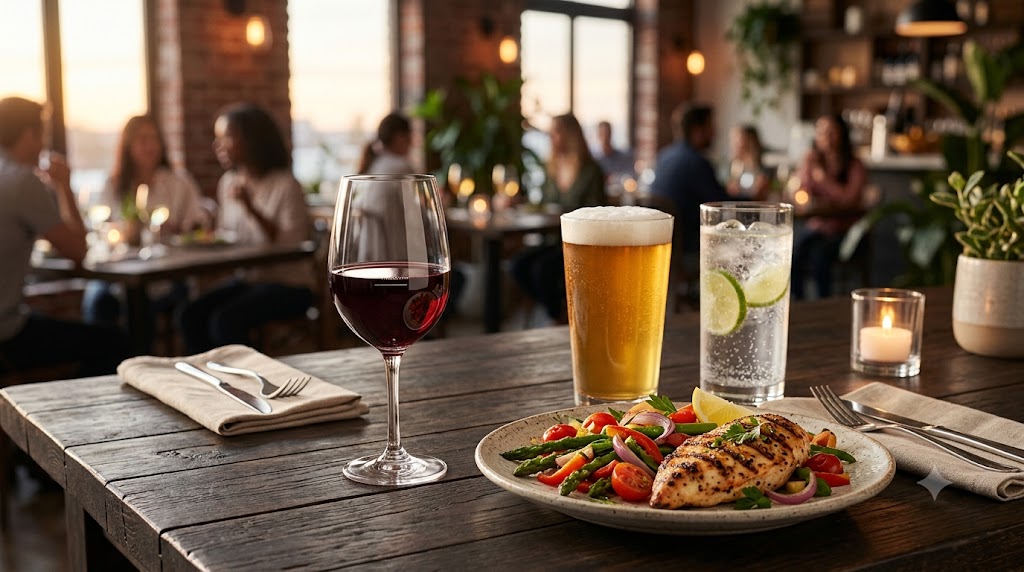
If you want to enjoy a drink without setting back your fitness goals, keep these practical tips in mind:
Alternate with sparkling water: Drinking a glass of water between alcoholic beverages slows your pace, keeps you hydrated, and cuts your total calorie intake in half over the course of an evening.
Watch out for craft beer ABVs: Check the menu for alcohol percentages. Beers over 7% ABV pack substantially more calories and carbohydrates than standard 4% to 5% lagers.
Prioritize lean protein on drinking days: Because alcohol puts fat burning on hold, pairing drinks with lean proteins (like grilled chicken or fish) and veggies helps minimize excess fat storage.
Be mindful of restaurant pours: Remember that home glasses and restaurant pours often hold 7 to 9 ounces of wine rather than the standard 5 ounces.
Log as you go with your voice: Use VoCal to record your drinks the moment you order them, so uncounted liquid calories do not slip under your radar.
How to Track Your Drinks Without the Stress
The biggest challenge with social drinking is not necessarily the drink itself—it is the logging fatigue that comes with it.
Traditional calorie-tracking apps require you to type, scroll through hundreds of user-submitted beer entries, scan barcodes at noisy restaurant tables, or guess exact fluid ounce measurements. As a result, most people stop tracking the moment happy hour begins, leaving those liquid calories unaccounted for.
This is where voice tracking changes the experience. With VoCal, logging your drinks is as easy as speaking out loud.
Instead of searching through confusing databases, tap the mic and say:
"I had a pint of hazy IPA and two slices of veggie pizza."
VoCal instantly parses your speech, breaks down the calories, calculates the protein, carbs, and fats, and updates your daily nutrition log in seconds. By removing the manual typing and barcode scanning, VoCal makes it simple to stay consistent with your health goals, even when dining out.
The Bottom Line
When navigating calories beer or wine, neither drink is automatically a diet-wrecker—the key is understanding portions and preparation.
Per standard serving, regular beer has more calories (153 calories) and far more carbs (12.6 grams) than dry red or white wine (125 calories and 3.8 grams of carbs). However, wine is twice as calorie-dense per ounce, meaning generous pours can quickly push its calorie count above beer. And if heavy craft IPAs are your go-to, they consistently pack the highest calories and carbs of all.
Whichever drink you choose, remember that alcohol temporarily pauses fat burning and can increase late-night food cravings. To keep your nutrition on track without missing out on social events, moderate your intake, balance your pours with water, and log your drinks effortlessly with voice-first tracking on VoCal.
Frequently Asked Questions
What has fewer calories: beer or wine?
Comparing standard single drinks, dry wine (about 121 to 125 calories per 5 oz glass) has fewer calories than regular commercial beer (153 calories per 12 oz can). However, commercial light beer (about 103 calories per 12 oz can) contains fewer calories than both.
Is red wine better for weight loss than beer?
For low-carb and ketogenic diets, dry red wine is usually the better option because it has under 4 grams of carbohydrates per serving, compared to nearly 13 grams in regular beer. However, both contain alcohol, which temporarily pauses fat burning until your liver clears it.
Does beer give you a "beer belly"?
The classic "beer belly" is not caused by special compounds in beer; it is the result of excess overall calories. Because beer is easy to drink in volume and carries extra carbohydrates, regular consumption can quickly create a calorie surplus. Additionally, alcohol directs co-ingested food calories toward fat storage.
How many calories are in a standard bottle of wine?
A standard 750 mL bottle of dry wine contains approximately five 5-ounce glasses, totaling around 600 to 625 calories. Sweeter varietals or higher-alcohol wines can reach 700 calories or more per bottle.
Disclaimer: This article is intended strictly for informational and educational purposes. It is not designed to provide individualized medical or dietary advice. Always consult a qualified physician or registered dietitian before making significant changes to your diet or alcohol consumption patterns.