

Get moving, hydrate, stay off the scale, and be kind to yourself — here is how to bounce back without stress.
Did you wake up Monday morning feeling like you swallowed a bowling ball? After two days of pizza, party dips, and late-night snacks, it is totally normal to step on the scale and see it jump up three to five pounds.
Before you panic, pack away your favorite foods, or sign up for a brutal workout class, take a deep breath.
If you are asking yourself, "does a weekend break your diet?" — the short answer is absolutely not. Science shows that a couple of fun, high-calorie days will not ruin weeks of healthy eating. That sudden jump on the scale is overwhelmingly bound water and stored carbs, not instant body fat.
Here is your fun, stress-free guide to understanding what actually happened inside your body and how to reset your routine effortlessly.
What Actually Happens to Your Body After a Food Splurge
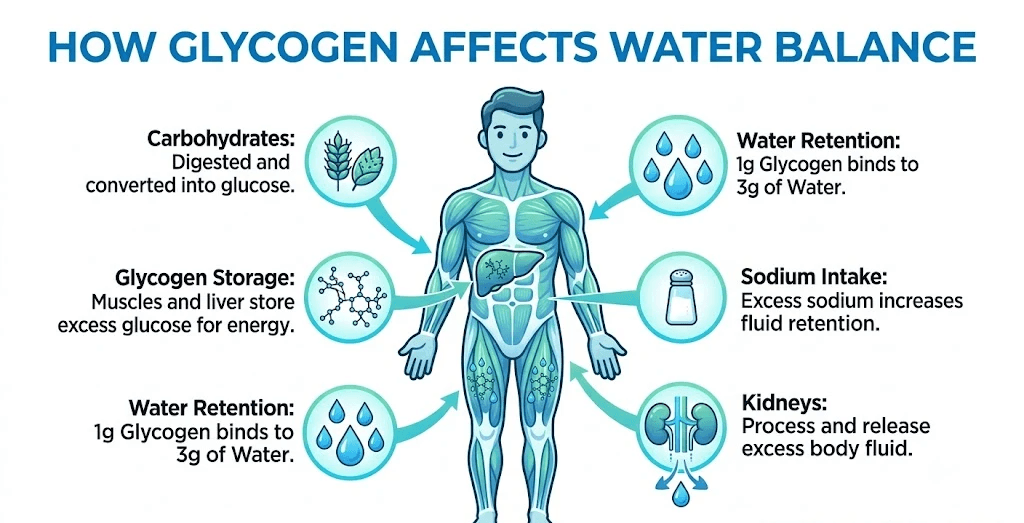
When you eat more than usual over Saturday and Sunday, your body goes through a few completely normal, temporary changes:
Carbs Bring Along Water Friends: When you eat carbohydrates, your body stores them in your muscles and liver as glycogen. For every single gram of glycogen your body stores, it holds onto about 3 to 4 grams of water. So, if you ate extra carbs, your body is simply holding extra water weight.
Salty Foods Hold Fluid: Restaurant meals and party appetizers are usually loaded with sodium. High sodium tells your kidneys to hold in liquid temporarily, causing visible bloating. Once you drink water and return to normal sodium levels, your kidneys flush that water right out.
Your Metabolism Revs Up: Digesting food actually burns calories! This is called the Thermic Effect of Food (TEF). Protein burns the most energy during digestion (up to 30% of its calories), while carbs and fats burn less. Your body also naturally moves more and produces heat after a big meal to burn off excess energy.
To see how hard it actually is to gain permanent body fat over a short weekend, check out the math breakdown below:
Surplus Caloric Intake (2-Day Total) | Observed Scale Weight Shift | Estimated Actual Adipose Gain | Primary Physiological Drivers |
+1,000 kcal (+500 kcal/day) | 1.0 – 2.0 lbs | ~0.28 lbs | Minor glycogen deposition, baseline sodium retention |
+3,500 kcal (+1,750 kcal/day) | 2.5 – 4.5 lbs | ~1.00 lbs | Moderate glycogen saturation, intracellular water expansion |
+7,000 kcal (+3,500 kcal/day) | 5.0 – 7.0 lbs | ~2.00 lbs | Complete glycogen saturation, high sodium extracellular edema |
As you can see, even a huge extra splurge of 3,500 calories over two days results in only about one pound of actual fat. The rest of those extra pounds on the scale are just liquid bloat that will disappear in a few days.
5 Easy Steps to Reset and Get Back on Track

1. Be Kind to Yourself (Put Down the Guilt)
Rebounding starts in your mind. Feeling guilty or ashamed triggers stress hormones that can make you crave more comfort food. Remember: one weekend does not define your fitness journey. Treat yourself like a good friend, let go of the guilt, and move forward.
2. Hydrate Like It’s Your Job
It sounds counterintuitive, but drinking more water is the fastest way to drop water bloat. Plenty of water signals your kidneys that it is safe to release stored sodium and fluid. Pair your water intake with potassium-rich, whole foods—like leafy greens, bananas, and sweet potatoes—to restore your natural fluid balance.
3. Return to Regular, Balanced Meals (No Extreme Fasting!)
One of the biggest mistakes people make after overeating is starving themselves the next day. Skipping meals or living on green juice drops your blood sugar and spikes hunger hormones, setting you up for another binge later in the week. Instead, return straight to a normal, balanced routine filled with lean protein (like tofu, eggs, or fish) and high-fiber veggies. Protein and fiber keep you full and satisfied all day.
4. Get Moving with Light Daily Activity
Do not try to "burn off" your weekend meals with a brutal, two-hour cardio workout. Heavy exercise can inflame tired muscles and increase your appetite even more. Focus instead on Non-Exercise Activity Thermogenesis (NEAT)—simple daily movement like going for a walk, taking the stairs, or doing light yard work. Walking helps your muscles soak up extra circulating blood sugar as glycogen without exhausting you.
5. Keep Tracking Your Food Without the Hassle
Studies show that people often stop logging their food on weekends because manual calorie counting feels tedious, stressful, or guilt-inducing. But skipping tracking hides what is actually happening and makes it harder to stay consistent.
To make tracking totally effortless, use VoCal. Instead of searching through long food databases or weighing every ingredient after a busy day, you simply speak into your phone.
Say: "I had two slices of veggie pizza and a side salad with olive oil dressing," and VoCal’s smart voice technology automatically logs your calories and macronutrients in seconds. Keeping your tracking friction-free helps you maintain honest visibility without any stress or food guilt.
Behavioral Dimension | Reactive Unstructured Recovery | Structured Voice-Assisted Recovery (VoCal) |
Weekend Self-Monitoring | Stops logging due to guilt and complex entry effort | Logged seamlessly via natural voice commands at VoCal. |
Scale Weight Reaction | Emotional distress triggering severe crash diets | Objective evaluation against Early Warning Weight thresholds |
Dietary Adjustment | Extreme carbohydrate or meal elimination | Return to a standard, balanced hypocaloric plan |
Physical Activity | Exhaustive, punitive cardiovascular workouts | Increased daily NEAT and consistent walking routines |
Long-Term Trajectory | Binge-restrict cycles resulting in weight regain | Continuous energy balance yielding sustained weight loss |
The Do’s and Don’ts of Post-Overeating Recovery
Interventional Category | Non-Recommended Strategy | Evidence-Based Clinical Protocol | Physiological Impact |
Caloric Management | Multi-day starvation or severe fasting (<800 kcal/day) | Return to standard moderate deficit (500–1,000 kcal drop) | Prevents hyperphagic hunger spikes and protects resting metabolic rate |
Fluid Regulation | Restricting water to force rapid scale loss | Elevated fluid intake with high-potassium foods | Stimulates renal sodium excretion and resolves fluid edema |
Macronutrient Balance | Total elimination of carbohydrates or dietary fats | High lean protein (20–30% TEF) with whole fiber sources | Maximizes satiety hormones, preserves muscle mass, and boosts TEF |
Dietary Tracking | Abandoning calorie logging due to complexity | Voice-based logging via VoCal. | Preserves self-monitoring accuracy across the full 7-day week |
Frequently Asked Questions
Does a weekend break your diet permanently?
No! A single weekend of overeating will not break your overall diet progress. Long-term weight loss depends on your average energy balance across weeks and months, not 48 hours. Once you return to your regular routine, your weekly energy balance smooths out naturally.
How long does it take for water weight to go away?
Most temporary water weight and bloating resolve within 2 to 4 days after returning to your normal diet, hydrating well, and reducing sodium intake.
Should I fast or skip breakfast the morning after overeating?
Unless you are naturally not hungry, skipping meals out of punishment is not recommended. Starving yourself often leads to low blood sugar and extreme cravings by late afternoon, repeating the cycle of overeating. Eat a balanced breakfast high in lean protein and fiber when you feel hungry.
Should I do extra cardio to burn off weekend calories?
No. Using exercise as punishment creates an unhealthy relationship with physical activity and food. Stick to your normal routine and focus on light daily movement like walking.
Disclaimer: This article is for informational and educational purposes only and is not intended as medical or nutritional advice. Always consult a qualified healthcare provider or registered dietitian before making significant changes to your diet or exercise routine.