
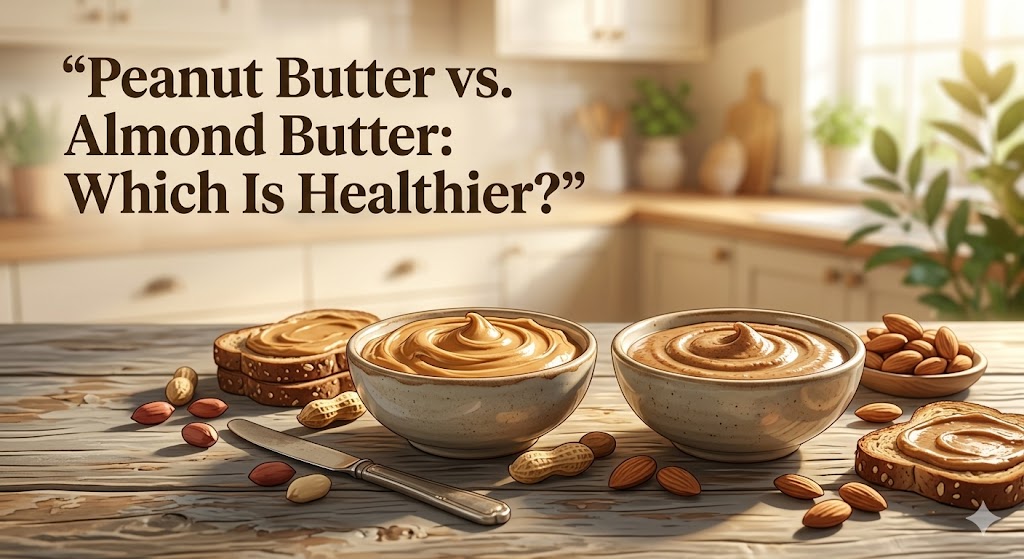
If you’ve ever stood in the grocery store aisle staring down a jar of creamy peanut butter and a jar of pricey almond butter, wondering which one is actually doing your body more favors, you aren't alone. It’s the ultimate pantry showdown.
For decades, peanut butter was the undisputed king of school lunches. But then almond butter arrived on the scene with a "health halo" and a premium price tag. Is it actually better for you, or is it just better marketing?
Let’s break down the "nutty" details so you can choose the best spread for your toast—and your health.
The Quick Comparison: How They Stack Up
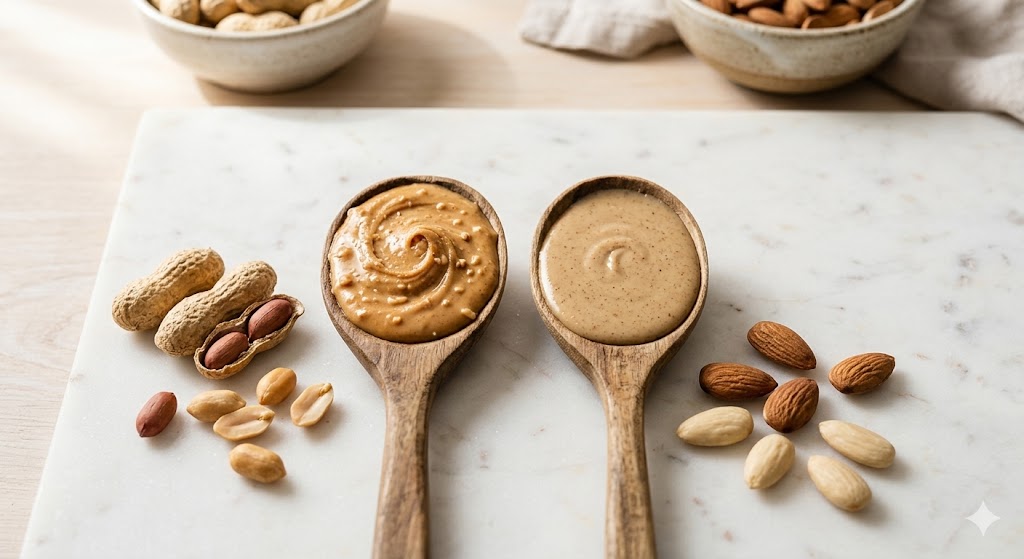
At first glance, these two look like twins. They both pack about 190 to 200 calories per 2-tablespoon serving. If you are strictly counting calories, it’s a total tie. However, when we look under the hood at the vitamins, minerals, and fats, a clear winner starts to emerge.The Fat Factor: Good vs. Great
Both butters are loaded with healthy, unsaturated fats that your heart loves. However, almond butter has a slight edge because it’s higher in monounsaturated fat—the same "gold standard" fat found in olive oil that helps lower "bad" LDL cholesterol.
Peanut butter, on the other hand, is higher in omega-6 fatty acids. While we need some omega-6s, the typical American diet already has plenty, and having too much compared to omega-3s can sometimes lead to inflammation.
The Bottom Line: Almond butter is slightly better for heart health because it has more monounsaturated fats and about 50% less saturated fat than peanut butter.
Nutrient | Almond Butter (per 2 tbsp) | Peanut Butter (per 2 tbsp) | Winner |
Calories | ~190 kcal | ~190 kcal | Tie |
Healthy Fats | High in Monounsaturated fats | High in Polyunsaturated fats | Almond Butter |
Fiber | ~3.3 grams | ~1.6 grams | Almond Butter |
Protein | ~6.7 grams | ~7.1 grams | Peanut Butter |
Vitamin E | ~7.7 mg | ~1.9 mg | Almond Butter |
Calcium | ~111 mg | ~17 mg | Almond Butter |
Magnesium | ~89–100 mg | ~57 mg | Almond Butter |
Fiber and Digestion: The Satiety Secret
If you’re trying to stay full until lunch, almond butter is your best friend. It contains roughly double the fiber of peanut butter. Fiber isn't just great for digestion; it also slows down how fast your body absorbs sugar, preventing those mid-morning energy crashes.
Protein: The Peanut’s Time to Shine
Peanut butter finally takes a win here! If you are looking for a plant-based protein boost, peanuts are technically legumes (like beans), which makes them naturally protein-dense. Peanut butter usually offers about 7 to 8 grams of protein per serving, while almond butter trails slightly behind at 6 to 7 grams.
The "Invisible" Extras: Vitamins and Minerals
This is where almond butter really pulls ahead in the "is it healthier" race.
Vitamin E: Almond butter has about three times more of this powerful antioxidant, which protects your cells and keeps your skin glowing.
Calcium: Want strong bones? Almond butter has seven times more calcium than peanut butter.
Magnesium: Almond butter is also richer in magnesium, a mineral that helps with muscle function and blood sugar control.
Peanut butter isn't empty, though! It’s an excellent source of B vitamins like Niacin (B3), which helps your body turn food into energy.
A Note on Safety: Aflatoxins and Pesticides
One thing many people don’t realize is that peanuts grow underground, making them more susceptible to a mold called aflatoxin. While the FDA monitors this strictly in the US, some health enthusiasts prefer almond butter because tree nuts grow above ground and have a much lower risk of mold contamination.
How to Track Your Nutty Habits
Nut butters are incredibly nutrient-dense, but they are also very calorie-dense. It is remarkably easy to accidentally eat four tablespoons instead of two.
This is where VoCal comes in. Instead of fumbling with a scale or searching through endless database entries while your hands are covered in toast crumbs, you can just say: "I had two tablespoons of natural almond butter on a slice of whole-wheat toast."
Using voice-AI tracking has been shown to be up to 98% accurate, making it much easier to enjoy your favorite spreads without accidentally overdoing it on the calories.
The Final Verdict

So, is almond butter healthier than peanut butter? Technically, yes.
Because it has more fiber, more Vitamin E, and more bone-building minerals, almond butter wins on points. However, peanut butter is still a fantastic, affordable source of protein and healthy fats.
Pro Tip: Look for "Natural" on the label. The healthiest nut butter is always the one that only has one or two ingredients: nuts and maybe a pinch of salt. Avoid brands with added sugars or "hydrogenated oils".
FAQs
Is almond butter better for weight loss?
It can be! The higher fiber content in almond butter helps you feel full for longer, which might prevent overeating later in the day.
Which one is better for keto?
Almond butter is generally preferred for keto because it is slightly lower in net carbs and higher in fiber than peanut butter.
Why is almond butter so much more expensive?
Almonds are more resource-intensive to grow (they need a lot of water!) and the harvesting process is more complex than it is for peanuts.
Disclaimer: This article is for informational purposes and not a substitute for professional medical advice. Always consult a healthcare provider before making dietary changes.