
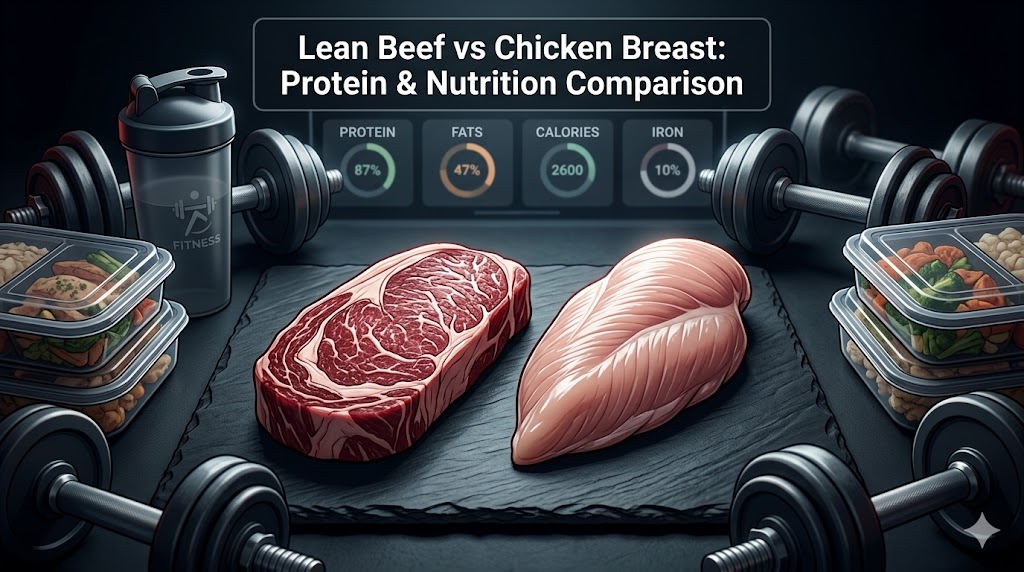
Ah, the eternal grocery store dilemma. You are standing in the meat aisle of your local supermarket, clutching your shopping cart, staring down the pristine packs of poultry and red meat. On one hand, you have the holy grail of bodybuilding—the almighty boneless, skinless chicken breast. On the other, a juicy, marbled lean beef steak that screams "satisfy your inner caveman".
Which one belongs in your meal prep containers if you want to optimize your muscle gains? Let's settle this lean beef vs chicken protein comparison once and for all with a deep, science-backed dive into the data.
To make tracking these heavy-hitting proteins seamless, the voice-based calorie logging system at VoCal offers a hands-free way to log your meals. By utilizing advanced voice recognition, you can instantly log your portion sizes as you cook, helping you crush your daily macro targets without the friction of manual entry.
The Raw Stats: Macronutrients and Calories
First things first: let's look at the raw numbers. If you are counting macros, you already know that every calorie counts, especially when you are balancing a cutting or bulking phase. To keep this fair, we are comparing 100 grams (about 3.5 ounces) of cooked skinless chicken breast to 100 grams of cooked USDA-certified lean top sirloin steak.
Here is how they stack up side-by-side in our primary macro showdown:
Nutrient (per 100 g cooked serving) | Cooked Lean Chicken Breast | Cooked Lean Beef (Top Sirloin) |
Energy (Calories) | 165 kcal | 177 kcal |
Protein | 31.02 g | 30.80 g |
Total Fat | 3.57 g | 6.50 g |
Saturated Fat | 1.01 g | 1.90 g |
Carbohydrates | 0.00 g | 0.00 g |
Chicken Breast is the undisputed king of ultra-lean protein. It is virtually pure protein with almost zero fat, making it the go-to option for anyone on a tight calorie budget trying to get shredded.
Lean Beef (Top Sirloin) packs a tiny bit more fat, but it is still USDA-approved as "lean" (meaning under 10 grams of total fat per serving). This makes top sirloin an absolute powerhouse for fueling heavy lifting sessions and supporting your energy needs during a clean bulk.
The Bottom Line: Chicken breast is highly protein-dense with minimal fat, making it perfect for calorie-restricted diets. Lean beef provides a slightly higher fat and calorie profile, serving as an effective option to meet elevated energy requirements during muscle-building phases.
The Amino Acid Showdown: The Leucine Trigger
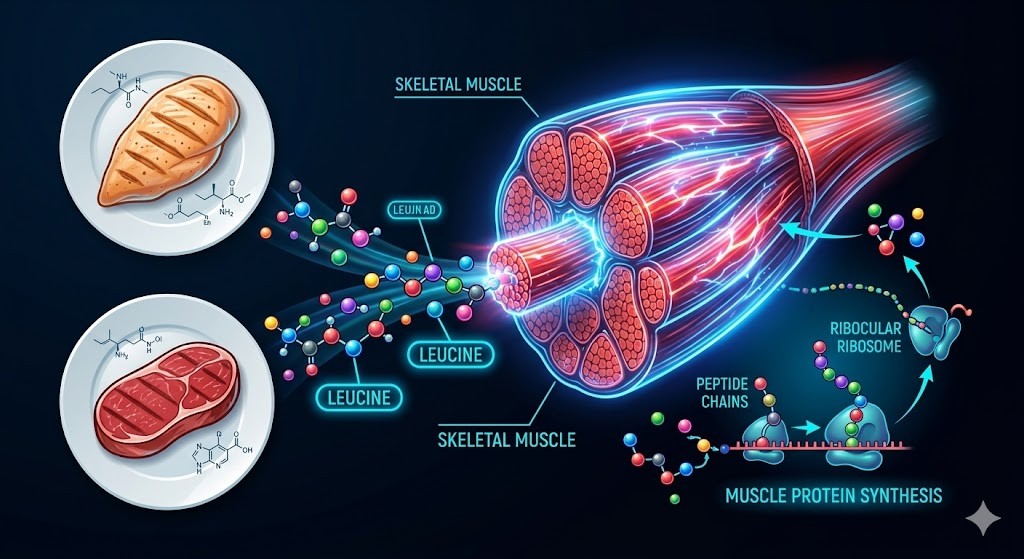
Now let's talk about the actual building blocks: amino acids. To build muscle, you need complete proteins that supply all nine essential amino acids. But the absolute boss of muscle protein synthesis is an amino acid called leucine.
Think of leucine as the key that turns on your body’s muscle-building engine (the mTOR pathway). To trigger this engine, you need roughly 2 to 3 grams of leucine per meal.
Amino Acid (mg per 100 g cooked) | Cooked Lean Chicken Breast | Cooked Lean Beef (Top Sirloin) |
Leucine | 2500 mg | 2600 mg |
Lysine | 3083 mg | 2394 mg |
Valine | 1660 mg | 1389 mg |
Isoleucine | 1573 mg | 1274 mg |
Threonine | 1438 mg | 1119 mg |
The data shows that both chicken breast and lean beef easily crush the leucine threshold required to trigger muscle growth. Chicken breast has a slight edge in lysine and valine, while beef offers an abundance of non-essential amino acids like glycine and proline, which help support your joints and connective tissues during heavy lifting.
Because chicken breast is lower in fat, it digests slightly faster. This makes it great for a quick post-workout recovery meal, though beef does an incredible job of keeping you full and maintaining a positive nitrogen balance for hours.
The Bottom Line: Both lean beef and chicken breast are exceptional sources of leucine and other essential amino acids, capable of fully stimulating muscle protein synthesis. Neither source holds a significant physiological advantage over the other regarding amino acid delivery.
Micronutrients: The Secret Sauce for Performance
Protein is great, but muscle building isn't just about macronutrients. Your body needs a solid foundation of vitamins and minerals to keep your energy levels high, your red blood cells oxygenated, and your recovery on point. This is where beef steps up and flexes its muscles.
Take a look at the key micronutrient differences below:
Micronutrient (per 100 g cooked serving) | Cooked Lean Chicken Breast | Cooked Lean Beef (Top Sirloin) |
Heme Iron | 0.45 mg | 1.92 mg |
Zinc | 0.90 mg | 5.70 mg |
Vitamin B12 | 0.21 mcg | 1.47 mcg |
Potassium | 343.00 mg | 406.00 mg |
Iron is a key player in carrying oxygen to your working muscles. The heme iron in lean beef is highly bioavailable, meaning your body absorbs it much more easily than plant-based iron. More oxygen to your muscles means better endurance and less fatigue during high-volume training days.
Zinc and B12 are crucial for cellular repair, testosterone production, and keeping your central nervous system firing smoothly. Beef delivers more than six times the zinc and seven times the B12 of chicken breast, giving you a massive recovery advantage.
The Bottom Line: Lean beef possesses a clear micronutrient advantage over chicken breast, offering substantially higher levels of heme iron, zinc, and vitamin B12. These micronutrients are critical for sustaining cellular repair, oxygen transport, and energy production during heavy training cycles.
The Creatine Factor: Powering Your Lifts
Creatine is the undisputed champion of gym supplements, famous for giving you that explosive power during heavy bench presses or squats. But did you know you can get it naturally from your dinner?
Both beef and chicken contain natural stores of creatine, but their concentrations differ:
Pork and Beef: These are the absolute richest whole-food sources of creatine among land animals, providing approximately 4.5 to 5.0 grams of creatine per kilogram of raw meat. A standard 4-ounce cooked steak nets you about 511 milligrams.
Chicken Breast: Chicken contains slightly lower creatine levels, averaging roughly 3.0 to 4.0 grams per raw kilogram. A typical cooked 4-ounce serving of chicken breast delivers approximately 443 milligrams.
Keep in mind that cooking can destroy 30% to 50% of this natural creatine. To keep those precious muscle-powering compounds intact, gentler cooking methods like baking, steaming, or poaching are highly recommended over high-heat grilling.
To fully saturate your muscles and get the performance-enhancing benefits of creatine, you generally need 3 to 5 grams daily. Since you would have to eat over two pounds of meat a day to hit that target, combining these whole foods with a targeted creatine supplement is the smartest play.
The Bottom Line: Lean beef provides higher levels of natural creatine than chicken breast, supporting cellular energy production. However, because cooking degrades a portion of this compound, neither meat can fully saturate muscle stores on its own, making supplementation a practical option.
What Does Science Say? (The Clinical Trials)
You might be wondering: does eating beef actually pack on more muscle than chicken in real life? Fortunately, scientists have put this exact question to the test.
In a rigorous 8-week study, researchers had active men and women undergo an intense resistance training program. One group supplemented with beef protein after workouts, another took chicken protein, and a third took whey.
The results were a complete draw:
Beef Protein Group: Lean body mass increased significantly from 51.68 kg to 54.65 kg.
Chicken Protein Group: Lean body mass jumped from 52.97 kg to 54.89 kg.
Whey Protein Group: Lean body mass rose from 52.48 kg to 54.96 kg.
Every group experienced nearly identical increases in lean body mass, significant fat loss, and massive strength gains in their bench press and deadlifts.
Another clinical feeding trial conducted by Purdue University evaluated whether emphasizing lean beef over non-red meat sources like chicken improved muscle and tendon adaptations during a 12-week lifting program. The study concluded that emphasizing lean beef did not produce superior muscle size or strength adaptations compared to chicken.
Ultimately, once your daily protein intake is sorted out, your muscles do not care where the high-quality protein comes from.
The Bottom Line: Peer-reviewed clinical trials demonstrate that lean beef and chicken breast are equally effective at supporting muscle hypertrophy, fat loss, and strength adaptations when paired with resistance training. The choice between them should be guided by your individual caloric goals, micronutrient needs, and personal taste.
How to Track Your Gains with VoCal
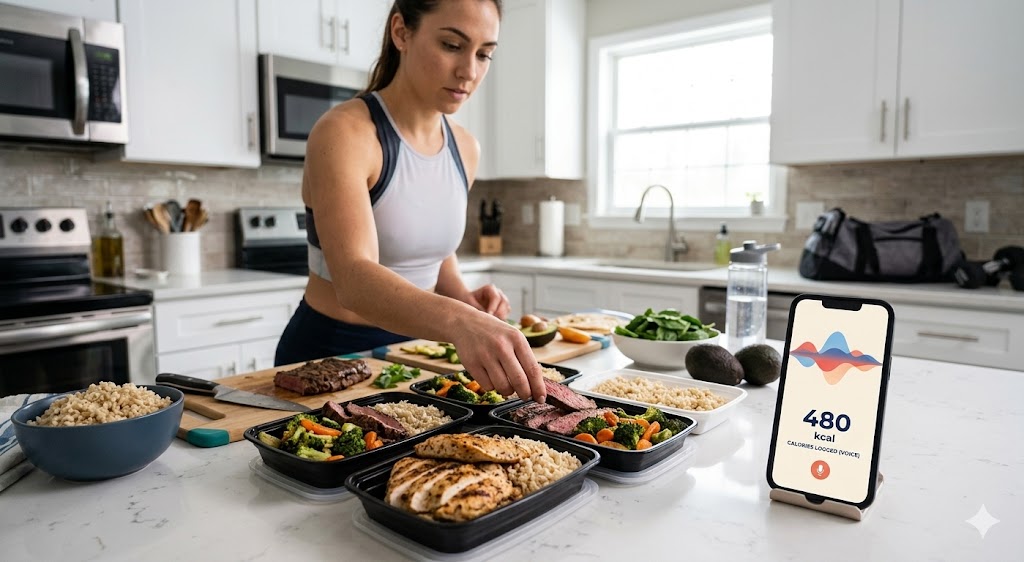
Consistency is the absolute secret to building a great physique. But let's be real—manually typing in every single ounce of top sirloin or chicken breast into a tracking app is a chore that gets old fast.
That is where VoCal makes macro tracking completely effortless. Instead of scrolling through endless databases to find the right cut, you can simply tell your phone:
"I just ate six ounces of grilled chicken breast" or "Log eight ounces of broiled sirloin steak."
The voice-activated tracker automatically processes your portion sizes, matches them with the correct USDA database values, and logs your macros instantly. This keeps your records 100% accurate while saving you time and mental energy for your training.
Frequently Asked Questions
Is beef or chicken better for building muscle?
Both are complete, highly bioavailable proteins that are equally effective at building muscle when your total daily protein and calorie goals are matched. Chicken breast is incredibly efficient for low-calorie cutting phases because of its low fat content. Lean beef, on the other hand, provides higher levels of essential recovery minerals like iron, zinc, and B12, making it fantastic for bulking and building strength.
Does cooking reduce the creatine or protein content of meat?
Cooking does not reduce the protein content of meat, though it causes water loss that slightly concentrates the protein per gram. However, high-temperature cooking methods like grilling or frying can degrade 30% to 50% of the natural creatine content. Using gentler cooking methods, such as baking, steaming, or poaching, helps preserve these natural energy-boosting compounds.
How much protein is required daily to maximize muscle growth?
If you are lifting weights regularly, clinical research suggests aiming for a daily protein intake of approximately 1.6 grams of protein per kilogram of body weight (about 0.73 grams per pound) to fully maximize muscle protein synthesis and lean mass gains.
How does the fat content of lean beef compare to chicken breast?
Cooked skinless chicken breast is exceptionally lean, containing about 3.57 grams of fat per 100 grams. USDA-certified lean beef contains less than 10 grams of total fat and 4.5 grams or less of saturated fat per 100 grams. While beef has more fat than chicken, opting for extra-lean cuts like top sirloin allows you to manage your fat intake while benefiting from beef's rich mineral profile.
Disclaimer: The information presented in this article is for educational and informational purposes only. It does not constitute personalized medical or dietary advice. Individuals should consult a healthcare professional or registered dietitian before starting any new diet or intensive exercise program.