

Imagine waking up to the rich aroma of a warm, sizzling omelette. It looks luxurious, tastes amazing, and keeps you energized all morning long. But if you are watching your weight, you might stop and wonder: is omelette good for weight loss? Or are omelette calories secretly holding back your progress?
The short answer? Yes, omelettes are fantastic for weight loss! In fact, eggs are one of nature's ultimate weight-loss secret weapons. However, depending on how you build your omelette, its calorie count can range anywhere from a lean 125 calories to a whopping 700+ calories.
In this dietitian guide, we break down the science of why eggs help burn fat, reveal the hidden calories in popular toppings, and share simple hacks to build a massive, satisfying omelette that melts weight away.
The Science of Fullness: Why Eggs Beat Morning Cravings
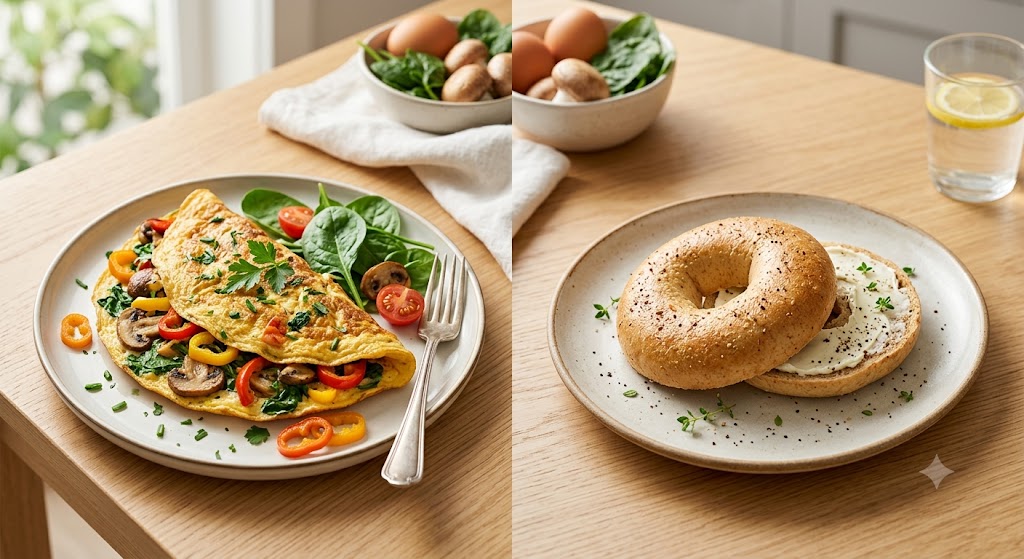
When you're trying to drop a few pounds, staying full is half the battle. This is where the power of protein comes in.
When you eat an omelette, your body gets a healthy dose of high-biological-value protein. Protein triggers your digestive system to release satiety hormones like PYY and GLP-1 while dialing down ghrelin (your body's primary "I'm hungry!" hormone).
Eating an egg-based breakfast helps you naturally eat fewer calories at lunch and dinner without feeling deprived.
Egg Breakfast vs. Bagel Breakfast (8-Week Clinical Trial)
Weight Loss: 65% greater weight loss in the egg group compared to the bagel group.
Waistline Reduction: 34% greater reduction in waist circumference in the egg group.
Fullness Factor: Higher overall satisfaction and lower hunger throughout the day.
In a well-known clinical study, researchers put two groups on the same energy-restricted diet. One group ate an egg breakfast, while the other ate a bagel breakfast with equal calories. After eight weeks, the egg group lost 65% more weight and had a 34% greater reduction in waist circumference!
The "Thermic Effect" Bonus
Did you know your body actually burns calories just digesting your food? This is called the Thermic Effect of Food (TEF).
Protein: Your body burns 20% to 30% of protein calories just processing it.
Carbs: Your body burns only 5% to 10%.
Fats: Your body burns a tiny 0% to 3%.
Because eggs are rich in protein, your metabolism gets a nice little boost right after breakfast.
Decoding Omelette Calories: What's Really in Your Pan?

To understand how your breakfast impacts your weight loss, let's look at standard nutritional data from USDA FoodData Central:
1 Large Whole Egg: 78 calories, 6.3g protein, 5.3g fat.
1 Large Egg White: 17 calories, 3.6g protein, 0g fat.
1 Large Egg Yolk: 55 calories, 2.7g protein, 4.5g fat.
The egg itself isn't what makes an omelette heavy—it's the extras! Adding just a single tablespoon of butter or cooking oil tosses an extra 100 to 120 calories straight into your pan.
Here is how different omelette styles stack up:
Omelette Style | Key Ingredients & Prep | Calories (kcal) | Protein (g) | Fat (g) | Carbs (g) |
Basic 2-Whole Egg Base | 2 Large Eggs + zero-cal spray | 156 | 12.6 | 10.6 | 0.8 |
Butter-Cooked Classic | 2 Large Eggs + 1 tbsp butter | 258 | 12.7 | 22.1 | 0.8 |
Lean Egg White & Veggie | 4 Egg Whites + spinach, mushrooms + 1 tsp oil | 125 | 16.2 | 4.7 | 4.2 |
High-Volume Hybrid | 2 Whole Eggs + 2 Egg Whites + veggies + 1 tsp oil | 260 | 22.4 | 15.2 | 4.5 |
Classic Loaded Western | 3 Whole Eggs + 1 oz cheddar + 2 oz ham + 1 tbsp butter | 572 | 34.8 | 45.2 | 3.5 |
Whole Eggs vs. Egg Whites: What About Cholesterol?
For years, people avoided egg yolks out of fear that cholesterol would harm their heart health. But modern science has set the record straight!
The Dietary Guidelines for Americans removed the old 300 mg daily restriction on dietary cholesterol. Why? Because saturated fats and trans fats in your diet have a far bigger impact on your blood cholesterol than the natural cholesterol found in eggs.
A 16-week study published in PMC Nutrients showed that people who ate whole eggs had better overall diet quality, improved HDL ("good") cholesterol, and higher levels of essential nutrients like choline compared to those eating only egg whites.
Dietitian Tip: Unless your doctor specifically advises you to limit dietary cholesterol due to a specific condition, whole eggs are a nutrient powerhouse that belong in a healthy diet!
4 Dietitian Hacks for a High-Volume Weight Loss Omelette

Want to eat a huge plate of food while keeping omelette calories low? Use these four simple dietitian hacks:
1. The Hybrid Egg Ratio
Instead of using three or four whole eggs, try mixing 2 whole eggs + 2 egg whites. You keep all the rich flavor and nutrients of the yolks while doubling your protein count for only ~210 total calories!
2. Pile on Non-Starchy Veggies
Vegetables add physical volume to your stomach, tricking your brain into feeling full for almost zero extra calories:
Spinach: 2 cups of raw spinach adds just 14 calories.
Sliced Mushrooms: 1/2 cup adds under 10 calories.
Bell Peppers & Onions: 1/2 cup adds around 15–20 calories.
3. Make Smart Ingredient Swaps
Swap out high-calorie, high-fat additions for lighter options that pack just as much flavor:
Addition Category | High-Calorie Option | Low-Calorie Swap | Calorie Savings |
Cooking Fat | 1.5 tbsp Unmeasured Butter (150 kcal) | 1 tsp Olive Oil or Cooking Spray (0-40 kcal) | 110 - 150 kcal |
Meat Fillers | 2 oz Crispy Bacon / Pork Sausage (200-250 kcal) | 2 oz Sliced Deli Turkey (54 kcal) | 140 - 190 kcal |
Cheese | 1.5 oz Processed Mild Cheddar (170 kcal) | 0.5 oz Aged Sharp Parmesan or Feta (50 kcal) | 120 kcal |
Side Dish | Fried Hash Brown Potatoes (220 kcal) | 2 cups Fresh Spinach + Mushrooms (24 kcal) | 196 kcal |
4. Watch the Added Salt
If you use ham or bacon, keep an eye on sodium. Spice up your omelette with fresh herbs, black pepper, red pepper flakes, or garlic powder instead of heavy salt.
Tracking Omelette Calories Effortlessly with VoCal
We’ve all been there: you whip up a custom omelette with two eggs, two egg whites, a handful of spinach, a few mushrooms, a teaspoon of olive oil, and a dash of feta cheese.
Opening a traditional calorie app and manually searching for six different ingredients one by one is frustrating. It’s easy to guess—or skip tracking altogether!
That is where VoCal makes life simple.
Instead of typing and searching endless dropdown menus, you just speak naturally into your phone:
"I ate an omelette made with two whole eggs, two egg whites, spinach, mushrooms, and a teaspoon of olive oil."
Using smart voice AI paired directly with verified USDA nutritional data, VoCal instantly breaks down every single ingredient, calculates the precise macros, and logs your calories in seconds. Tracking your weight loss goals has never been this easy.
The Final Takeaway
So, is omelette good for weight loss? Absolutely! When built with intention, an omelette is one of the most effective, nutrient-packed meals to keep you full and energized on a weight-loss journey.
Control your cooking fats, combine whole eggs with egg whites, load up on colorful veggies, and let VoCal handle your calorie logging with simple voice commands!
Frequently Asked Questions (FAQs)
How many calories are in a 2-egg omelette?
A plain 2-egg omelette cooked with a light spray of cooking oil has around 156 calories. If you cook those two eggs in a tablespoon of butter, the calorie count jumps to about 258 calories.
Is an omelette good for weight loss if I eat it every day?
Yes! Eating an omelette daily is a fantastic way to hit your protein targets, manage hunger, and keep your calorie intake under control. Just pay attention to cooking oils, butter, and cheese additions so total calories stay aligned with your daily goals.
Should I eat egg whites or whole eggs to lose weight?
Both work great! Egg whites are ultra-low in calories and pure protein, making them ideal for high-volume eating. Whole eggs contain healthy fats and essential nutrients like choline that keep you feeling satisfied. Mixing two whole eggs with two egg whites gives you the perfect balance!
What are the best low-calorie veggies for an omelette?
Spinach, mushrooms, bell peppers, tomatoes, and onions are top choices. They add bulk, fiber, and delicious flavor for under 25 calories per serving!
Disclaimer: This is for informational purposes only. For medical advice or diagnosis, consult a professional.