
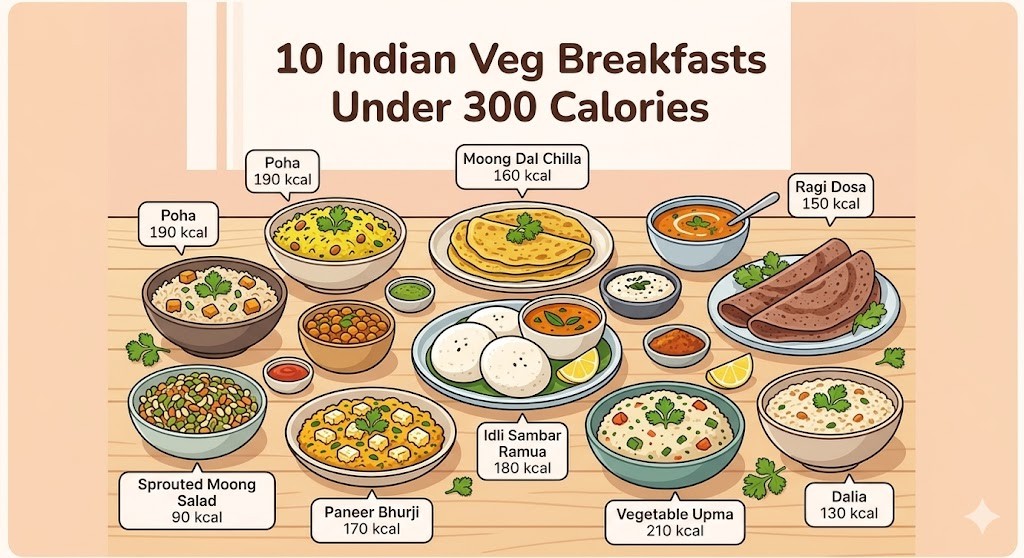
Struggling to lose weight while missing your favorite Indian breakfast? We get it! In a world of buttery parathas and deep-fried vadas, finding a healthy "middle ground" can feel like a mission. But here is the good news: you don't have to sacrifice taste for your waistline.
According to the Indian Council of Medical Research (ICMR) and the National Institute of Nutrition (NIN), keeping your breakfast around the 300-calorie mark is a metabolic "sweet spot" that helps manage blood sugar and keeps you full until lunch.
Whether you are a busy professional or a home chef, these ten vegetarian options are protein-packed, fiber-dense, and delicious. Plus, tracking them is easier than ever with VoCal, the voice-activated app that lets you log your "poha" or "chilla" in 11 Indian languages just by speaking.
Why 300 Calories? The Satiety Secret
Not all calories are created equal. When you choose plant-based proteins and complex fibers, your body actually burns more energy just trying to digest them! This is known as the Thermic Effect of Food (TEF) .
Macronutrient | Thermic Effect of Food (TEF) | Satiety Impact | Blood Glucose Response |
Plant-Based Proteins | High (20-30%) | High (Decreased Ghrelin) | Minimal/Stable |
Complex Fiber | Moderate (5-10%) | High (Mechanical Fullness) | Slow/Sustained |
Refined Carbohydrates | Low (0-3%) | Low (Insulin Spike) | Rapid Rise/Crash |
Healthy Fats | Very Low (0-3%) | Moderate (Slow Emptying) | Indirect Influence |
1. Moong Dal Chilla: The Protein Powerhouse
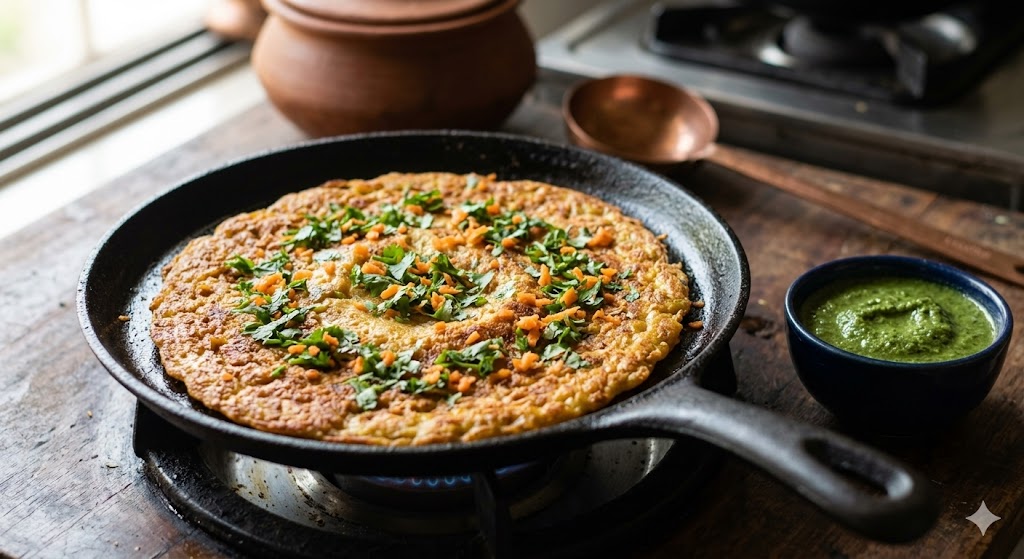
Often called the "gold standard" of weight-loss breakfasts, these savory crepes are made from ground green gram. They are packed with folate (essential for cell repair) and antioxidants.
Calories: ~128-150 kcal per serving
Protein Punch: ~7.5g
2. Besan Chilla: The "Vegetarian Omelet"
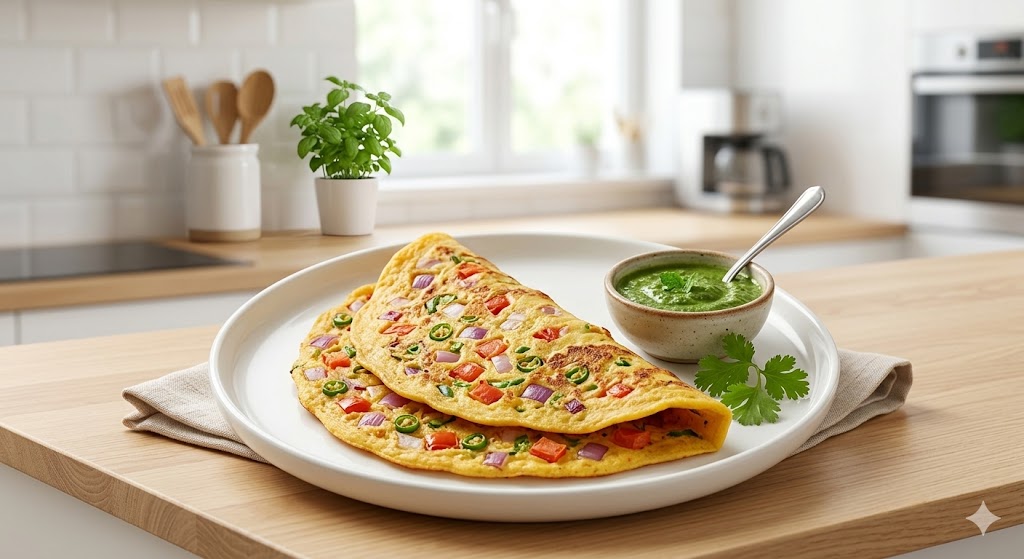
Made from chickpea flour (besan), this is a savior for those who want an omelet-like texture without the eggs. It has a super-low Glycemic Index (GI) of 28, which means no mid-morning energy crashes .
Calories: ~180 kcal per piece
Why it works: High in iron and magnesium for steady energy .
3. Ragi Dosa: The Bone Builder
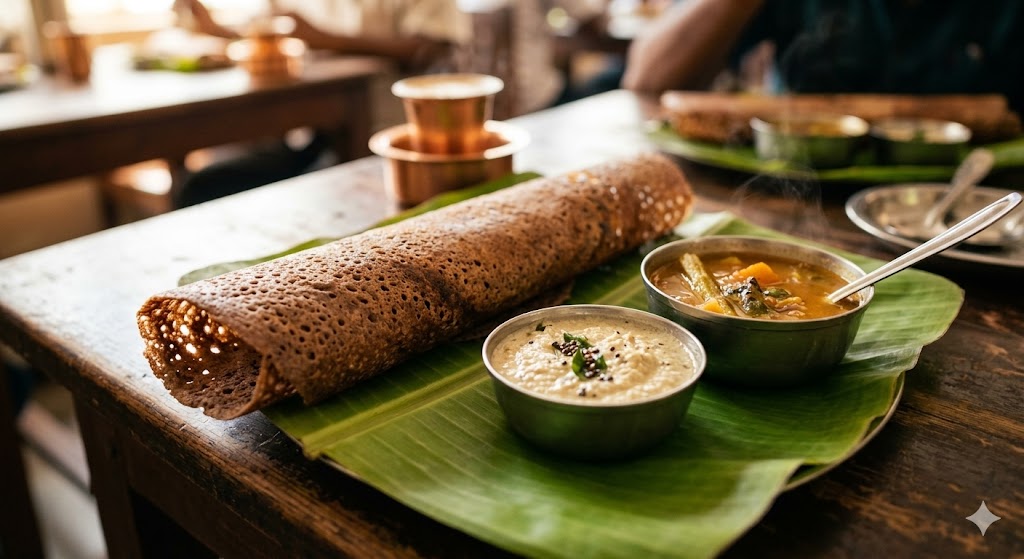
Ragi (finger millet) is the ultimate "super-grain." It contains significantly more calcium than most other cereals and is great for bone health .
Calories: ~132 kcal per dosa
Why it works: Rich in fiber (up to 20%) to keep you full for hours .
4. Vegetable Poha: The Iron-Rich Classic
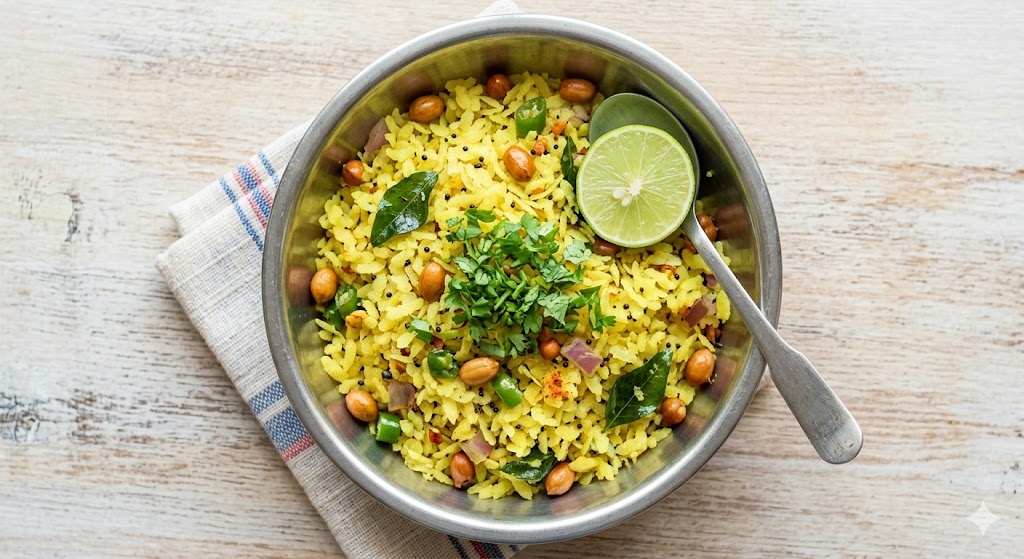
Poha (flattened rice) is light, easy to digest, and a staple in Western India. Pro tip: Squeeze some lemon on top! The Vitamin C helps your body absorb the iron in the poha.
Calories: ~250-290 kcal per serving
Why it works: Low in fat but high in volume, so you feel like you've had a big meal without the calorie guilt.
5. Idli with Sambar: The Probiotic Champion
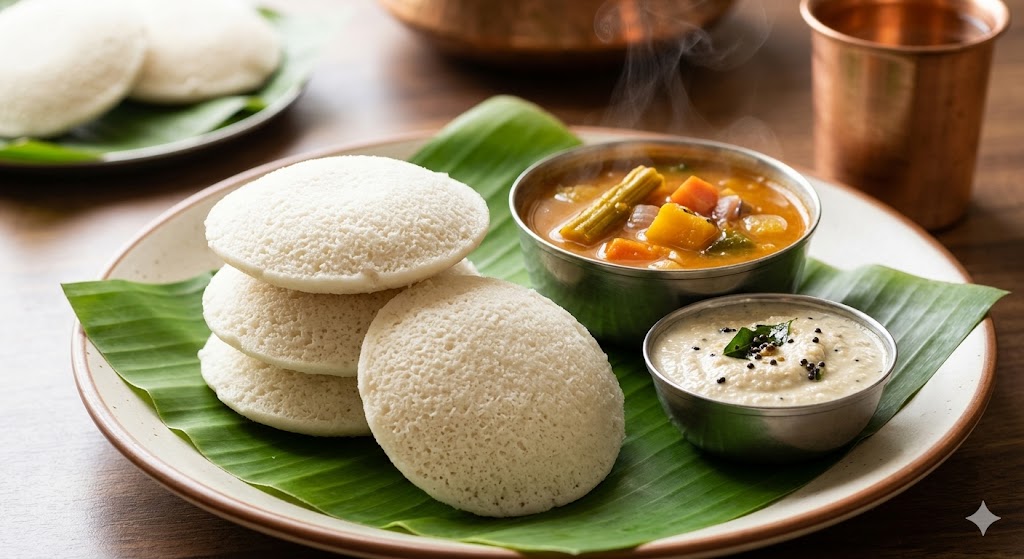
Steamed rice cakes (idli) paired with lentil soup (sambar) are a match made in health heaven. The fermentation process makes the nutrients more bioavailable and supports your gut microbiome.
Calories: ~200-250 kcal (2 idlis + 1 bowl sambar)
Why it works: A "complete protein" containing all essential amino acids.
6. Vegetable Upma: The Satiety Staple
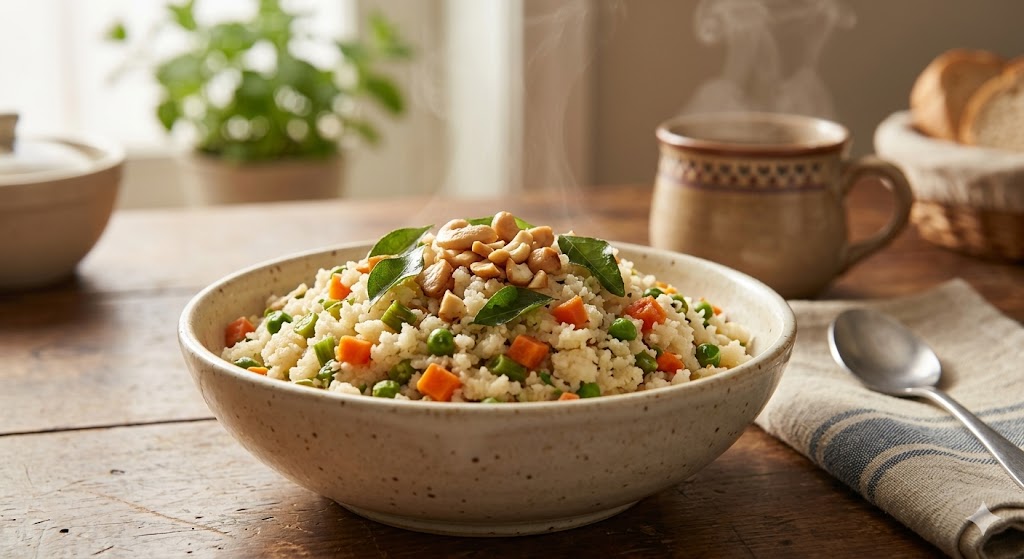
Traditionally made with semolina (suji), upma provides a steady release of energy. Loading it with carrots, peas, and beans lowers its glycemic load significantly.
Calories: ~210-250 kcal per bowl
Diet Tip: Swap suji for oats to boost the fiber content even further!
7. Dalia Khichdi: The Fiber Anchor
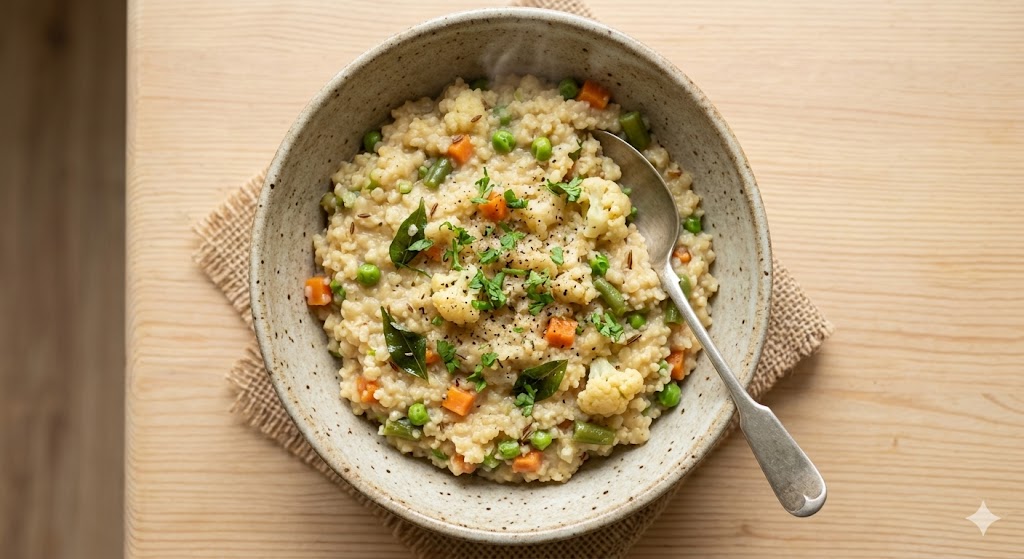
Dalia (broken wheat) is a high-fiber heavyweight. It is often recommended by clinical nutritionists to prevent constipation during weight loss and to keep you mentally sharp.
Calories: ~120-145 kcal per bowl
Why it works: Low GI prevents insulin spikes that cause fat storage.
8. Sprouted Moong Salad: The Enzyme Booster
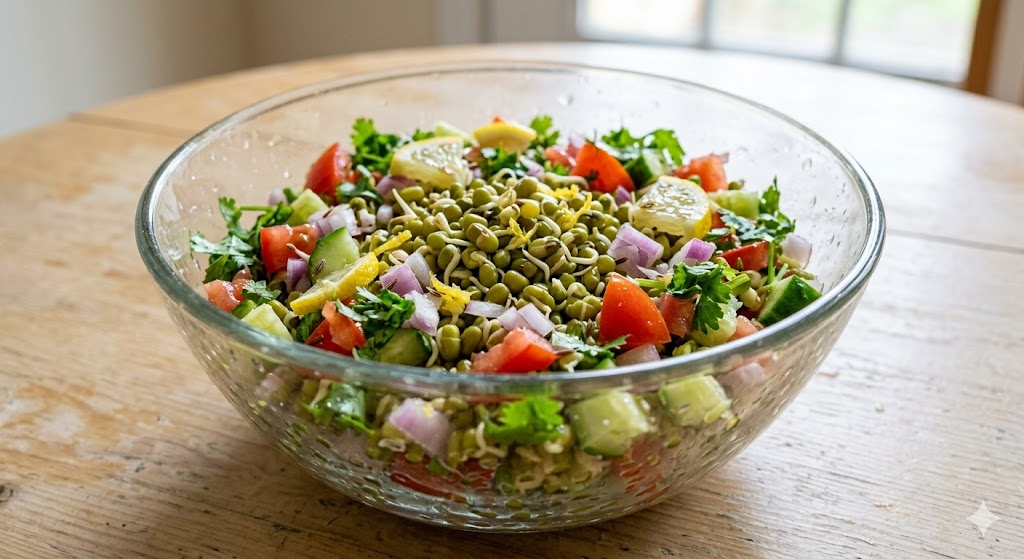
If you have a busy morning, this "no-cook" option is for you. Sprouting moong beans increases their Vitamin C and A levels while reducing "anti-nutrients" like phytic acid.
Calories: ~120-160 kcal per cup
Why it works: Maximum nutrients with zero added oil.
9. Paneer Bhurji & Roti: The Muscle Preserver
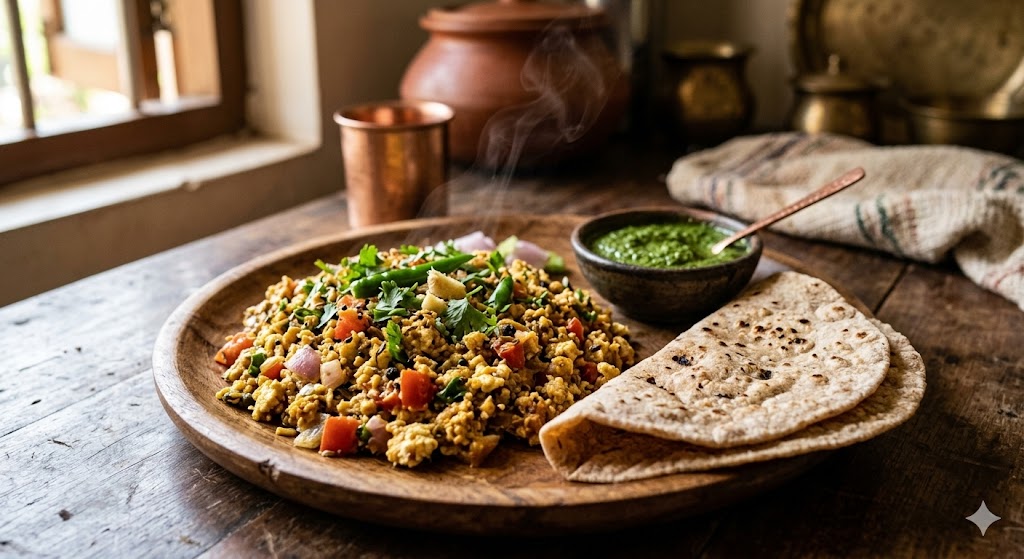
Paneer (cottage cheese) is the best source of high-quality protein for vegetarians. Because it contains casein (a slow-digesting protein), it stops hunger in its tracks.
Calories: ~250-300 kcal
Protein Punch: ~18-20g
10. Mixed Millet Dosa: The Future of Breakfast
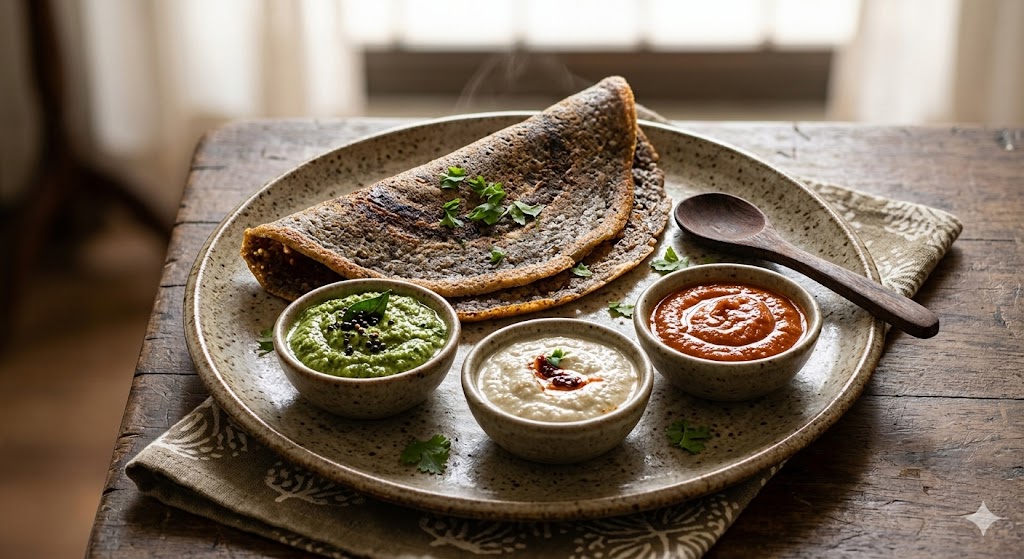
Why stick to one grain when you can have many? Mixing Jowar, Bajra, and Ragi gives you a broad spectrum of minerals and antioxidants.
Calories: ~120-160 kcal per dosa
Why it works: Naturally gluten-free and heart-friendly.
Log Your Breakfast in 15 Seconds with VoCal
Consistency is the hardest part of any diet. Typing "one small bowl of dalia with half a spoon of ghee" into an app every morning is exhausting. That is why VoCal was built .
Instead of searching through Western-biased databases, you just talk to the app. Whether you speak Hindi, Tamil, Telugu, Bengali, or English, VoCal understands your regional meals and logs them with 98% accuracy in seconds . No typing, no photos—just your voice.
Your 7-Day Metabolic Rotation Plan
Day | Breakfast Choice | Primary Benefit | Caloric Target |
Monday | Vegetable Poha with Peanuts | Iron & Healthy Fats | 250 kcal |
Tuesday | Moong Dal Chilla | Protein & Folate | 260 kcal |
Wednesday | Oats Upma with Veggies | Beta-Glucan Fiber | 230 kcal |
Thursday | Ragi Dosa with Chutney | Calcium & Iron | 200 kcal |
Friday | Besan Chilla with Spinach | Magnesium & Fiber | 280 kcal |
Saturday | Sprouted Moong Salad | Active Enzymes | 150 kcal |
Sunday | Paneer Bhurji on Wheat Toast | B12 & Protein | 300 kcal |
FAQs
1. What is the lowest calorie Indian breakfast?
Steamed Idli is the winner at roughly 39-40 calories per piece. Pairing two idlis with a bowl of sambar keeps you well under 250 calories.
2. Can I eat parathas on a 300-calorie diet?
Yes, but portion control is key. A plain roti or a small vegetable-stuffed paratha without excess oil or butter usually lands between 150-200 calories, leaving room for a side of curd.
3. Why is protein important in the morning?
Protein has a higher "Thermic Effect," meaning your body burns more calories to process it . It also suppresses ghrelin (the hunger hormone), stopping those 11 AM cravings .
Disclaimer: This content is for informational purposes only. Please consult a healthcare professional before starting any new weight-loss or dietary regimen.