

Let’s be honest: there’s nothing quite like a well-stacked sandwich. It’s the ultimate grab-and-go meal. But if you’re trying to keep an eye on your nutrition, you might be wondering how your lunchtime favorite stacks up. Specifically, how do roast beef sandwich calories fit into your daily goals?
Depending on how you build your sandwich, the total count can range from a light 230 calories to a hefty 600-plus calories. The secret to keeping it healthy lies entirely in your ingredient blueprint. Let's break down the calories, macros, and hidden saboteurs so you can build the ultimate guilt-free masterpiece.
Sizing Up the Ingredients: The Sandwich Blueprint
Every great sandwich is a team effort. But some players bring a lot more calories to the table than others. To understand your roast beef sandwich calories, let's look at how the individual ingredients compare based on USDA FoodData Central data.
Ingredient | Portion Size | Calories | Protein | Total Fat | Carbs | Sodium |
Whole Wheat Bread | 2 slices (64g) | 161 | 8g | 2.2g | 27.3g | 291mg |
White Bread | 2 slices (58g) | 154 | 5.2g | 1.9g | 28.6g | 284mg |
Deli Roast Beef | 2 oz (56g) | 66 | 10g | 2g | <1g | 250-500mg |
Home-Roasted Beef | 2 oz (56g) | 125 | 21g | 4g | 1g | 967mg |
Swiss Cheese | 1 oz (28g) | 112 | 7.7g | 8.8g | 0.4g | 53mg |
Cheddar Cheese | 1 oz (28g) | 114 | 6.5g | 9.5g | 1g | 185mg |
Mayonnaise | 1 tbsp (14g) | 100 | 0g | 11g | 0g | 70mg |
Prepared Horseradish | 1 tsp (5g) | 10 | 0g | 1g | 1g | 0mg |
Horseradish Sauce | 1 tbsp (15g) | 60 | 0g | 5g | 3g | 90mg |
Bottom Line
Your choice of bread, cheese, and condiments can easily double the calories of your sandwich. Swapping white bread for whole wheat and using low-calorie spreads keeps your meal light and nutrient-dense.
The Bread Debate: Whole Wheat vs. White
Bread is the foundation of your sandwich, but it’s also where glycemic control comes into play.
Two slices of whole wheat bread come in at about 161 calories and deliver 3.8 grams of dietary fiber. Fiber is your best friend here—it slows down digestion, keeps your blood sugar stable, and stops you from reaching for the snack drawer an hour later.
Refined white bread might have a slightly lower calorie count on paper, but it lacks fiber. This means your body processes it quickly, leading to a rapid spike in insulin and an equally rapid crash in energy.
The Meat of the Matter: Deli-Sliced vs. Home-Cooked
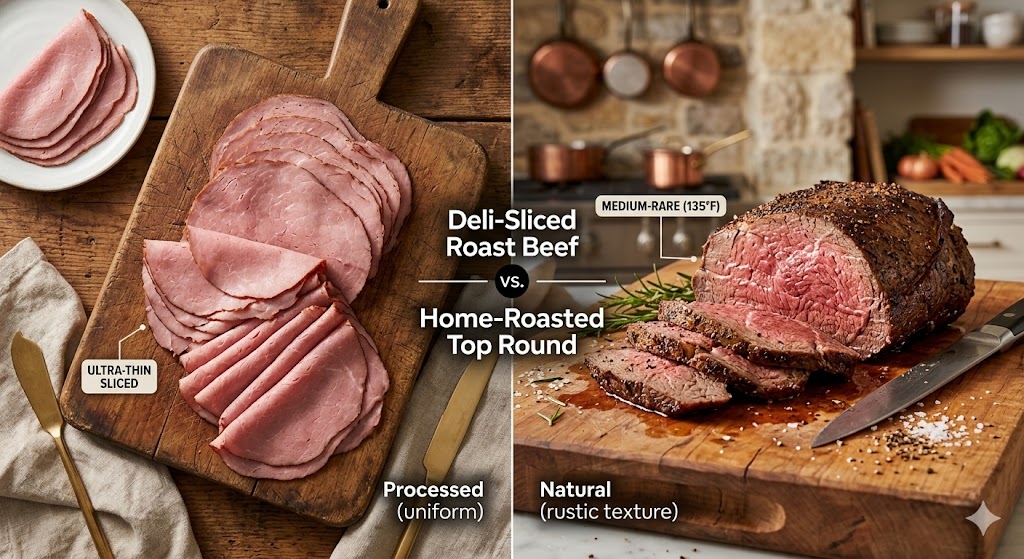
When it comes to the star of the show—the roast beef—you have two main routes: the deli counter or your own kitchen oven.
A standard 2-ounce serving of deli-sliced roast beef is incredibly lean, providing just 66 calories and a solid 10 grams of protein. Because roast beef is naturally highly flavorful, it’s often easier to find lower-sodium options at the deli counter than with ham or turkey.
If you prefer to cook at home, fresh-roasted lean beef top round jumps to 125 calories for the same 2 ounces, but it packs an amazing 21 grams of protein. Going the DIY route also lets you bypass the synthetic nitrates and nitrites often found in prepackaged deli meats, which have been linked to cardiovascular risks and colorectal cancers.
How does roast beef stack up against other healthy deli meats? Let’s compare them head-to-head:
Deli Meat (2 oz serving) | Calories | Protein | Fat | Sodium Range |
Roast Beef | 66 | 10g | 2g | 250-500mg |
Turkey Breast | 60 | 12g | <1g | 330-600mg |
Chicken Breast | 60 | 12g | <1g | 250-520mg |
Lean Ham | 60 | 9g | 2g | 300-600mg |
Say Cheese: Swiss vs. Cheddar
Adding cheese is an easy way to boost the protein content of your sandwich, but it also brings saturated fat. The American Heart Association recommends limiting your saturated fat intake to support heart health, so choosing your cheese wisely is key.
Swiss cheese is a fantastic heart-healthy option. An ounce of Swiss cheese provides 112 calories, 7.7 grams of protein, and a mere 53 milligrams of sodium.
In comparison, Cheddar cheese has a similar calorie profile (114 calories) but contains 185 milligrams of sodium—more than three times what’s in Swiss!
Bottom Line Swiss cheese is the ultimate low-sodium champion for your sandwich, offering excellent protein and calcium with only a fraction of the salt found in Cheddar or processed American cheese.
Hidden Calorie Traps: Mayonnaise vs. Horseradish
If you aren’t careful, your condiments can quietly turn a healthy lunch into a calorie bomb.
Just one tablespoon of standard mayonnaise adds 100 calories and 11 grams of fat to your sandwich. If you love a creamy spread but want to cut calories, try swapping mayo for prepared horseradish. At just 10 calories per teaspoon, it adds a huge kick of flavor with almost zero fat. Even a creamy commercial horseradish sauce is a lighter alternative at 60 calories per tablespoon.
Plant-Based Protein Swaps: Vegan Roast Beef
If you are looking to skip the animal protein entirely, modern plant-based cold cuts have made massive strides.
Brands like Unreal Deli make vegan "steak slices" from wheat gluten (seitan) and white beans that mimic the savory texture of traditional roast beef. A 2-ounce serving of these plant-based slices contains about 130 to 140 calories, 4 grams of fat, and a whopping 15 to 16 grams of protein. They contain zero cholesterol and zero saturated fat.
Keep in mind that because they are processed, plant-based meats are still relatively high in sodium, containing about 400 to 480 milligrams per serving.
The Healthy Build: Mayo Clinic Philly Steak Style
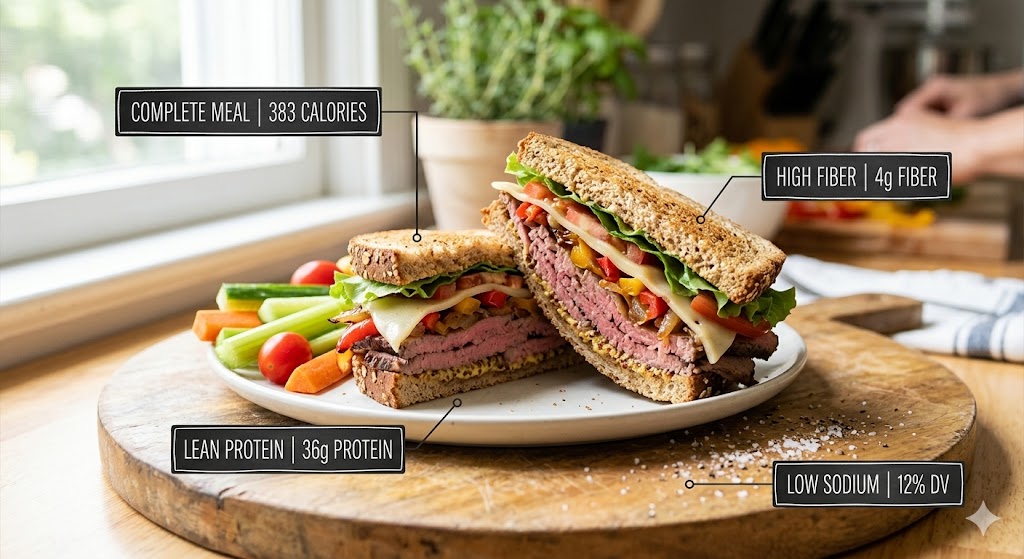
Looking for a chef-approved, heart-healthy way to bring it all together? The Mayo Clinic Philly Steak template is an incredible model. It uses lean ingredients and fresh, sautéed vegetables to maximize the volume of your meal without overloading the calories.
Recipe Ingredients
Bread: 2 slices of 100% sprouted whole-wheat bread
Beef: 3 oz of thinly shaved, lean home-roasted beef top round
Veggies: 1/2 green bell pepper and 1/2 small onion, thinly sliced and sautéed in cooking spray
Cheese: 2 tbsp of low-fat shredded Cheddar or Swiss cheese
Nutrition Facts (Per Serving)
Calories: 383 kcal
Protein: 36g
Total Fat: 11g (4g Saturated Fat)
Carbohydrates: 34g (4g Dietary Fiber)
Sodium: 291mg
Potassium: 447mg
How to Track Your Sandwich Hands-Free
Let's be honest: typing out "two slices of wheat bread, three ounces of roast beef, a slice of cheese, and a teaspoon of horseradish" into a traditional tracking app can feel like a chore. This friction is why many people stop tracking their meals altogether.
That’s where VoCal comes in. With voice-based dietary tracking, you don’t have to search a massive database or weigh every crumb. You simply open the app and say:
"I had a homemade roast beef sandwich on whole wheat bread with a slice of Swiss cheese and a teaspoon of prepared horseradish."
VoCal's smart natural language processing instantly identifies the foods, estimates the standard serving sizes, and logs your meal to your tracker. Keeping your nutrition on point has never been this easy!
Frequently Asked Questions
What is the average calorie count of a basic homemade roast beef sandwich?
A basic homemade roast beef sandwich built with two slices of whole wheat bread, two ounces of lean deli roast beef, and mustard or prepared horseradish contains approximately 230 to 250 calories. Adding one slice of Swiss cheese and a tablespoon of mayo will bring that total closer to 440 to 450 calories.
Is a roast beef sandwich good for weight loss?
Absolutely! Roast beef is packed with high-quality protein, which is excellent for keeping you full and preserving lean muscle mass while you're in a calorie deficit. Just be sure to choose high-fiber whole-grain bread and opt for low-calorie condiments like horseradish or mustard instead of mayonnaise.
Which cheese is the healthiest choice for a roast beef sandwich?
Swiss cheese is typically your best bet, especially if you are watching your sodium intake. A 1-ounce slice of Swiss has only 53 milligrams of sodium, compared to Cheddar which has 185 milligrams, or processed American cheese which contains a massive 474 milligrams of sodium per slice.
Disclaimer: This article is for informational purposes only and does not substitute for professional medical advice, diagnosis, or treatment. Always consult a qualified healthcare professional before making any major changes to your diet or nutrition plan.