
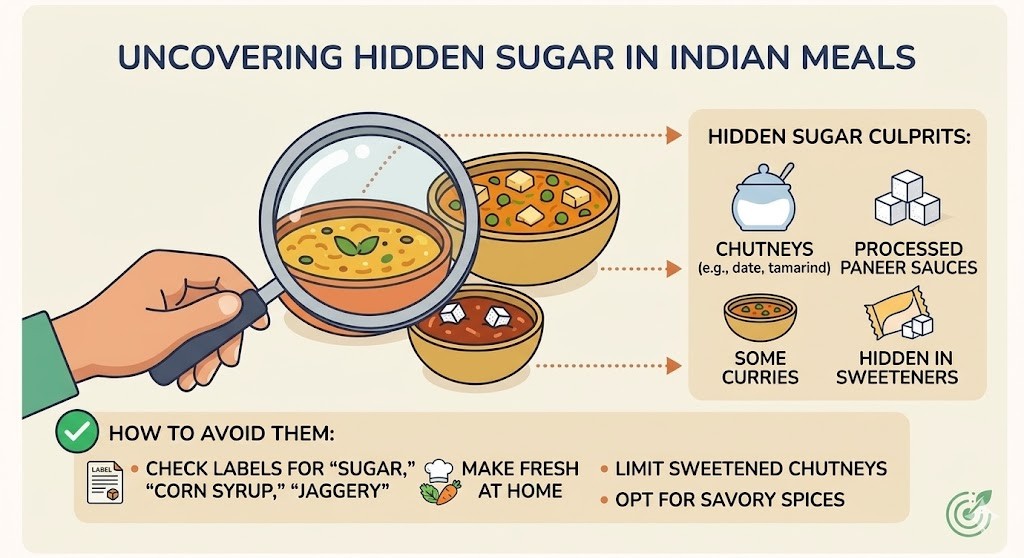
Think you’re winning the health game by skipping the gulab jamun? You might want to check your "healthy" digestive biscuit again.
While most of us know to avoid obvious sweets, sugar is a master of disguise. It’s currently playing a massive game of hide-and-seek in the Indian food aisles—tucked away in everything from savory namkeens to your morning "health" drink.
With India often called the "diabetes capital," the stakes are high. But don't worry—unmasking these hidden sweeteners is easier than you think. Here is how to spot the sneaky sugar in your pantry and reclaim your metabolic health.
The Epidemiological Crisis: India’s Metabolic Vulnerability
Before we dive into the labels, it’s important to understand why we need to be so careful. India is currently going through an "epidemiological transition," shifting from infectious diseases to lifestyle-related chronic conditions.
Today, non-communicable diseases (NCDs) like heart disease and diabetes account for roughly 63% to 65% of all deaths in India. The numbers are staggering:
The Diabetes Burden: There are an estimated 77 million to 101 million adults in India living with type 2 diabetes, and another 25 million to 136 million are classified as prediabetic.
The "Thin-Fat" Paradox: Many Indians have a unique body composition known as the "thin-fat" phenotype. This means that even with a normal BMI, individuals may have high levels of internal visceral fat and low muscle mass, making them more prone to insulin resistance at lower weights compared to Western populations.
The Economic Hit: If we don't curb this trend, India is projected to lose $4.58 trillion by 2030 due to NCDs and mental health conditions.
Comparative Burden of Diabetes and Obesity in India
Parameter | Current Statistic | Context |
Type 2 Diabetes | 77–101 Million Adults | Increasing rapidly in urban areas |
Prediabetes | 25–136 Million Adults | High risk of conversion to T2DM |
Undiagnosed Diabetes | >50% of cases | Leads to late-stage complications |
Economic Loss (NCDs) | $4.58 Trillion by 2030 | Significant impact on national GDP |
The many names of sugar: A master of disguise
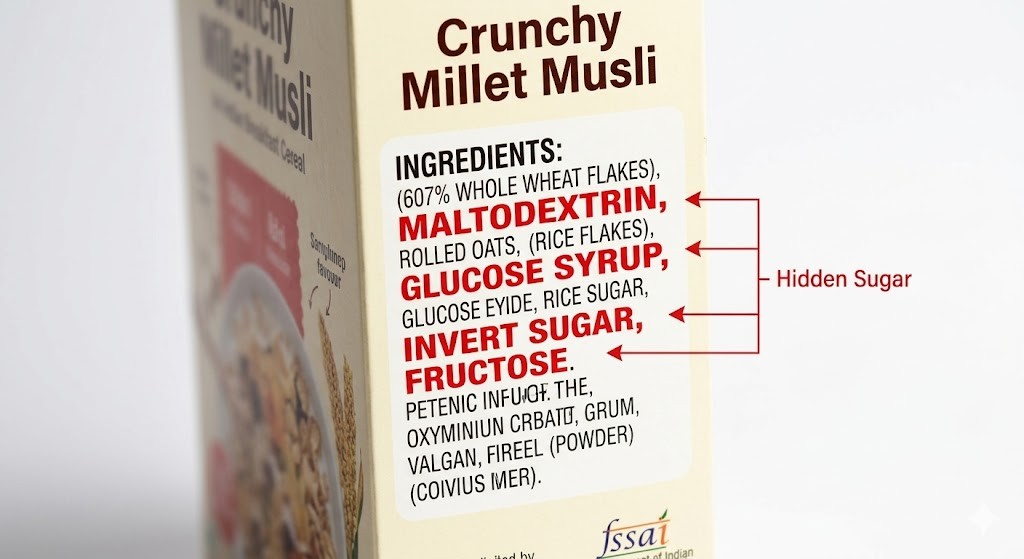
If you look at a label and don’t see the word "sugar," don't celebrate just yet. Manufacturers often use a variety of "aliases" to keep the total sugar content from looking too high on the ingredient list.
The Diverse Names of Hidden Sugars on Indian Labels
Category | Specific Pseudonyms | Typical Product Usage |
Simple Sugars (-ose) | Glucose, Fructose, Dextrose, Maltose, Sucrose, Galactose, Lactose | Baked goods, flavored milks, snacks. |
Syrups & Liquid Sugars | High-fructose corn syrup (HFCS), Glucose syrup, Invert syrup, Malt syrup, Rice syrup, Golden syrup | Beverages, sauces, breakfast cereals. |
"Natural" Sweeteners | Jaggery, Honey, Agave nectar, Coconut sugar, Date paste, Molasses, Maple syrup | "Health" bars, organic snacks, traditional sweets. |
Industrial / Processed | Maltodextrin, Dextrin, Barley malt, Ethyl maltol, Caramel | Savory namkeens, instant noodles, ketchups. |
Fruit-Based | Fruit juice concentrate, Fruit puree, Grape juice concentrate | "No added sugar" juices, fruit bars, jams. |
Surprising "Healthy" Traps in the Indian Diet
You might be eating more sugar than a jalebi without even realizing it. Even foods that taste salty or "earthy" can be loaded with sweeteners to improve shelf life or crunch.
Hidden Sugar Profiles of Common Indian Processed Foods
Food Category | Typical Hidden Sugars | Potential Impact |
Namkeens / Savory Snacks | Maltodextrin, Corn syrup, Dextrose | High sodium-sugar combo drives overeating. |
Ketchup / Chutneys | HFCS, Liquid glucose, Invert sugar | Adds significant empty calories to meals like idli/poha. |
Health Beverage Mixes | Maltodextrin, Sucrose, Malt extract | Targeted at children; promotes early insulin resistance. |
"Diet" / Brown Bread | Caramel color, Sugar, Maltose | Often just white bread with coloring and added sugar. |
Packaged Fruit Juices | Fruit concentrates, Fructose syrup | Lacks fiber; spikes blood sugar more than whole fruit. |
Why does it matter?
When you consume hidden sugars, your blood glucose levels go on a rollercoaster. You get a quick "high" followed by a sugar crash that leaves you tired and craving more. Over time, this leads to metabolic stress and fat storage.
Metabolic Consequences of High Sugar Intake
Condition | Mechanism | Long-term Risk |
Insulin Resistance | Chronic glucose spikes leading to reduced cellular sensitivity to insulin. | Type 2 Diabetes, Metabolic Syndrome. |
De Novo Lipogenesis | Liver conversion of excess fructose into lipids. | NAFLD, High Triglycerides. |
Visceral Adiposity | Elevated insulin levels promoting fat storage in the abdominal cavity. | Cardiovascular disease, Systemic inflammation. |
Glycemic Variability | Rapid spikes and crashes in blood glucose. | Fatigue, cognitive "brain fog," sugar addiction. |
How to win the "Sugar War"
The ICMR-NIN 2024 guidelines recommend that added sugar should make up less than 5% of your daily calories (about 5-6 teaspoons for an adult).

Practical Swaps for Sugar Reduction
Instead of... | Try... | The Health Advantage |
Flavored Yogurt | Plain dahi with fresh berries/cinnamon | Avoids 15-20g of added fruit syrup. |
Commercial Cornflakes | Besan chilla or Moong dal chilla | High protein/fiber; zero added sugar. |
Sugar-Sweetened Tea | Tea with monk fruit or Stevia | Saves ~15,000 empty calories annually per person. |
Energy / Granola Bars | Handful of walnuts and seeds | Provides essential Omega-3s and fiber. |
Instant Poha / Upma | Freshly prepared poha with extra veggies | Controls dextrose and sodium intake. |
Pro-Tip: Go Hands-Free with VoCal
Tracking every gram of sugar manually is a chore. Modern tools like VoCal allow you to log your meals just by speaking. You can say, "I had two rotis and a bowl of dal," and the AI handles the rest, spotting hidden sugars in regional Indian dishes so you don't have to.
Summary
The Indian food landscape is currently facing a significant health crisis driven by hidden sugars in processed foods, which contribute to rising rates of type 2 diabetes and obesity. These sweeteners are often disguised under more than 50 different names, including maltodextrin, liquid glucose, and various terms ending in "-ose". They are frequently found in products marketed as healthy, such as digestive biscuits, breakfast cereals, and malt-based "health" drinks.
The 2024 ICMR-NIN guidelines now recommend limiting added sugar to less than 5% of daily calories—roughly 25 grams for adults. Consumers can reclaim their health by checking if sugar appears in the first three ingredients of a label and using AI tools like Vo-cal, which offers multilingual voice tracking tailored specifically for regional Indian dishes.
FAQs
What are the common secret names for hidden sugar?
Watch for ingredients ending in "-ose" (like glucose, maltose, or fructose) and industrial syrups such as maltodextrin, invert syrup, or liquid glucose.
What is the new daily sugar limit for Indians?
The ICMR-NIN 2024 guidelines recommend limiting added sugar to less than 5% of your total daily energy intake, which is about 25 grams (5–6 teaspoons) for most adults.
Why was the "Health Drink" label removed from malt-based powders?
The FSSAI banned the term "Health Drink" because it has no legal definition in India and was being used to mislead consumers about products that often contain very high sugar levels.
Does "No Added Sugar" mean a product is sugar-free?
No. This label only means no extra table sugar was added; the product may still be loaded with natural sugars from fruit concentrates or malts that spike blood sugar just as much as refined sugar.
Is jaggery (gur) a healthy alternative to white sugar?
While jaggery contains some trace minerals, it is still considered an "added sugar" by health experts. It causes similar spikes in blood glucose and insulin levels and should be used sparingly.
Are "digestive" or "multigrain" biscuits safe for weight loss?
Rarely. Most are made primarily with refined flour (maida) and contain hidden sugars like maltodextrin or invert syrup to maintain taste, making them metabolically similar to regular cookies.
Disclaimer: The information provided is for educational purposes only and is not a substitute for professional medical advice, diagnosis, or treatment. While voice-tracking tools can help you monitor and understand your eating habits, they are not medical diagnostic or treatment platforms. Always consult a qualified healthcare professional, doctor, or nutritionist before making significant changes to your diet or lifestyle.