
Whether you need a mid-afternoon pick-me-up or a bubbly partner for movie night, an ice-cold can of Diet Coke often feels like liquid magic. It has that crisp, refreshing fizz without any of the guilt. But if you are watching your intake or logging your daily meal plan, you might be asking yourself: What is the real story behind diet coke calories?
Is it actually zero calories, or is there a hidden catch? Let’s crack open a can and break down the numbers, the science, and how this bubbly staple fits into your daily routine!
The Big Answer: How Many Calories Are in a Can?
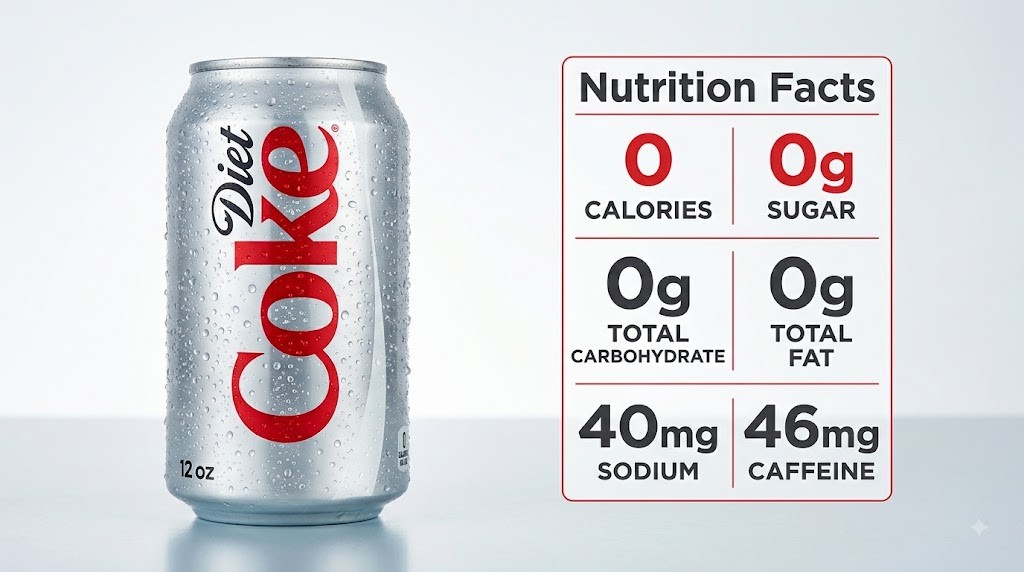
If you check the back of a standard aluminum container, the number staring back at you is a glorious 0.
When it comes to a diet coke calories 12 oz can, the official count is zero. Under U.S. Food and Drug Administration (FDA) guidelines, any food or beverage with under 5 calories per serving can legally round down to zero on the nutrition label. So while there might be a microscopic fraction of a calorie from flavorings, your body burns it off just by opening the tab!
Here is how Diet Coke stacks up against its sister drinks and classic Coca-Cola Classic:
Nutritional Parameter | Diet Coke (12 oz Can) | Caffeine-Free Diet Coke (12 oz Can) | Diet Cherry Coke (12 oz Can) | Regular Coca-Cola Classic (12 oz Can) |
Serving Size | 12 fl oz / 360 g | 12 fl oz / 360 g | 12 fl oz / 360 g | 12 fl oz / 360 g |
Calories | 0 | 0 | 0 | 155 |
Total Fat | 0 g (0% DV) | 0 g (0% DV) | 0 g (0% DV) | 0 g (0% DV) |
Sodium | 40 mg (2% DV) | 40 mg (2% DV) | 30 mg (1% DV) | 45 mg (2% DV) |
Total Carbohydrates | 0 g (0% DV) | 0 g (0% DV) | 0 g (0% DV) | 38 g (14% DV) |
Total Sugars | 0 g | 0 g | 0 g | 38 g |
Added Sugars | 0 g (0% DV) | 0 g (0% DV) | 0 g (0% DV) | 38 g (76% DV) |
Protein | 0 g | 0 g | 0 g | 0 g |
Caffeine Content | 46 mg | 0 mg | 34 mg | 34 mg |
Bottom Line: A standard 12 oz can of Diet Coke gives you 0 calories, 0 sugar, and 0 fat, along with 40 mg of sodium and 46 mg of caffeine. It swaps out the 155 liquid sugar calories found in a regular soda while keeping that iconic fizzy bite!
How Does It Taste Sweet Without Calories?
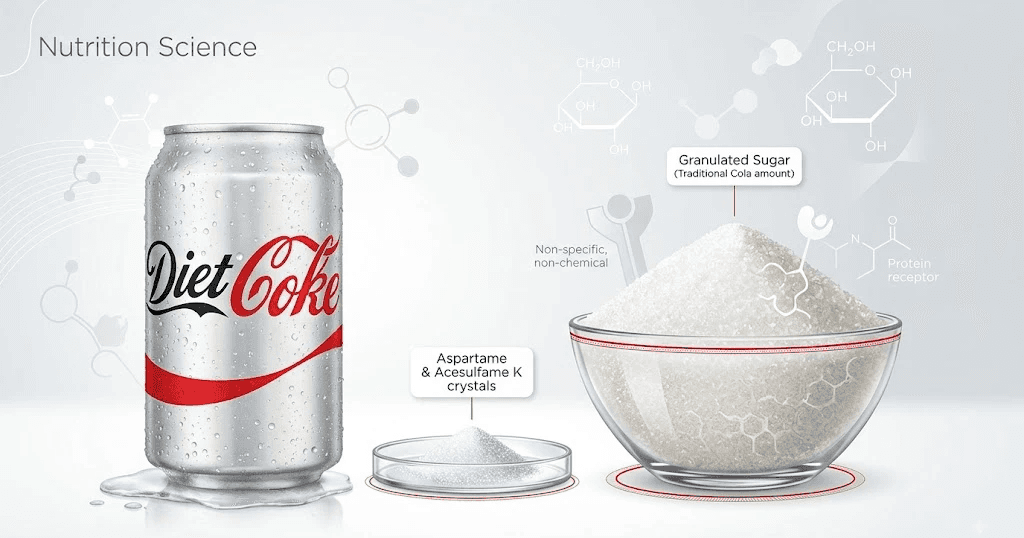
How do you get sweet cola flavor without dumping in teaspoons of sugar? The secret ingredient is aspartame.
Aspartame is an artificial sweetener made from two amino acids (aspartic acid and phenylalanine). Because it is roughly 200 times sweeter than regular sugar, manufacturers only need a tiny pinch to sweeten an entire 12 oz can. That tiny amount yields virtually no energy for your body to convert into calories.
Is Aspartame Safe?
The FDA and major health organizations worldwide have thoroughly studied aspartame for decades. The FDA set the Acceptable Daily Intake (ADI) for aspartame at 50 mg per kilogram of body weight each day.
To put that into perspective:
An average adult weighing 132 lbs (60 kg) can safely consume up to 3,000 mg of aspartame a day.
Since a 12 oz can has about 180 mg to 200 mg of aspartame, you would have to drink 15 to 17 cans of Diet Coke every single day to reach that limit!
(Note: People with a rare genetic condition called Phenylketonuria (PKU) cannot process phenylalanine and should avoid aspartame.)
Bottom Line: Diet Coke gets its sweetness from aspartame, a high-intensity sweetener approved as safe by the FDA. You would need to drink a mountain of cans daily to exceed recommended safety levels!
How Diet Coke Compares to Other Drinks
If you are trying to cut back on sugar or manage your daily intake, liquid calories are usually the easiest place to start. A single regular soda can quietly add 150+ calories to your day.
Take a look at how Diet Coke compares across the soda aisle:
Beverage Name | Category | Serving Size | Calories (kcal) | Sugar Content (g) |
Diet Coca-Cola | Zero-Calorie Cola | 12 oz (360 mL) | 0 | 0 g |
Coca-Cola Zero Sugar | Zero-Calorie Cola | 12 oz (360 mL) | 0 | 0 g |
Diet Pepsi | Zero-Calorie Cola | 12 oz (360 mL) | 0 | 0 g |
Diet Dr. Pepper | Zero-Calorie Soda | 12 oz (360 mL) | 0 | 0 g |
Fresca Soda Water | Zero-Calorie Citrus Soda | 12 oz (360 mL) | 0 | 0 g |
Sierra Mist (Formulation) | Reduced-Calorie Soda | 12 oz (360 mL) | 90 | 23 g |
Canada Dry Ginger Ale | Regular Soda | 12 oz (360 mL) | 124 | 33 g |
7 Up | Regular Soda | 12 oz (360 mL) | 150 | 38 g |
Dr. Pepper | Regular Soda | 12 oz (360 mL) | 150 | 40 g |
Sprite | Regular Soda | 12 oz (360 mL) | 151 | 38 g |
A&W Root Beer | Regular Soda | 12 oz (360 mL) | 152 | 45 g |
Coca-Cola Classic | Regular Cola | 12 oz (360 mL) | 155 | 38 g |
Orange Crush | Regular Soda | 12 oz (360 mL) | 160 | 43 g |
Cherry Coca-Cola | Regular Flavored Cola | 12 oz (360 mL) | 164 | 42 g |
Mountain Dew | Regular Soda | 12 oz (360 mL) | 174 | 46 g |
Fanta Orange | Regular Soda | 12 oz (360 mL) | 179 | 48 g |
Red Bull Sugar Free | Energy Drink | 16 oz (480 mL) | 20 | 0 g |
Monster Low Carb | Energy Drink | 16 oz (480 mL) | 33 | 6 g |
Red Bull Energy Drink | Regular Energy Drink | 16 oz (480 mL) | 220 | 54 g |
Monster Energy Drink | Regular Energy Drink | 16 oz (480 mL) | 298 | 54 g |
Can Diet Coke Help with Weight Loss?

Swapping out sugar-sweetened sodas for zero-calorie options creates an immediate calorie deficit. CDC-referenced trials show that switching two sugary sodas a day for diet drinks or water can help adults lose 2% to 2.5% of their body weight over six months.
Plus, since Diet Coke contains zero carbs and zero sugar, it won't spike your blood glucose or insulin levels. That makes it a friendly option if you are following a low-carb, keto, or diabetic-friendly eating plan.
Bottom Line: Replacing sugar-filled sodas with zero-calorie diet sodas is an easy hack to cut unnecessary calories without sacrificing flavor.
Why You Should Still Log Zero-Calorie Drinks
If Diet Coke has zero calories, why bother tracking it at all?
Even zero-calorie foods and drinks have extra nutrients you might want to keep an eye on:
Sodium: Drinking 3 or 4 cans adds up to 120–160 mg of extra sodium.
Caffeine: At 46 mg of caffeine per 12 oz can, drinking a few cans in the late afternoon might sneakily ruin your bedtime routine.
Instead of typing out search queries or digging through drop-down lists every time you pop open a can, VoCal makes logging effortless.
With VoCal’s voice-activated calorie tracker, all you have to do is tap and speak naturally:
"I just had a 12 oz can of Diet Coke with grilled chicken breast."
VoCal instantly logs the entry, tracks your sodium and caffeine levels, and keeps your nutrition diary up to date in seconds!
Frequently Asked Questions (FAQs)
Does Diet Coke have zero calories?
Yes! A standard 12 oz can of Diet Coke contains zero calories, zero sugar, and zero fat.
Will Diet Coke break a fast or kick me out of ketosis?
No. Because Diet Coke has no sugar or digestible carbohydrates, it does not spike blood sugar or insulin levels, meaning it won't break ketosis.
How much caffeine is in a 12 oz Diet Coke can?
A 12 oz can of Diet Coke contains 46 mg of caffeine. For comparison, a regular cup of coffee usually has around 95 mg to 140 mg.
Is Diet Coke healthier than regular Coca-Cola?
If your primary goal is reducing daily calorie or sugar intake, Diet Coke is a much lighter choice than regular Coca-Cola, which packages 155 calories and 38 grams of added sugar into every can.
Disclaimer: This is for informational purposes only. For medical advice or diagnosis, consult a professional.