
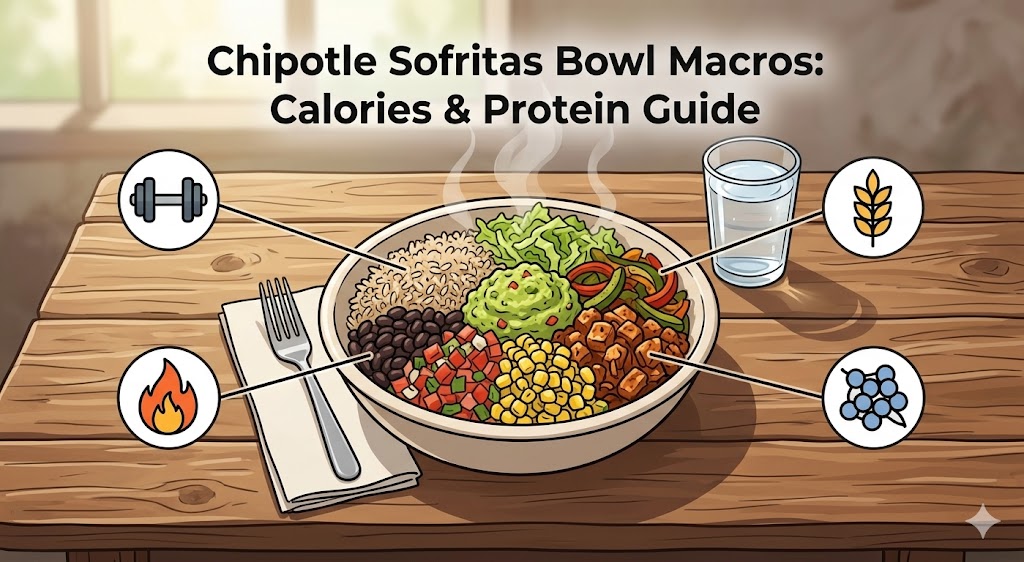
Whether you’re a long-time vegan or a "Meatless Monday" enthusiast, the Chipotle Sofritas bowl is a legendary fast-casual staple. But when you’re standing in line (or ordering from your couch), the big question remains: How does this plant-based powerhouse stack up in terms of calories and macros?
Between the spicy braised tofu and the mountain of toppings, it’s easy for a "healthy" bowl to turn into a caloric mystery. Let’s break down the Chipotle bowl calories and macros so you can build a meal that fits your goals—and tastes like a win.
What Exactly Are Sofritas?
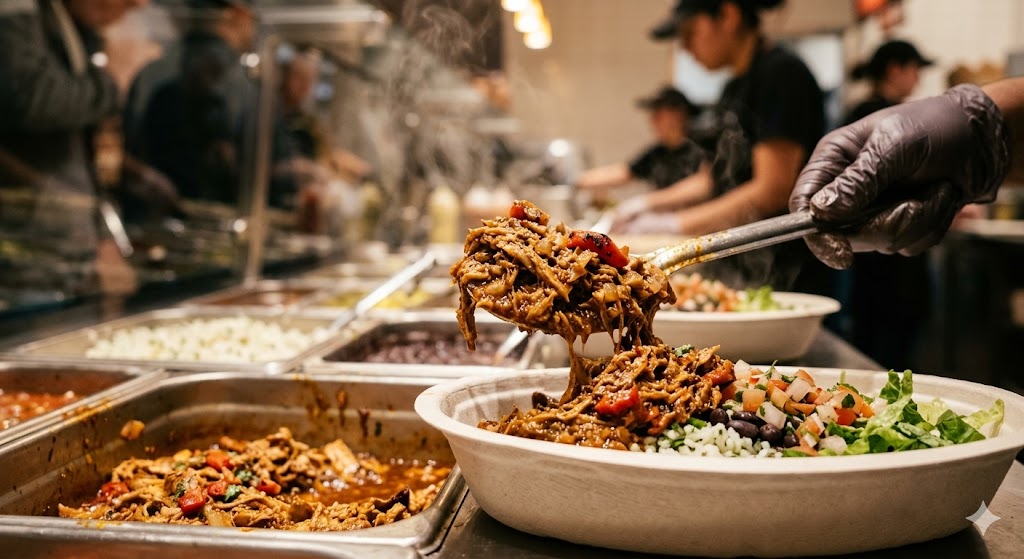
If you've ever stared at the metal tray of crumbly, saucy goodness and wondered what it is, you're not alone. Sofritas are made from organic, non-GMO tofu that's braised with chipotle chilies, roasted poblanos, and a blend of aromatic spices.
From a nutrition standpoint, it's a winner because soy is a "complete protein". This means it packs all nine essential amino acids your body can't make on its own.
Detailed Macronutrient Profile of Sofritas Protein
Nutrient Component | Value per 4 oz Serving | % Daily Value (2,000 kcal) |
Energy (Calories) | 150 kcal | 7.5% |
Total Lipid (Fat) | 10 g | 13% |
Saturated Fatty Acids | 1.5 g | 8% |
Cholesterol | 0 mg | 0% |
Sodium | 560 mg | 24% |
Total Carbohydrates | 9 g | 3% |
Dietary Fiber | 3 g | 11% |
Protein | 8 g | 16% |
Bottom Line: Sofritas are cholesterol-free and lower in saturated fat than options like carnitas, but they do pack a punch of sodium—nearly 25% of your daily limit in just the protein alone.
Sofritas vs. The Field: How Does It Compare?
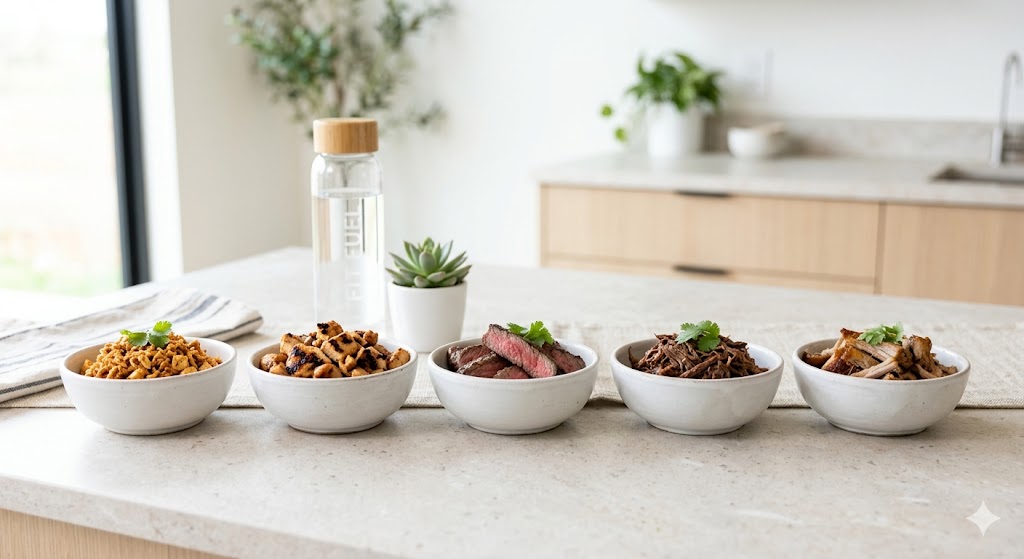
If you’re tracking your Chipotle bowl calories and macros to build muscle or lose weight, you might be debating between the tofu and the chicken. While Sofritas win on fiber and heart-healthy fats, they are lower in the protein department compared to animal-based options.
Comparative Table: Chipotle Protein Macros (4 oz)
Protein Source | Calories | Protein (g) | Total Fat (g) | Carbs (g) | Fiber (g) |
Sofritas (Vegan) | 150 | 8 | 10 | 9 | 3 |
Chicken (Grilled) | 180 | 32 | 7 | 0 | 0 |
Steak (Grilled) | 150 | 21 | 6 | 1 | 1 |
Barbacoa (Beef) | 170 | 24 | 7 | 2 | 1 |
Carnitas (Pork) | 210 | 23 | 12 | 0 | 0 |
Building the Foundation: Rice and Beans
The protein is the star, but the rice and beans are the "supporting cast" that usually carry the most calories.
The Great Rice Debate
Both white and brown rice at Chipotle clock in at 210 calories per serving. However, brown rice is the fiber king, helping to stabilize your blood sugar and keep you full longer. Plus, white rice has nearly double the sodium of brown rice (350 mg vs. 190 mg).
Grain Type (4 oz) | Calories | Total Carbs (g) | Fiber (g) | Protein (g) | Sodium (mg) |
White Rice | 210 | 40 | 1 | 4 | 350 |
Brown Rice | 210 | 36 | 2 | 4 | 190 |
The "Satiety Engine": Beans
Beans are the secret weapon for any Sofritas fan. Adding black or pinto beans adds about 130 calories but brings 8 grams of protein and a massive 7–8 grams of fiber to the party.
The Fiber Math:
A standard Sofritas bowl with brown rice and black beans delivers a serious fiber hit:
Total Fiber= 3g (Sofritas) + 2g (Rice) + 7g (Beans) + 1g (Veggies) = 13g
That equals roughly 52% of the recommended daily fiber intake for women (25g/day).
It also equals about 34% of the recommended daily fiber intake for men (38g/day).
The "Add-On" Trap: Salsas and Toppings
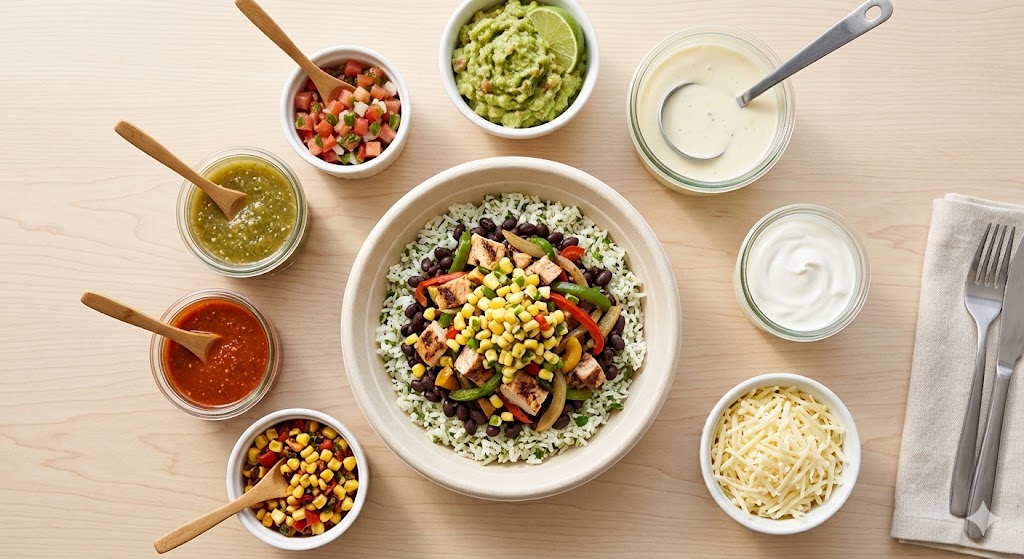
Flavor is free, but calories aren't. Salsas are generally low-cal but can be "sodium bombs". On the other hand, creamy toppings like guacamole and cheese can double your bowl’s calorie count if you aren't careful.
Salsa Comparison (Sodium Watch)
Salsa Variety | Serving | Calories | Fat (g) | Carbs (g) | Sodium (mg) |
Fresh Tomato Salsa | 4 oz | 25 | 0 | 4 | 550 |
Roasted Chili-Corn Salsa | 4 oz | 80 | 1.5 | 16 | 330 |
Tomatillo-Green Salsa | 2 oz | 15 | 0 | 4 | 260 |
Tomatillo-Red Salsa | 2 oz | 30 | 0 | 4 | 500 |
Fats and Dairy: The Calorie Heavyweights
Topping | Portion | Calories | Total Fat (g) | Saturated Fat (g) | Protein (g) |
Guacamole | 4 oz | 230 | 22 | 3.5 | 2 |
Monterey Jack Cheese | 1 oz | 110 | 9 | 5 | 6 |
Sour Cream | 2 oz | 110 | 9 | 7 | 2 |
Queso Blanco | 2 oz | 120 | 9 | 6 | 5 |
How to Track Like a Pro (Without the Math)
Let’s be real: Chipotle employees aren’t robots. One "scoop" of rice might actually be two, which can add an extra 200+ calories to your log. This "scoop factor" makes manual calorie counting feel like a part-time job.
This is where voice-based tracking with VoCal changes the game. Instead of scrolling through endless databases to find the right combination of "brown rice + black beans + half-guacamole," you can just say it. Voice-powered apps are shown to be up to 23% more effective for consistent logging because they reduce "user fatigue".
When you use your voice to log, you can easily account for variances like "I had a Sofritas bowl with double rice and extra fajita veggies." The AI handles the heavy lifting, keeping your Chipotle bowl calories and macros accurate in seconds.
Frequently Asked Questions (FAQs)
Are Sofritas healthy for weight loss?
Yes! They are a high-fiber, plant-based protein. To keep calories low, skip the rice and flour tortilla and opt for a "salad base" with extra fajita veggies and fresh tomato salsa.
How much protein is in a Sofritas bowl?
A standard bowl with Sofritas, beans, and rice provides about 20 grams of protein. If you’re looking to bulk up, consider asking for "double protein" to hit around 28–30 grams.
Why is my weight up after eating a Sofritas bowl?
Don't panic—it’s likely water weight! The high sodium content in a typical bowl (often over 1,500 mg) causes your body to retain fluids. Drink plenty of water to help your system flush out the excess salt.
Is the Chipotle Nutrition Calculator accurate?
It’s a great baseline, but real-world portions vary. Studies show restaurant logs can be 20% off due to serving sizes. Tools like VoCal allow you to verbally adjust for "heavy scoops," giving you a much more realistic picture of your intake.
Disclaimer: This information is for educational purposes only and is not medical advice. Consult a healthcare provider before making significant dietary changes.