
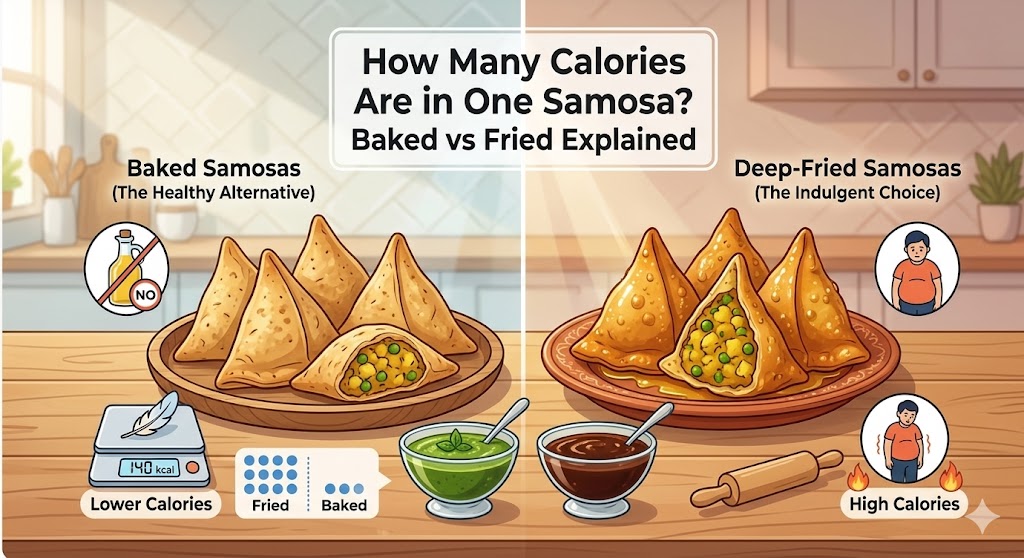
No snack rules the Indian heart (and tea-time) quite like the samosa. Whether it’s a rainy afternoon or a quick office break, that triangular pocket of spiced potatoes is almost impossible to resist. But if you’ve ever stopped mid-bite to wonder about the "calories in 1 samosa baked vs fried," you’re not alone!
Lately, the traditional deep-fried favorite has found a new rival: the baked samosa. It promises the same spicy kick but with a much lighter footprint on your waistline. So, which one should you pick for your next snack session? Let’s crunch the numbers.
The Classic Deep-Fried Samosa: A Crispy Calorie Bomb?
The traditional street-style samosa is a masterclass in textures—crunchy on the outside and soft on the inside. However, that crunch comes at a cost. When a samosa is dunked into hot oil, it undergoes a "moisture-for-fat" swap. As the water in the dough evaporates into steam, the resulting pores act like tiny sponges, soaking up oil through capillary action.
According to the National Institute of Nutrition (NIN), a single medium-sized fried samosa can pack anywhere from 200 to 260 calories. The real "calorie bomb" isn't just the potato; it's the fact that oil absorption can increase the fat content of the pastry by 20% to 30%.
The Baked Samosa: The Healthier Underdog
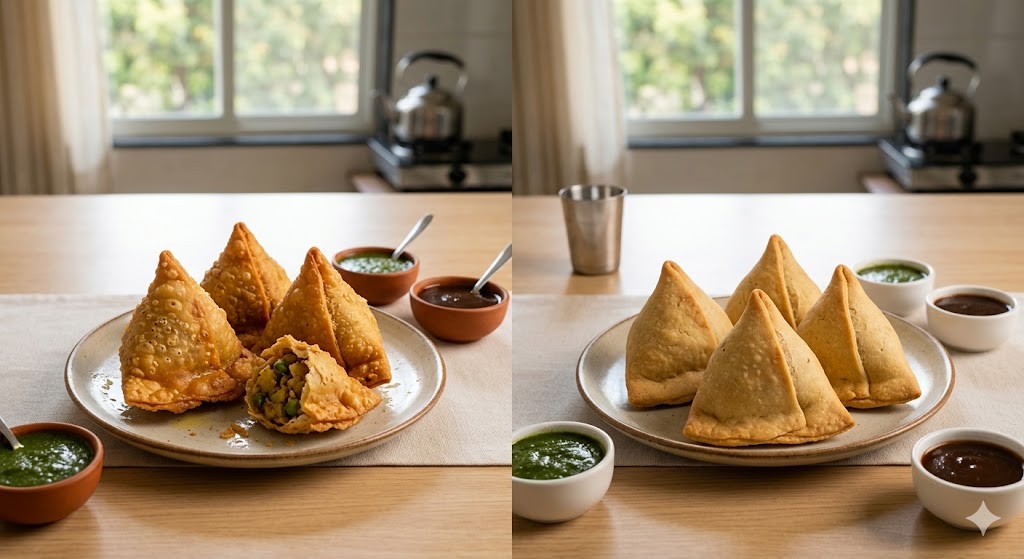
Baking uses dry convection heat instead of a lipid bath. While you might lose that signature "street-food" grease, you gain a significant caloric advantage. A baked samosa usually relies on the small amount of fat already in the dough (called the moyen) to get its color.
By skipping the deep-fryer, you can slash the calorie count by nearly 40% to 50%.
The Showdown: Baked vs. Fried vs. Air-Fried

If you’re looking for the gold standard of "healthy" samosas, the air-fryer is the current reigning champ. It uses circulating hot air to mimic the fry-up with 70% to 80% less oil.
Nutrient | Deep-Fried (Street Style) | Baked (Home Style) | Air-Fried (Modern) |
Total Calories | 217-262 kcal | 120-150 kcal | 100-130 kcal |
Total Fat | 12-18 g | 4-6 g | 3-5 g |
Saturated Fat | 4-6 g | 1-2 g | 0.5-1.5 g |
Carbohydrates | 32-38 g | 30-34 g | 30-34 g |
Protein | 4-5 g | 4-5 g | 4-5 g |
*Data based on a standard 50g vegetable samosa. *
Why Cooking Method Matters for Your Health
It’s not just about the numbers on the scale. The World Health Organization (WHO) and FSSAI warn that frequently eating deep-fried foods—especially from vendors who might reuse oil—can lead to the intake of trans fats and inflammatory compounds.
Repeatedly heating oil creates oxidative degradation, which is linked to heart health concerns and insulin resistance. Choosing a baked version helps you stay within the ICMR-NIN 2024 guidelines, which recommend prioritizing whole grains and limiting deep-fried intake to prevent metabolic issues.
Pro-Tips for a Better Samosa
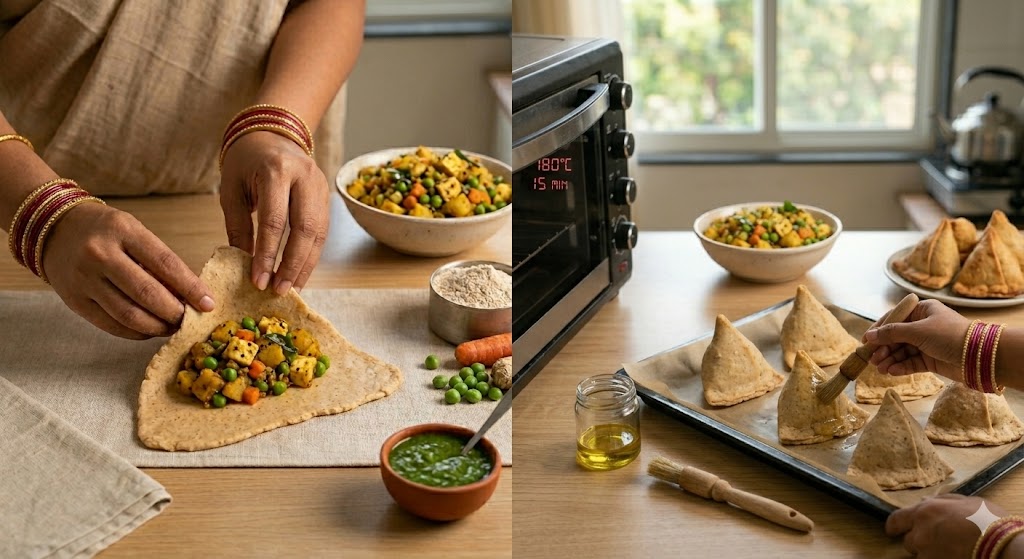
Swap the Flour: Use whole wheat flour (atta) instead of refined flour (maida) to boost fiber by up to 300%.
Veggie Power: Add peas, carrots, or even paneer to the potato filling to increase protein and micronutrients.
Track Smarter: Since samosas vary wildly in size, generic "1 samosa" logs in apps are often wrong. Use a voice-based tracker like VoCal. Simply saying, "I had two small air-fried samosas," gives you a much more accurate estimate than manual typing.
Frequently Asked Questions (FAQs)
How many calories are in a mini cocktail samosa?
A mini or "cocktail" samosa is much smaller (about 25g) and contains roughly 70-100 calories if fried, or as little as 45-60 calories if baked.
Can I eat a samosa if I’m trying to lose weight?
Yes, but moderation is key! Experts suggest limiting fried treats to once every two weeks. Opting for a baked or air-fried version makes it much easier to fit into your daily calorie budget.
Does chutney add calories?
Green mint/coriander chutney is very low in calories (5-10 kcal per tbsp). However, sweet tamarind chutney can add 20-30 calories per serving due to the sugar or jaggery content.
Disclaimer: This content is for informational purposes only and does not constitute medical advice. Please consult a healthcare professional or qualified nutritionist before making significant changes to your diet, especially if you have underlying health conditions like diabetes or heart disease.