
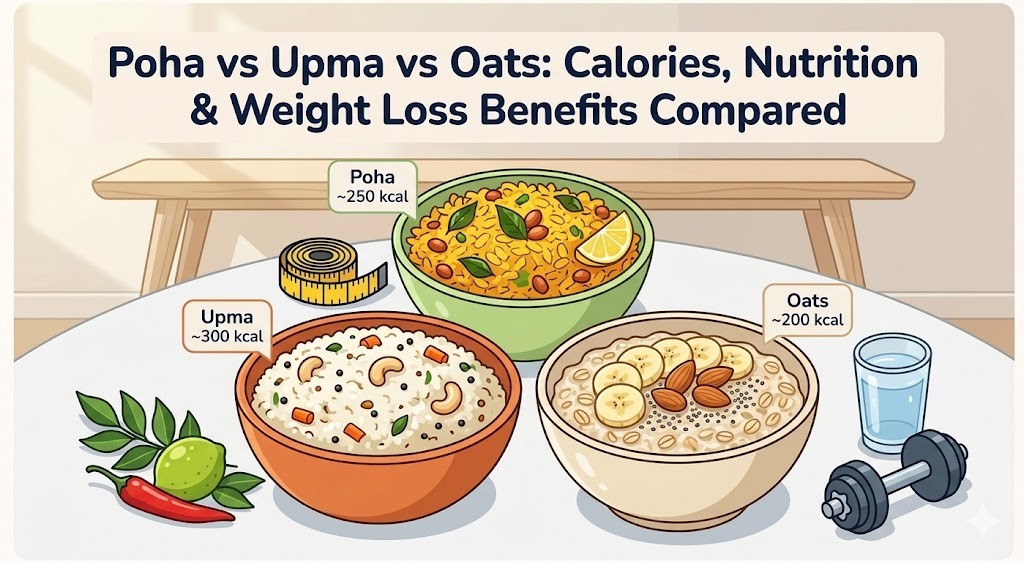
In every Indian household, the morning usually begins with a big question: "Poha, Upma, or maybe some Oats today?" While traditional choices were once decided by what mom felt like making, today’s fitness goals require a closer look at the "battle of the bowls." Whether you are looking for a light energy boost, something to keep you full until lunch, or a heart-healthy superfood, choosing the right grain is the first step toward a healthier you.
Here is a breakdown of how these three breakfast staples compare in terms of calories, nutrition, and weight loss benefits.
Summary: Which One Should You Choose?
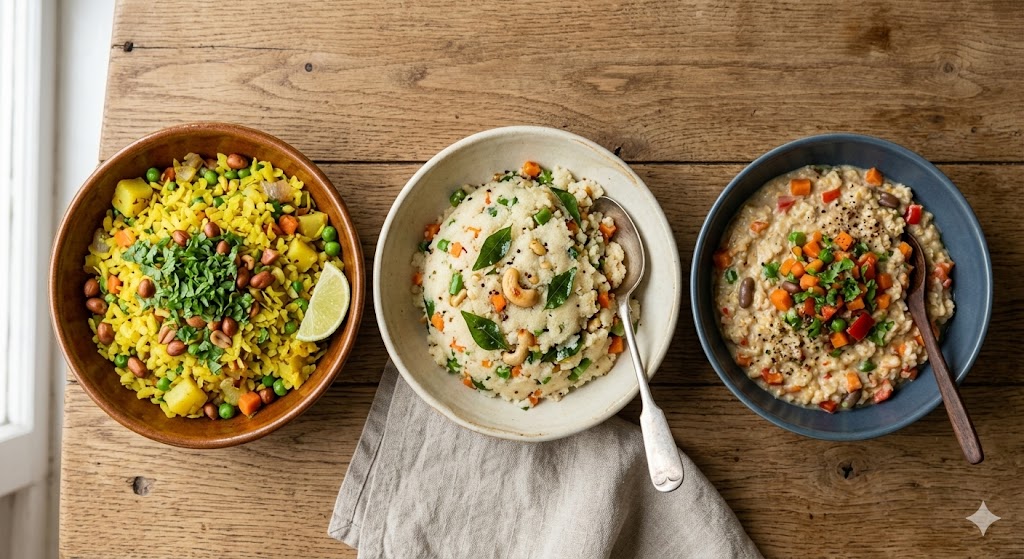
Choose Poha if you want a gluten-free, iron-rich, and light meal that won't make you feel sluggish.
Choose Upma if you need sustained energy for a busy morning and want to avoid snacking.
Choose Oats for the ultimate heart-health and blood sugar benefits with the highest fiber content.
The Raw Numbers: A Nutritional Baseline
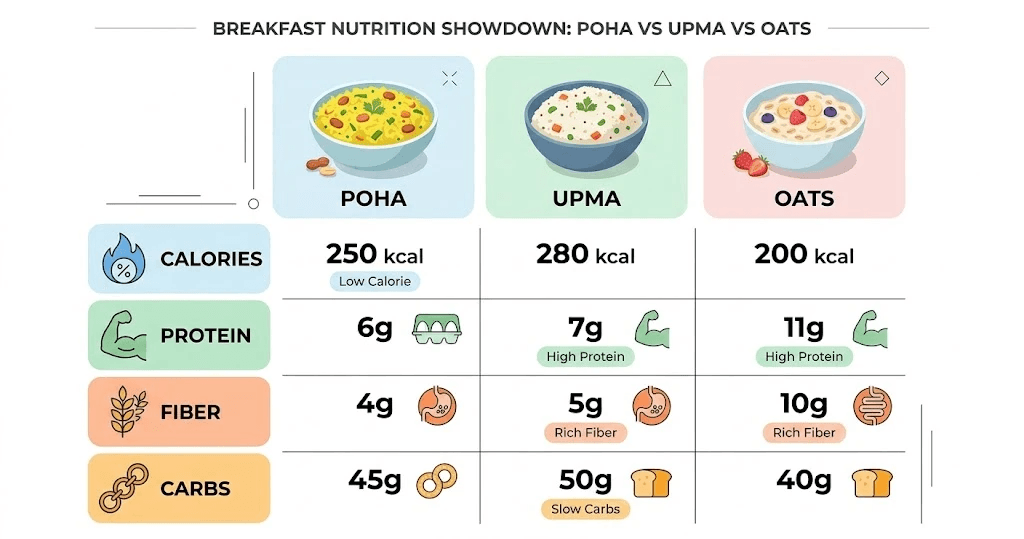
Before we add the tadka and veggies, it is important to see what these grains offer in their raw form. While their calorie counts are surprisingly similar, their internal "superpowers" vary greatly.
Nutrient (per 100g raw) | Poha (White) | Upma (Semolina) | Oats (Rolled) |
Energy (kcal) | 350 - 360 | 360 | 379 - 389 |
Carbohydrates (g) | 75 - 77 | 72.8 | 66 - 67.7 |
Protein (g) | 6.0 - 7.4 | 12.6 | 13.1 - 16.9 |
Total Fat (g) | 0.5 - 1.1 | 1.05 | 6.5 - 6.9 |
Dietary Fiber (g) | 0.8 - 3.4 | 3.9 | 10.1 - 10.6 |
Iron (mg) | 2.7 - 20.0 | 1.2 | 4.2 - 4.7 |
Poha: The Iron-Rich Digestibility Champ
Poha, or flattened rice, is the go-to for those who want a "light" start. Because it is parboiled before being flattened, it retains a high amount of iron—perfect for boosting energy levels.
Pro-Tip: Always add a squeeze of lemon! The Vitamin C in lemon juice helps your body absorb the plant-based iron in Poha much more effectively.
Best for: Morning workouts or those with sensitive stomachs, as it is incredibly easy to digest.
Upma: The Satiety Specialist
Made from semolina (suji), Upma is a denser, more filling option. It is higher in protein than Poha and provides a slow, steady release of energy that keeps mid-morning cravings at bay.
The Fullness Factor: Upma’s texture requires more chewing, which triggers hormones that signal your brain that you are full.
Best for: Long office hours or anyone who struggles with "grazing" on snacks before lunchtime.
Oats: The Metabolic Superfood
Oats have become a modern favorite for a reason. They are packed with beta-glucan, a soluble fiber that does everything from lowering "bad" cholesterol to stabilizing blood sugar levels.
Weight Loss Weapon: The fiber in oats forms a gel in your stomach, slowing down digestion and keeping you satisfied for hours.
Best for: Managing heart health, diabetes, and long-term weight loss journeys.
Calorie Comparison: From Pan to Plate
When cooked, these grains absorb different amounts of water, changing their "fullness" on your plate. If you are watching your weight, it is all about the "cooked volume."
Breakfast Item | Serving Size (Cooked) | Approximate Calories | Protein Content | Satiety Level |
Vegetable Poha | 150g | 180 - 250 kcal | 3 - 4g | Moderate |
Vegetable Upma | 150g | 210 - 250 kcal | 5 - 6g | High |
Masala/Veg Oats | 150g | 170 - 210 kcal | 6 - 8g | Very High |
How to Make Your Breakfast a Weight Loss Winner
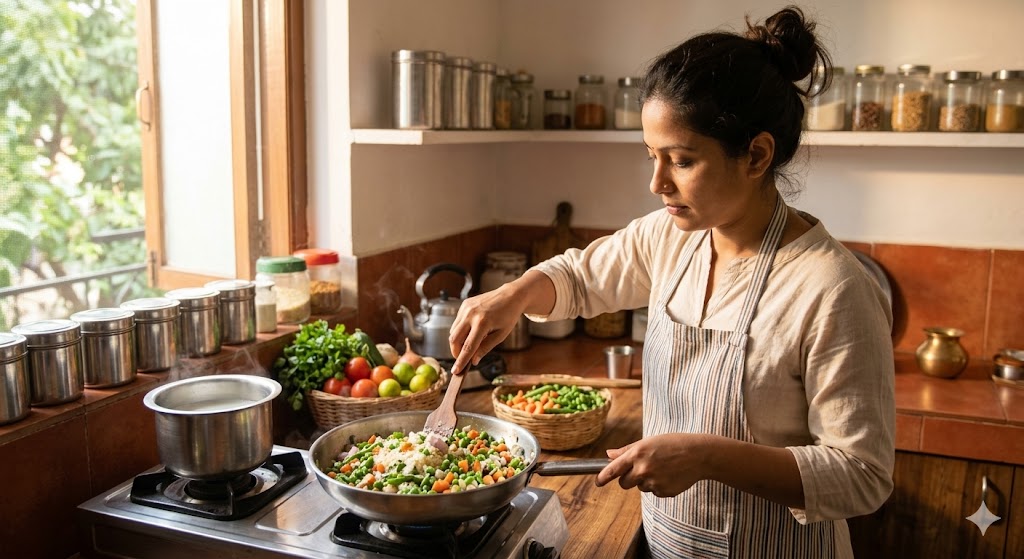
The "healthiness" of your meal depends entirely on your cooking method. To maximize fat loss, try these easy vegetarian tweaks:
Load the Veggies: Aim for a 1:1 ratio of grain to vegetables. Peas, carrots, and beans add volume and fiber without the heavy calories.
Add a Protein Punch: Pair your Poha or Upma with a small bowl of curd, or add boiled sprouts and paneer cubes directly into the mix.
Mind the Fat: Limit peanuts to just a tablespoon and keep the oil to a minimum. Healthy fats are good, but they can double the calorie count if you aren't careful!
Logging Made Easy: The Voice Tracking Revolution
One secret to losing weight is simply being aware of what you eat. However, manually typing in every peanut and pea can be a chore. This is where voice-based technology, like the VoCal app, changes the game.
Instead of searching through endless databases, you can just say, "I had a medium bowl of vegetable upma with a side of curd." Voice-activated tracking is nearly 10 times faster than manual typing and has been shown to improve consistency by over 50%. It’s like having a digital nutritionist in your pocket that listens and logs while you enjoy your meal.
Frequently Asked Questions (FAQs)
1. Is Poha healthier than white rice?
Yes. Poha is less processed and retains more iron and vitamins through its unique parboiling method.
2. Can I eat oats every day for weight loss?
Absolutely. In fact, people who eat high-fiber breakfasts like oats tend to eat 10-15% fewer calories throughout the rest of the day.
3. Is Upma good for diabetics?
Plain semolina has a higher glycemic load, but if you load it with fiber-rich vegetables and pair it with curd, it can be a safe, energy-boosting option.
Disclaimer: This article provides general information and is not medical advice. Consult a healthcare professional before starting any new diet or weight loss program.