

Avocados have officially taken over our grocery carts, Instagram feeds, and brunch menus. And honestly, who can blame them? They are creamy, delicious, and make literally everything taste better.
But if you are keeping an eye on your daily energy intake, you have probably wondered about the actual calories in avocado. Because let's be real—this buttery fruit behaves less like a watery apple and more like a rich, nutrient-dense superfood.
Whether you are keto-curious, trying to lose weight, or just really love guacamole, here is your ultimate guide to understanding what is inside this green powerhouse.
The Big Question: How Many Calories Are Actually in an Avocado?
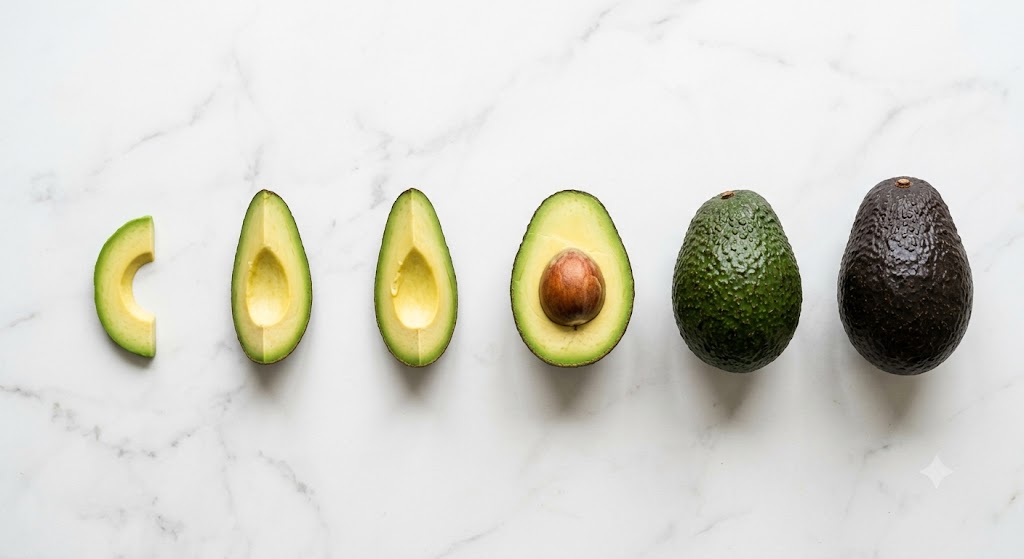
If you have ever tried logging a whole avocado into a generic food app, you might have gotten some wildly different numbers. So, what is the straight scoop?
According to the United States Department of Agriculture (USDA) database, the calorie count of an avocado is tied directly to its physical weight. A single, whole medium Hass avocado contains about 150 grams of edible, creamy flesh, which delivers roughly 240 calories.
Keep in mind that this count only applies to the delicious green stuff you actually eat. It does not include the heavy pit or the leathery skin, which can make up around 30 percent of the fruit’s weight.
To help you eyeball your portions at breakfast or lunch, here is a quick cheat sheet for Hass avocados:
Portion Scale | Edible Mass (Grams) | Edible Mass (Ounces) | Caloric Yield (kcal) |
|---|---|---|---|
Standard 1 Ounce Slice | 28 g | 1.0 oz | 45 kcal |
One-Quarter Medium Fruit | 37 g | 1.3 oz | 60 kcal |
FDA Reference Serving (1/3 Medium) | 50 g | 1.7 oz | 80 kcal |
One-Half Medium Fruit | 75 g | 2.6 oz | 120 kcal |
Whole Medium Avocado | 150 g | 5.3 oz | 240 kcal |
Whole Large Avocado | 201 g | 7.1 oz | 322 kcal |
Why does this matter? Since avocados are calorie-dense, accidentally logging a large avocado as a medium one can quietly add over 80 unrecorded calories to your day. Over time, those little rounding errors can stall your weight loss goals without you even realizing why.
Bottom Line: A standard whole medium Hass avocado packs about 240 calories of nutrient-dense, heart-healthy fuel. Knowing your actual portion size is the secret to fitting them seamlessly into your daily budget.
The Golden Standard: Calories per 100g
When nutritionists want to compare foods fairly, they look at a standardized 100-gram serving. It strips away the guesswork of "small" versus "large" fruits.
The official USDA baseline shows that 100 grams of raw avocado serves up exactly 160 calories.
If you are curious about where those calories come from, we can look at the Atwater system of metabolizable energy:
Total Calories=(Grams of Carbohydrates×4)+(Grams of Protein×4)+(Grams of Fat×9)
When we plug in the numbers for 100g of avocado—which contains roughly 8.53g of carbs, 2g of protein, and 14.66g of healthy fats—the gross math looks like this:
Gross Energy=(8.53×4)+(2×4)+(14.66×9)=174.06 kcal
So why does the USDA list it as 160 calories instead of 174? It is all thanks to a magical thing called dietary fiber! Out of those 8.53 grams of carbs, a whopping 6.7 grams are indigestible fiber. Because your body can't break down fiber for fuel, it does not spike your blood sugar or add to your net calorie intake. This makes avocados a favorite for low-carb and ketogenic diets alike.
Size Matters: Calories by Avocado Size
We have all stood in the produce aisle staring at a mountain of avocados, trying to choose the perfect one. But size isn't just about finding the best value—it drastically impacts the calories in avocado you end up eating.
Small Avocado (approx. 100g edible flesh): 160 calories
Medium Avocado (approx. 150g edible flesh): 240 calories
Large Avocado (approx. 201g edible flesh): 322 calories
A common tracking pitfall is the "pit-and-skin discount". If you place a whole avocado on your digital kitchen scale, it might weigh 200 grams. But if you log that full weight, you are overestimating your calories by about 30 percent! For the most accurate tracking, only weigh the green flesh after scooping it out.
Under the Hood: The Avocado Macronutrient Breakdown
Let’s look beyond the calorie tag. What are you actually feeding your body when you enjoy some avocado?
The Star of the Show: Monounsaturated Fats
About 75% of the calories in avocado come from fat, but it is the "good" kind you don't have to apologize for. In a 100g serving, you get 14.66 grams of total fats, broken down as:
Monounsaturated Fats (9.80g): This is mostly oleic acid, the very same heart-healthy fatty acid that gives extra-virgin olive oil its stellar reputation.
Polyunsaturated Fats (1.82g): Essential fats, including omega-6 and a dash of plant-based omega-3.
Saturated Fats (2.13g): A tiny, natural amount of palmitic acid.
The American Heart Association (AHA) recommends swapping saturated fats (like butter or lard) with monounsaturated fats to help protect your cardiovascular system.
Low Carbs, High Fiber
Avocados are a dream come true for anyone watching their insulin levels. With only 1.83 grams of net carbs per 100g (total carbs minus fiber), they have an incredibly low glycemic impact. Plus, they are packed with both soluble and insoluble fiber, which support your gut microbiome and keep digestion smooth.
A Fruit with... Protein?
It is rare for fresh fruits to contain protein, but the avocado breaks the rules here, too. It offers a modest 2.00 grams of protein per 100g, which is one of the highest values in the fruit kingdom.
The Green Showdown: Hass vs. Florida Avocados
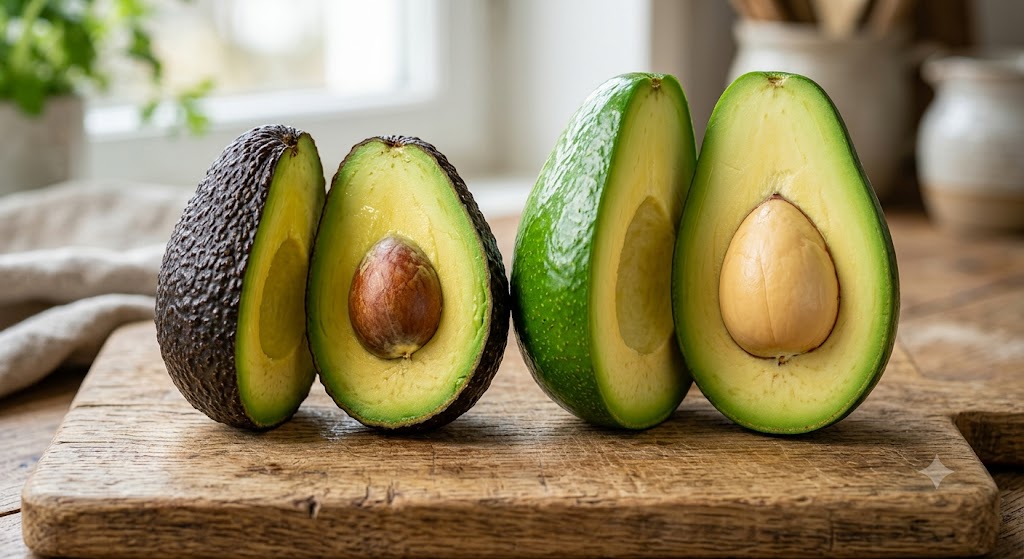
Did you know there is a major culinary turf war happening in the produce section? In the US, you will mostly run into two distinct types of avocados: the California Hass and the giant Florida avocado.
Hass avocados are small, bumpy, and turn dark purple-black when they are ripe. Because they are packed with monounsaturated fats, they have an incredibly rich, buttery texture. They are the undisputed champions for mashing onto toast, blending into chocolate mousse, or whipping into creamy dressings.
Florida avocados are much larger, smooth, and stay bright green when ripe. Biochemically, they are a bit different: they contain more water and significantly less fat. This gives them a firmer, milder flesh that holds its shape beautifully—making them perfect for cubing into summer salads or slicing onto tacos.
Let's look at the numbers side-by-side:
Nutrient Component (per 100g raw edible portion) | Hass / Commercial Varieties | Florida Avocado Cultivar |
|---|---|---|
Energy (Calories) | 160 kcal | 120 kcal |
Total Lipid (Fat) | 14.66 g | 10.06 g |
Monounsaturated Fat | 9.80 g | 5.51 g |
Polyunsaturated Fat | 1.82 g | 1.68 g |
Saturated Fat | 2.13 g | 1.96 g |
Total Carbohydrate | 8.53 g | 7.82 g |
Dietary Fiber | 6.70 g | 5.60 g |
Total Sugars | 0.66 g | 2.42 g |
Crude Protein | 2.00 g | 2.23 g |
Water Content | 73.23 g | 78.81 g |
While the Florida variety has fewer calories per gram, it is also much milder in flavor and contains slightly more natural sugar. If you love that classic rich, melt-in-your-mouth texture, Hass is still your best bet.
The Weight Loss Dilemma: Can Eating Fat Help You Lose Fat?
It sounds backward, right? How can eating a calorie-dense fruit packed with fat help you fit into your favorite jeans? It all comes down to satiety—the wonderful feeling of being comfortably full.
The Fullness Hormones: Peptide YY vs. Insulin
Avocados are incredibly good at telling your brain, "Hey, we are full, you can stop eating now."
In a clinical study, researchers had adults replace some of the carbs in their meals with avocado. The result? The avocado-rich meals triggered a release of Peptide YY (PYY), a hormone that signals satiety, while simultaneously lowering insulin spikes.
Because high insulin levels tell your body to store fat, keeping insulin stable while boosting PYY is a double win for weight management.
What the Long-Term Studies Say
This isn't just short-term science. In the massive Adventist Health Study-2, which tracked over 55,000 people for up to 11 years, researchers found that people who regularly ate avocados gained significantly less weight over time than those who skipped them.
Happy Gut, Happy Metabolism
A 12-week study also showed that eating a daily serving of avocado increases gut bacterial diversity. A healthy, diverse gut microbiome is closely linked to less inflammation and a more resilient metabolism.
Bottom Line: Avocados may be calorie-dense, but their healthy fats and fiber trigger satiety hormones like PYY and support a healthy gut microbiome, helping you naturally eat less throughout the day.
Beyond the Calories: Surprising Health Benefits of Avocados
Avocados are essentially nature’s multivitamin. Here are a few other science-backed reasons to keep them in your rotation:
Heart Health: The combination of monounsaturated fats, fiber, and plant phytosterols helps naturally lower "bad" LDL cholesterol and triglycerides while supporting "good" HDL cholesterol.
Pregnancy Superfood: When expecting, requirements for folate, potassium, and vitamin C skyrocket. A single large Hass avocado provides 163 micrograms of natural folate to support fetal development, plus fiber to help manage gestational constipation.
Glowing Skin and Shiny Hair: Packed with vitamins A, D, E, and B6, avocados help keep your skin elastic, moisturize your scalp, and support healthy hair growth.
Toast Talk: Deconstructing Your Favorite Avocado Toast Calories
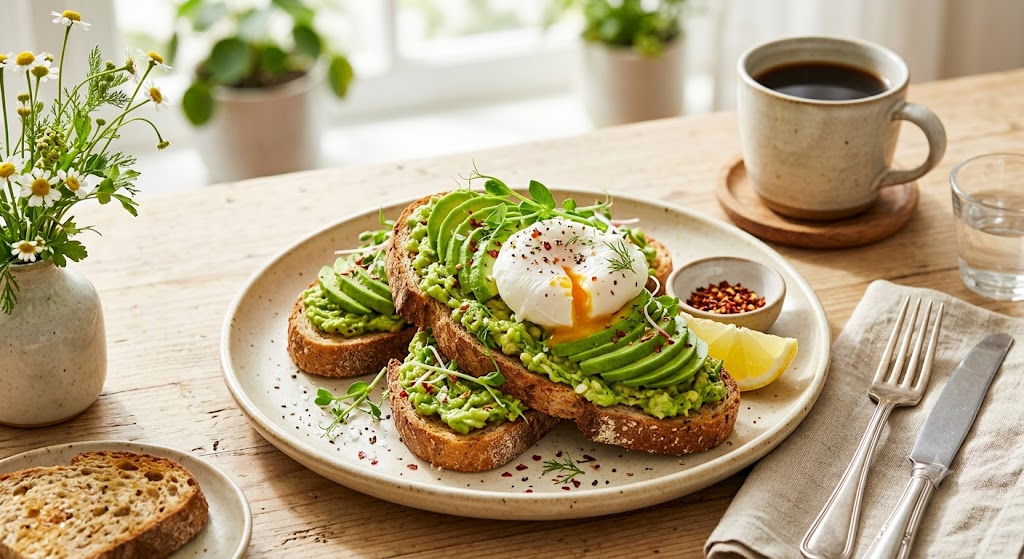
Ah, avocado toast—the absolute king of modern breakfasts. But how quickly do the calories add up when you start customizing?
Let’s look at a simple home-cooked baseline:
The Bread: 1 slice of artisanal whole-grain or sourdough bread (approx. 90-110 calories).
The Spread: 1/2 of a mashed medium Hass avocado (approx. 120 calories).
This baseline avocado toast comes out to a very reasonable 210 to 230 calories.
However, things get interesting when you start adding toppings:
Add a poached egg: +70 calories
Add a drizzle of olive oil: +120 calories
Add seeds or bacon: +50 to 100 calories
While healthy fats are fantastic for you, keep an eye on these extras so your morning toast doesn't accidentally turn into a 500-calorie heavy meal.
Guacamole vs. Fresh Avocado: Is One Better?
Is diving into a bowl of guacamole just as healthy as slicing up a fresh avocado?
The short answer: Yes, as long as it is freshly made!
Standard guacamole is just mashed Hass avocado mixed with lime juice, cilantro, red onion, tomatoes, and salt.
The Calories: One tablespoon of guacamole has about 23 calories, which is practically identical to eating raw avocado.
The Salt Factor: The biggest difference is sodium. Raw avocado has virtually zero sodium (just 7mg per 100g), while salted or store-bought guacamole can pack over 50mg of sodium per single tablespoon.
The Satiety Factor: Because guacamole is smooth and easy to scoop, it requires less chewing. This makes it much easier to accidentally overconsume while watching TV compared to eating a sliced, whole avocado.
Ditch the Logging Math: How to Track Your Avocado Hassle-Free
Let's be honest: trying to weigh your avocado, subtracting the pit weight, figuring out if it is California Hass or Florida green, and calculating the exact grams is a headache.
That is where VoCal comes in.
VoCal is a voice-activated calorie tracking app designed to take the friction out of logging your meals. Instead of searching through endless, confusing databases, you can simply tap the mic and speak naturally:
"I just had a slice of sourdough toast with half a medium Hass avocado and a poached egg."
Thanks to its smart natural language parser, VoCal instantly:
Identifies the cultivar (choosing the rich, high-fat Hass entry over Florida).
Calculates the exact portion size (translating "half a medium Hass" to 75g).
Subtracts the pit-and-skin weight automatically, so you are only logging what you actually ate.
Logs the entire meal in separate, accurate macronutrient columns in seconds.
It is the easiest way to enjoy your favorite creamy superfood without any of the tracking anxiety.
Quick Summary
At the end of the day, Persea americana (the humble avocado) is an absolute nutritional champion. While its calorie density requires a little bit of mindfulness, the incredible cardiorespiratory, metabolic, and satiety benefits make it worth every single bite.
By using smart tracking tools like VoCal, you can easily keep your portion sizes in check with nothing more than your voice. Go ahead and enjoy that creamy goodness!
Frequently Asked Questions (FAQs)
How many calories are in half an avocado?
Half of a medium Hass avocado contains approximately 120 calories and about 11 grams of healthy fat.
Is it okay to eat a whole avocado every day?
Yes! If you are following a low-carb, ketogenic, or highly active lifestyle, a whole avocado fits beautifully into your day. Just make sure to balance its calorie density with the rest of your daily meals.
Are the fats in avocados bad for my cholesterol?
Not at all! Avocados are rich in monounsaturated fats (mainly oleic acid), which clinical studies have shown can help lower "bad" LDL cholesterol and support "good" HDL cholesterol.
Can I use Florida avocados for guacamole?
You can, but because Florida avocados have a higher water content and lower fat profile, your guacamole might turn out a bit watery and less creamy than if you used a traditional Hass avocado.
Disclaimer: This is for informational purposes only. For medical advice or diagnosis, consult a professional.