
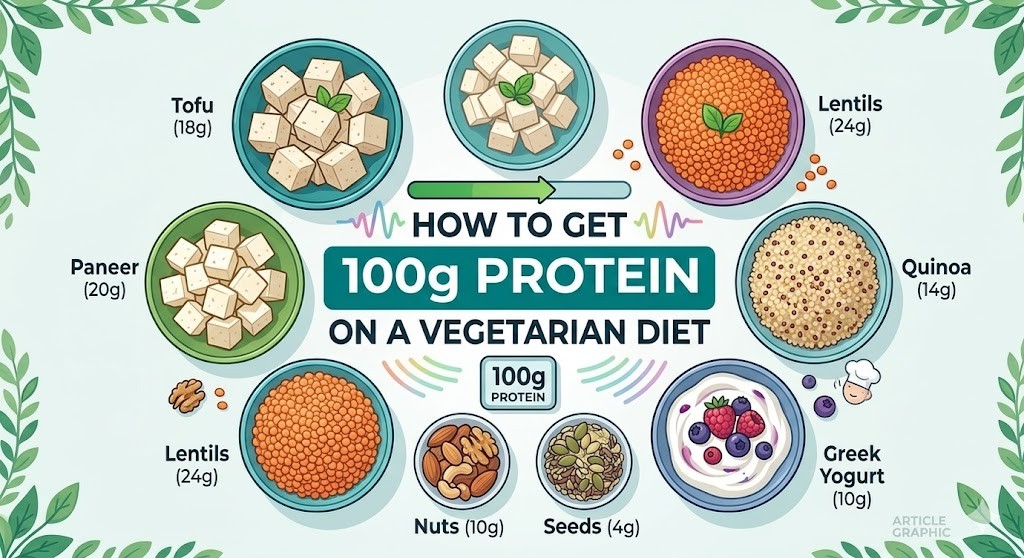
Think you need a steak the size of a frisbee to hit your protein goals? Think again! Whether you are looking to build muscle, lose weight, or just feel more energetic, hitting 100 grams of protein daily on a vegetarian diet is totally doable—and delicious. With the right strategy and a little help from modern tech, you can crush your goals without ever touching a piece of chicken.
Why Aim for 100 Grams?
Most of us have heard of the Recommended Dietary Allowance (RDA) for protein, which is roughly 0.8 grams per kilogram of body weight. For a 70 kg person, that’s just 56 grams. But here is the secret: that number is the minimum to keep you from getting sick, not the optimum for a high-performing life.
If you are active, lifting weights, or simply want to stay full longer while losing weight, 100 grams is often the "sweet spot". It helps repair muscle tissue and keeps your metabolism humming.
Activity Level | Recommended Intake (g/kg) | Estimated Daily Protein (75kg Adult) |
Sedentary Adult | 0.8 g/kg | 60 g |
Active Adult (Regular Exercise) | 1.1 - 1.5 g/kg | 82 - 112 g |
Strength/Endurance Athlete | 1.2 - 1.7 g/kg | 90 - 127 g |
Aging Adult (Age 50+) | 1.0 - 1.2 g/kg | 75 - 90 g |
Your Protein Pillars: The Heavy Hitters
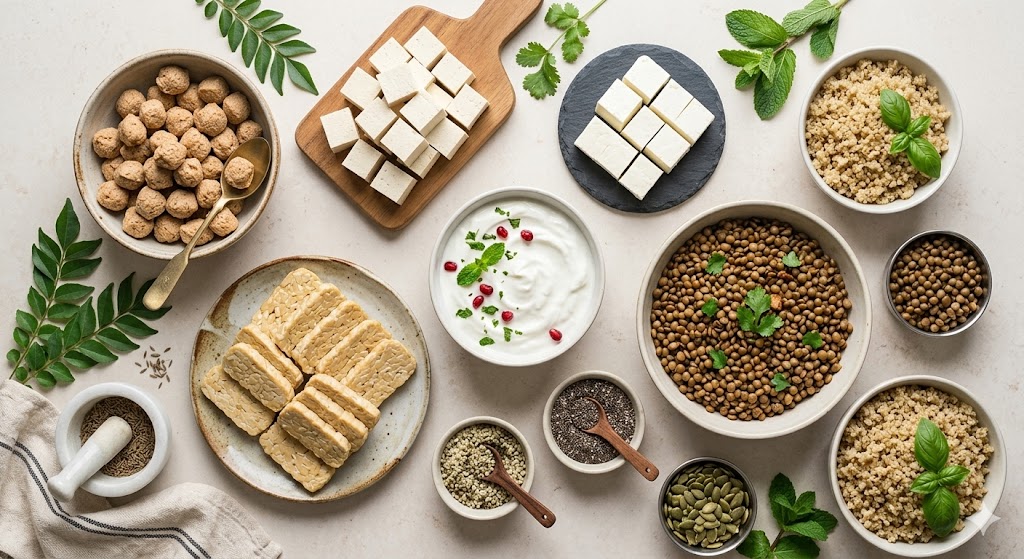
To hit 100g without eating 5,000 calories of rice and beans, you need "Protein Pillars"—foods that are protein-dense. Soy is your best friend here because it is a "complete" protein, meaning it has all the essential amino acids your body needs.
The latest 2024 guidelines from the National Institute of Nutrition (NIN) suggest a cereal-to-pulse ratio of 3:1 to make sure you are getting high-quality protein in every meal.
High-Protein Source | Protein per 100g (Cooked/Raw) | Why it's Awesome |
Soya Chunks (Dry) | 52 g | Budget-friendly powerhouse |
Tempeh | 20.3 g | Fermented for gut health |
Paneer (Full-Fat) | 18 - 18.8 g | Rich in Calcium and Vitamin A |
Firm Tofu | 17.3 g | Versatile and complete protein |
Edamame | 11 g | Great high-fiber snack |
Greek Yogurt | 10 - 15 g | Probiotic-rich and filling |
Secondary Multipliers: Every Gram Counts
While the pillars do the heavy lifting, your "multipliers" help you cross the finish line. These are seeds, nuts, and high-protein grains that you can sprinkle onto any meal. For example, just three tablespoons of hemp seeds adds a whopping 10 grams of protein to your morning smoothie.
Seed/Nut Source | Protein per 100g | Key Benefit |
Hemp Seeds | 31.6 g | Omega-3 & 6 fats |
Pumpkin Seeds | 29.8 g | High in Magnesium |
Peanut Butter | 24.1 g | Heart-healthy fats |
Chia Seeds | 16.5 g | Calcium and Fiber |
Almonds | 21 g | Vitamin E for skin health |
The 100g Daily Game Plan
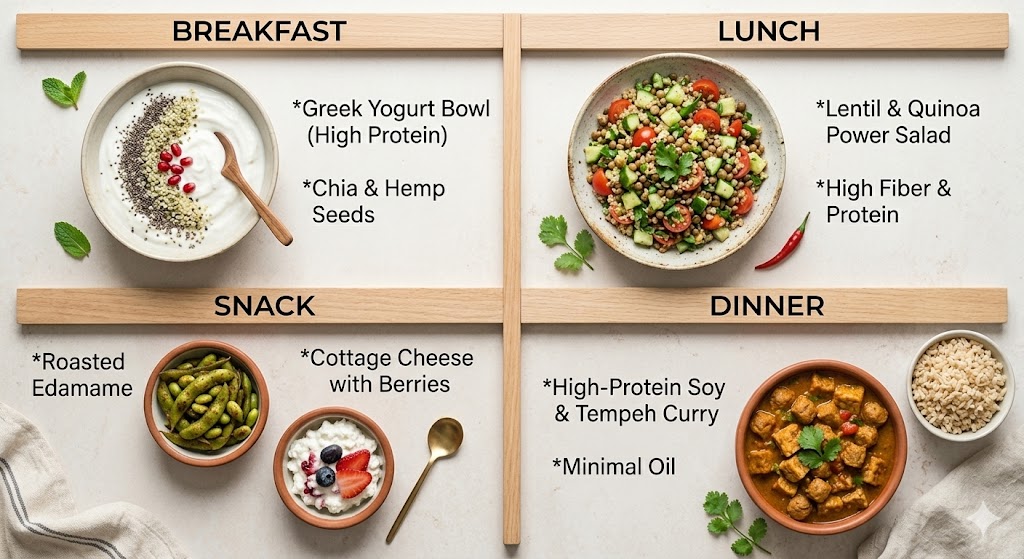
Distributing your protein throughout the day is key. Your body is most efficient at using protein when you eat about 20–30 grams per meal.
Breakfast (30g): Start with a bowl of 0% Plain Greek Yogurt topped with 2 tablespoons of hemp seeds and a side of sprouted grain bread.
Lunch (32g): A hearty lentil and quinoa salad. Use one cup of cooked lentils and a half cup of quinoa, then top with a sprinkle of cheese.
Snack (12g): Half a cup of low-fat cottage cheese or a serving of roasted edamame.
Dinner (30g): 150g of pan-seared Tempeh or a big bowl of Soya Chunk curry with minimal oil.
Total: 104g Protein!
Effortless Tracking with VoCal
The biggest hurdle to hitting 100g isn't the food—it's the tracking. Who has 15 minutes to search through databases for "Dal Makhani" after every meal?
This is where VoCal changes the game. Built specifically for Indian food and real-life habits, VoCal lets you log your meals just by speaking.
Speak Your Language: Supports 11 Indian languages including Hindi, Tamil, Telugu, and English.
Lightning Fast: Log an entire meal in 15 seconds compared to 15 minutes on other apps.
Indian Food Expert: It recognizes regional dishes like Paneer Bhurji and Chole with 95% accuracy.
No Photo Fatigue: You don't have to take pictures of your food in public; just talk and move on.
Summary
Hitting 100 grams of protein as a vegetarian is a simple matter of choosing the right "pillars" like soy and pulses, using "multipliers" like seeds, and tracking your progress effortlessly with VoCal. By building your meals around protein first, you'll be hitting your 100g goal in no time!
Frequently Asked Questions
Is soy safe for men?
Yes! Research and global health institutes like the ICMR-NIN confirm that moderate soy consumption is perfectly safe and does not negatively impact hormones.
Can I hit 100g without eggs or dairy?
Absolutely. You will just need to lean more heavily on seitan, tempeh, tofu, and high-protein pastas made from beans or lentils.
Will a high-protein diet hurt my kidneys?
For healthy individuals, 100g is well within a safe range. However, if you have a history of kidney issues, it is always best to consult a healthcare professional before making major dietary changes.
Disclaimer: This article is for informational purposes only and does not constitute medical advice. Please consult with a healthcare professional or a registered dietitian before beginning any new diet or supplement regimen.