

Picture this: You’re placing an order at your favorite burger spot. You decide to swap out classic french fries for sweet potato fries, feeling like a nutritional hero. But when it comes to the battle of sweet potato fries vs french fries calories, are you actually saving yourself a ton of calories, or is it mostly just clever marketing?
Let’s crack the case on sweet potato fry calories, uncover the hidden nutrient superpowers inside those orange wedges, and figure out how to enjoy your favorite crispy sides without sabotaging your health goals!
The Calorie Truth: Raw Potato vs. Deep Fryer

If you look at raw spuds sitting on the kitchen counter, sweet potatoes actually contain slightly more natural energy than white potatoes. But once they head into the kitchen, the cooking method changes everything.
When deep-fried at a restaurant, sweet potato fries soak up oil just like regular fries. On top of that, many restaurants coat sweet potato fries in refined starch batters to make them extra crispy, which drives up the calorie count. As a result, restaurant sweet potato fry calories end up practically neck-and-neck with classic french fries.
However, if you bake or air-fry them at home with just a light drizzle of healthy oil, the story changes completely!
Here is how the numbers stack up per 100-gram serving (about 3.5 ounces):
Nutritional Metric (per 100g serving) | Deep-Fried Sweet Potato Fries | Deep-Fried French Fries | Baked / Air-Fried Sweet Potato Fries | Baked / Air-Fried French Fries |
Energy (kcal) | 250 – 300 | 280 – 320 | 90 – 120 | 100 – 130 |
Total Fat (g) | 13.0 – 17.0 | 14.0 – 18.0 | 2.0 – 4.0 | 2.5 – 4.5 |
Carbohydrates (g) | 32.0 – 38.0 | 35.0 – 40.0 | 20.0 – 24.0 | 21.0 – 25.0 |
Dietary Fiber (g) | 3.5 – 4.5 | 2.5 – 3.0 | 3.0 – 4.0 | 2.0 – 2.5 |
Free Sugars (g) | 6.0 – 8.0 | 0.5 – 1.0 | 5.0 – 7.0 | 0.5 – 1.0 |
Sodium (mg) | 250 – 450 | 300 – 500 | 100 – 200 | 120 – 220 |
Carbs, Fiber, and Blood Sugar: What Happens After You Eat?
When comparing sweet potato fries vs french fries calories, total energy isn't the only thing to keep an eye on—carbohydrate quality matters just as much!
Sweet potatoes pack around 50% more dietary fiber than regular white potatoes. Fiber acts like a natural speed bump during digestion, helping you stay full longer and preventing sudden post-meal energy crashes.
However, sweet potatoes naturally contain higher amounts of natural simple sugars (like glucose, fructose, and sucrose). Deep-frying them at high heat breaks down those starches quickly, raising their Glycemic Index (GI) to around 76—similar to traditional deep-fried spuds. To keep the glycemic impact lower and preserve that gut-friendly fiber, opt for air-frying or oven-baking!
The Micronutrient Face-Off: Orange vs. White
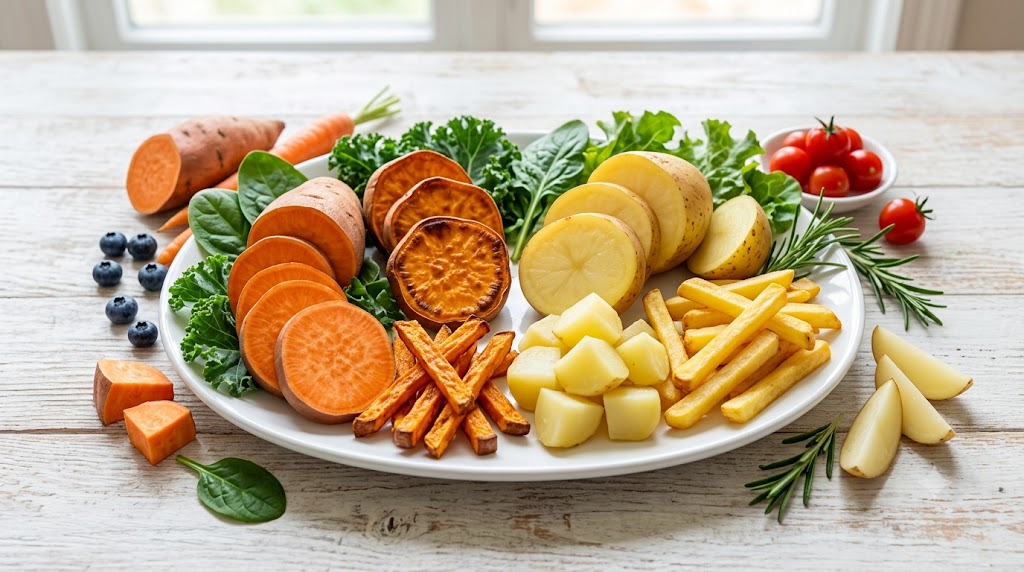
Even if deep-fried calorie counts are similar, sweet potatoes pull ahead when it comes to key vitamins! That vibrant orange hue comes from beta-carotene, an antioxidant your body converts directly into Vitamin A to support your eyes and immune system.
White potatoes aren't total lightweights, though! They deliver higher levels of Vitamin C, Vitamin B6, and potassium, which support heart function and steady daily energy.
Nutrient / Bioactive Compound | Sweet Potato Fries (% RDA per 100g) | Traditional French Fries (% RDA per 100g) | Primary Health Benefit |
Vitamin A (Beta-Carotene) | 80% – 89% | < 1% | Boosts vision and immune system strength |
Vitamin C | 3% – 10% | 15% – 24% | Supports immune health and collagen synthesis |
Vitamin B6 (Pyridoxine) | 15% | 23% | Helps convert food into steady daily energy |
Potassium | 10% – 12% | 10% – 14% | Supports muscle contraction and fluid balance |
Anthocyanins | High (in purple varieties) | Absent | Fights oxidative stress and supports metabolic health |
Cooking Tip: Keep an Eye on the Heat!
Did you know that sweet potatoes can form higher levels of a heat-induced compound called acrylamide when fried at very high temperatures? Because sweet potatoes have more natural reducing sugars, cooking them until almost burnt can trigger this chemical reaction.
To keep your fries healthy and clean, keep baking temperatures below 330°F (165°C) or give raw wedges a quick soak in water before air-frying.
Track Your Favorite Fries Effortlessly with VoCal
Logging side dishes accurately can feel like a guessing game. Did the restaurant deep-fry those sweet potato fries in heavy oil, or did you make air-fried wedges with a spray of olive oil? Manual searches in calorie-tracking databases often leave you guessing.
That’s where VoCal makes calorie tracking completely effortless. Instead of typing and searching through endless lists, simply open the app and speak naturally:
"I ate 4 ounces of homemade air-fried sweet potato fries with a pinch of sea salt and one teaspoon of olive oil."
VoCal’s smart voice-AI instantly converts your spoken description into accurate nutrition tracking backed by verified USDA data. Whether you're tracking sweet potato fry calories, macronutrients, or fiber goals, VoCal keeps your daily logging fast and hands-free.
Frequently Asked Questions (FAQs)
Are sweet potato fries actually good for weight loss?
Yes! When baked or air-fried with minimal oil, sweet potato fries are rich in fiber and complex carbs that promote satiety and help control appetite. Just keep an eye on portion sizes and avoid heavy deep-fried restaurant versions.
How many calories are in a typical portion of sweet potato fries?
A 100-gram serving (about 3.5 ounces) of restaurant deep-fried sweet potato fries averages 250 to 300 calories. The same serving cooked in an air fryer or oven with minimal oil contains only 90 to 120 calories.
Which is healthier: sweet potato fries or french fries?
Sweet potato fries win on Vitamin A, fiber, and antioxidant content. Traditional french fries offer slightly more Vitamin C and Vitamin B6. Ultimately, how you prepare them (air-fried vs. deep-fried) makes a much bigger health impact than the vegetable itself!
Disclaimer: This is for informational purposes only. For medical advice or diagnosis, consult a professional.