
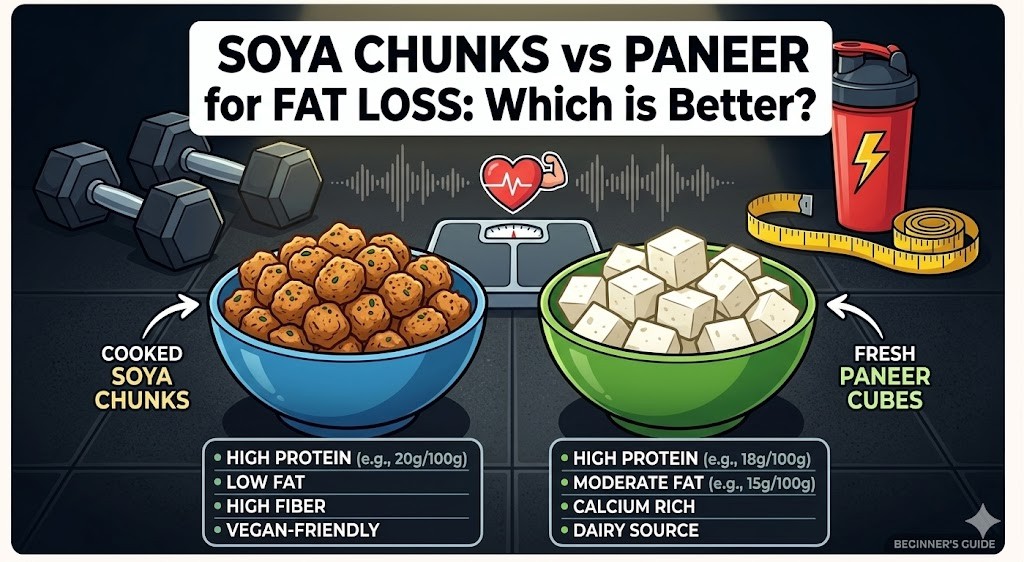
If you are a vegetarian hitting the gym, you know the "protein struggle" is real. You’ve probably found yourself staring at a block of paneer and a bag of soya chunks, wondering: "Which one is going to help me see my abs faster?"
Both are legendary in Indian kitchens, but when it comes to your gym diet, they play very different roles. Whether you want to pack on size or shred for summer, choosing the right one can make all the difference. Let’s break down the ultimate vegetarian protein showdown: Soya Chunks vs Paneer.
The Quality Check: Are They "Complete" Proteins?
In the world of fitness, not all proteins are created equal. Your muscles need nine "essential" amino acids that your body can’t make on its own.
The good news? Both paneer and soya chunks are "complete" proteins. Paneer is a dairy star, loaded with leucine, the "anabolic trigger" that tells your muscles to start growing. Soya chunks are a plant-based miracle—one of the few plant sources to hit a perfect 1.0 score on the protein quality scale (PDCAAS), meaning they are just as effective for muscle repair as animal products.
Macronutrient Showdown: Soya Chunks vs Paneer for Fat Loss
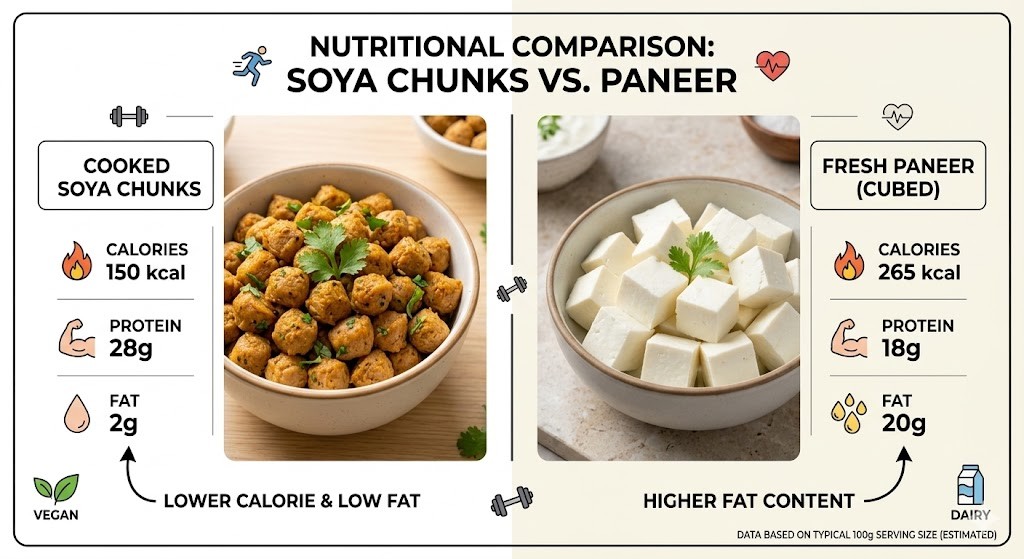
If your primary goal is fat loss, the numbers tell a very clear story. Soya chunks are the "lean" choice, while paneer is the "rich" choice. Soya chunks are "defatted," meaning most of the oil is removed during processing, leaving behind almost pure protein and fiber.
Paneer, however, is calorie-dense because it keeps the milk fat. Unless you’re using a low-fat version, paneer brings significantly more calories to the party.
Nutritional Concentration: Dry vs. Cooked Weights
One common mistake is comparing dry soya chunks to fresh paneer. When you cook soya chunks, they soak up water and triple in weight! Here is how they stack up:
Nutrient (per 100g) | Soya Chunks (Dry) | Soya Chunks (Cooked) | Paneer (Full-Fat) |
Energy (kcal) | 330 – 354 | 100 – 115 | 265 – 300 |
Protein (g) | 50 – 53 | 16 – 18 | 18 – 20 |
Total Fat (g) | 0.5 – 1.2 | 0.2 – 0.4 | 20 – 25 |
Carbohydrates (g) | 30 – 35 | 10 – 11 | 1.2 – 3.0 |
Dietary Fiber (g) | 13 – 21 | 4.0 – 5.0 | 0 |
Cholesterol (mg) | 0 | 0 | 70 – 90 |
The Verdict for Fat Loss: Soya chunks are the winner here. For the same 18g of protein, you’ll consume about 110 calories with soya chunks versus 265+ calories with paneer. Plus, the fiber in soya helps you feel full for much longer.
Muscle Gain & Recovery: The Case for Casein

While soya chunks win the fat loss round, paneer has a secret weapon for muscle growth: Casein. Casein is a slow-digesting protein that forms a "bolus" in your stomach, releasing amino acids slowly over several hours.
This makes paneer the perfect "pre-sleep" meal. Eating paneer at dinner provides a steady "slow-drip" of protein to your muscles while you sleep, preventing muscle breakdown (catabolism) and supporting overnight repair.
Micronutrient Bonus: Beyond Just Protein
Muscles need more than just protein to function; they need minerals like iron for energy and calcium for strong contractions.
Micronutrient | Soya Chunks (per 100g Dry) | Paneer (per 100g) | Gym Benefit |
Iron (mg) | 15 – 20 | 0.2 – 0.9 | Keeps energy levels high |
Calcium (mg) | 300 – 350 | 208 – 476 | Strong bones and muscle firing |
Potassium (mg) | 1800 – 2490 | 20 – 30 | Prevents muscle cramps |
Vitamin B12 | 0 (unless fortified) | 0.8 mcg | Essential for nerve health |
Soya chunks are an iron and potassium powerhouse, which is great for stamina. Paneer provides much-needed Vitamin B12 and highly bioavailable calcium.
Pro-Tips for Your Gym Diet
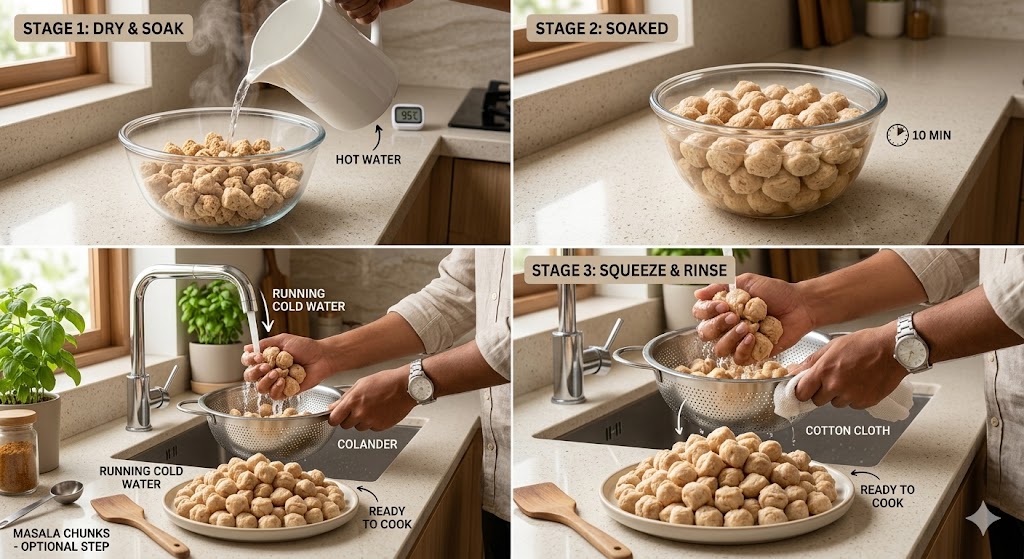
The Soya "Triple-Rinse": To avoid the "beany" taste and potential gas, soak your soya chunks in boiling water, then squeeze and rinse them three times before cooking.
Hormone Myth-Busting: Don't worry, guys—moderate soy intake (25-50g dry) will not mess with your testosterone. Science shows it has zero effect on male hormones in these amounts.
The Hybrid Approach: Use soya chunks during the day to stay lean and full, and enjoy paneer at night for sustained recovery.
Effortless Tracking with VoCal
Trying to figure out the difference between "dry" and "cooked" soya chunks in a traditional app can be a headache. That’s where VoCal comes in.
Instead of searching through endless databases, you can just say: "I had 100 grams of cooked soya chunks and a bowl of dal." The AI-powered voice tracker understands the difference in caloric density automatically, giving you 98% accuracy without the typing. It’s the fastest way to ensure your "soya chunks vs paneer for fat loss" strategy is actually working!
Final Summary: Which Should You Pick?
Choose Soya Chunks if: You are on a strict budget, trying to lose body fat, or need a high-fiber meal to stay full.
Choose Paneer if: You are in a muscle-building phase, need an overnight recovery meal, or require more Vitamin B12 and Calcium.
FAQs
Is it okay to eat soya chunks every day?
Yes! Eating 25–50 grams of dry soya chunks daily is perfectly safe and a great way to meet your protein goals.
Does paneer make you fat?
Only if you eat too much of it! Because it is high in fat and calories, you should stick to 50–100g portions if you are watching your weight.
Which is better for post-workout?
Soya chunks are great post-workout for a quick, lean protein hit. Paneer is better for pre-sleep recovery.
Disclaimer: This article is for educational and informational purposes only and is not a substitute for professional medical advice, diagnosis, or treatment. Always seek the advice of your physician or a registered dietitian before making significant changes to your diet or starting a new fitness routine.