

Take a stroll down the center aisles of any American grocery store, and you will notice something wild: real, recognizable ingredients have practically become an endangered species.
Data from the National Health and Nutrition Examination Survey (NHANES) reveals that ultra-processed foods (UPFs) now make up roughly 60% of the daily calories consumed by American adults, and over 65% of what kids eat.
Between microwaveable dinners engineered for indefinite shelf lives, colorful boxed cereals, and soft drinks packed with high-fructose corn syrup, the modern diet has essentially become a science experiment.
Rejecting ultra-processed foods is not about living on raw kale stems or feeling guilty if you grab a slice of birthday cake. It is about understanding what commercial food processing does to your biology, ditching factory concoctions, and rediscovering the satisfying power of meals built from real ingredients.
Here is your complete guide to identifying hidden UPFs, surviving the initial cravings, eating whole foods on a budget, and making the transition seamless.
The NOVA Breakdown: What Even Is an Ultra-Processed Food?
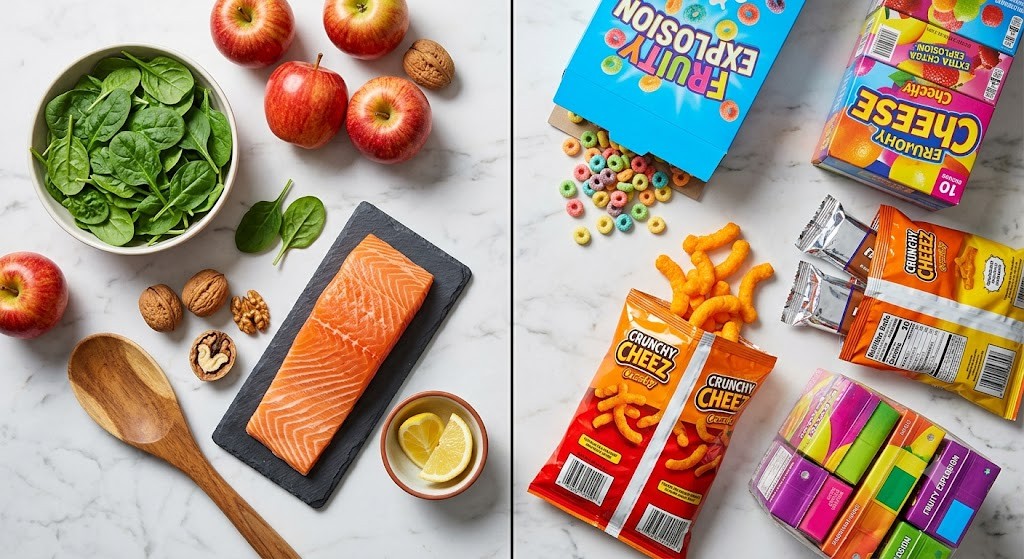
To kick ultra-processed formulations out of your kitchen, you first need a simple way to identify them. Nutrition scientists at the University of São Paulo created the NOVA classification system, an internationally recognized standard used by researchers at Harvard and the World Health Organization.
NOVA sorts everything we eat into four straightforward categories based on what happens to the food before it reaches your plate:
Group 1: Unprocessed or Minimally Processed Foods. Think of these as nature's original recipes: fresh spinach, apples, dry lentils, raw walnuts, rolled oats, and fresh cuts of chicken or fish. They may be washed, sliced, frozen, or pasteurized, but their cellular structure remains intact.
Group 2: Processed Culinary Ingredients. These are kitchen basics extracted directly from Group 1 foods, like extra virgin olive oil, culinary butter, table sugar, and sea salt. You rarely eat them by themselves; you use them to cook real meals.
Group 3: Processed Foods. Simple pairings of Group 1 and Group 2, often created for traditional preservation. Examples include fresh sourdough bread, canned beans packed in water and salt, aged cheddar cheese, and canned tuna.
Group 4: Ultra-Processed Formulations (UPFs). Industrial creations made through multi-step chemical and physical processing. Group 4 products rarely contain an intact food matrix. Instead, they combine cheap fractionated starches, protein isolates, industrial seed oils, emulsifiers, cosmetic dyes, and flavor enhancers to create hyper-convenient, hyper-palatable packages.
In nature, whole foods usually offer concentrated carbohydrates (like fruit) or concentrated fats (like nuts and seeds). Ultra-processed items, by contrast, are factory-designed with an unnatural 1:1 carbohydrate-to-fat caloric ratio paired with sodium, creating an intense sensory reward that bypasses normal fullness cues.
NOVA Classification | Primary Processing Methods | Distinguishing Components | Representative Dietary Examples | Biological Matrix Integrity |
Group 1: Unprocessed / Minimally Processed | Cleaning, refrigeration, freezing, drying, pasteurizing, boiling | Intact cellular tissue, natural water, intrinsic micronutrients | Fresh spinach, raw walnuts, rolled oats, intact chicken cuts, dried lentils | Fully intact; requires enzymatic hydrolysis and mechanical mastication |
Group 2: Processed Culinary Ingredients | Mechanical extraction, pressing, centrifugal refining, crystallization | Pure extracted fatty acids, simple carbohydrates, minerals | Extra virgin olive oil, culinary butter, cane sugar, sea salt | Extracted substrate; consumed exclusively as a culinary preparation vehicle |
Group 3: Processed Foods | Basic preservation combining Group 1 foods with Group 2 ingredients | Whole food base accompanied by basic preservation agents | Canned black beans in salt brine, fresh artisanal bread, canned tuna | Largely preserved; maintains intact plant or animal cellular morphology |
Group 4: Ultra-Processed Formulations (UPFs) | Extrusion, chemical fractioning, hydrogenation, industrial synthesis | Modified starches, protein isolates, emulsifiers, cosmetic additives | Commercial breakfast cereals, reconstituted nuggets, soft drinks, packaged pastries | Completely degraded; rapid absorption kinetics, minimal mastication demand |
Bottom Line: If a food has been pulverized, stripped of its natural fiber, and rebuilt with chemical texturizers and flavor extracts, it is a Group 4 ultra-processed food.
The Glow-Up Timeline: What Happens to Your Body When You Ditch UPFs
Is rejecting ultra-processed foods genuinely worth the effort? A clinical trial from the National Institutes of Health (NIH) settled the debate.
Researchers housed 20 adults in an inpatient metabolic ward and served them either an ultra-processed diet or an unprocessed whole-food diet for two weeks each. Both diets were matched down to the gram for total presented calories, sugar, fat, sodium, and dietary fiber.
The result? When on the ultra-processed diet, participants automatically consumed an extra 508 calories per day and gained two pounds in two weeks. When eating whole foods, they spontaneously ate 500 fewer calories per day and lost two pounds—without calorie counting or deliberate restriction.
Here is how your body responds across each phase after saying goodbye to UPFs:
Days 1 to 3: The Fluid Flush and Glycemic Reset
Without high doses of hidden sodium and fast-digesting starches, your blood sugar stabilizes and circulating insulin drops. Because insulin prompts the kidneys to hold onto sodium, lower insulin triggers natural fluid shedding. You will likely notice a rapid drop in water weight, less facial puffiness, and steadier energy between meals.
Days 4 to 14: Gut Microbiome Revival
Many UPFs rely on synthetic emulsifiers like polysorbate 80 and carboxymethylcellulose. These detergent-like compounds can erode the mucosal layer of your intestines, allowing bacterial debris to provoke low-grade systemic inflammation. Once you cut out these chemicals and introduce natural plant fibers, your gut lining begins repairing itself. Beneficial gut bacteria ferment these fibers into short-chain fatty acids like butyrate, easing bloating and supporting regular digestion.
Weeks 3 to 8: Sensory Reset and Dopamine Balance
Industrial flavor coatings overstimulate your taste buds and flood your brain with dopamine. After a few weeks without synthetic sweeteners and artificial flavor boosters, your taste receptors reset. Natural foods like crisp apples, roasted carrots, and grilled salmon start tasting rich and flavorful. In the brain, your dopamine $D_2$ receptors normalize, silencing the urge to compulsively snack between meals.
Months 2 and Beyond: Long-Term Cardio-Metabolic Protection
A 30-year epidemiological study led by the Harvard T.H. Chan School of Public Health tracked over 200,000 adults and found that high consumption of UPFs—especially processed meats and sugary beverages—significantly raises the risk of cardiovascular disease, stroke, and premature death. Long-term adherence to whole foods reduces visceral belly fat, improves blood pressure, and lowers systemic inflammatory markers like hs-CRP.
Phase of Transition | Biological Timeline | Primary Biomarkers and Organ Systems | Underlying Physiological Mechanisms | Observable Clinical Outcomes |
Acute Phase | Days 1–3 | Fasting plasma insulin, renal natriuresis, serum electrolytes | Mitigation of rapid glucose absorption; blunted hyperinsulinemia; mobilization of glycogen-bound water | Rapid reduction in extracellular fluid, alleviation of peripheral puffiness, decrease in resting blood pressure |
Subacute Phase | Days 4–14 | Epithelial tight junctions, fecal short-chain fatty acids (SCFAs), microbiome diversity | Cessation of detergent emulsifier ingestion; mucosal barrier regeneration; prebiotic fermentation by Faecalibacterium | Relief from abdominal distension, irregular bowel motility, and postprandial lethargy |
Adaptive Phase | Weeks 3–8 | Striatal dopamine D_2 receptor density, gustatory receptor sensitivity | Resensitization of central mesolimbic reward pathways; peripheral taste bud turnover and adaptation | Resolution of compulsive cravings; enhanced satiety perception; automatic reduction in caloric intake |
Consolidation Phase | Month 2+ | High-sensitivity C-reactive protein (hs-CRP), ApoB, visceral adipose volume, HbA1c | Resolution of metabolic endotoxemia; downregulation of hepatic de novo lipogenesis; negative energy balance | Lowered incidence of cardiovascular morbidity, metabolic syndrome, and cognitive decline |
Bottom Line: Ditching ultra-processed foods triggers rapid benefits: you shed excess water weight within days, restore gut barrier function within weeks, and lower cardiovascular risk over the long haul.
Detective Mode: How to Outsmart Sneaky Labels and Spot Hidden Additives

Food packaging can be misleading. Manufacturers often use buzzwords like "Plant-Based," "Heart-Healthy Whole Grains," "Organic," or "No Sugar Added" to give highly engineered products a healthy appearance.
Under FDA guidelines, ingredients are listed in descending order by weight. The easiest way to determine whether a product is ultra-processed is to check the ingredient list for these four common additive categories:
Fractionated Food Derivatives: Ingredients like soy protein isolate, pea protein powder, vital wheat gluten, corn maltodextrin, dextrose, and high-fructose corn syrup. These are cracked components of whole foods stripped of their natural fiber, water, and micronutrients.
Industrial Emulsifiers and Gums: Additives like polysorbate 60/80, carboxymethylcellulose (cellulose gum), mono- and diglycerides, carrageenan, and xanthan gum. These give low-fat items a creamy mouthfeel and keep packaged baked goods soft on grocery shelves for months, but they can irritate your gut lining.
Cosmetic Flavors and Dyes: Ingredients such as "natural flavors," artificial flavorings, autolyzed yeast extract, disodium inosinate, caramel color, and Red 40. These are added to mimic home-cooked flavors and cover up the taste of synthetic preservatives.
High-Potency Sweeteners: Additives like sucralose, aspartame, acesulfame potassium, saccharin, and synthetic sugar alcohols like maltitol. Long-term studies associate heavy intake of artificially sweetened drinks with disrupted gut microbiota and elevated cardiovascular risk.
Many of these industrial additives enter the US food supply through the FDA's "Generally Recognized as Safe" (GRAS) provision. Established in 1958, this rule allows food manufacturers to self-determine the safety of novel additives using private panels, bypassing mandatory agency reviews before products land on store shelves.
Industrial Additive Class | Common Label Additives | Intended Food Manufacturing Function | Observed Biological & Pathophysiological Mechanism | Whole-Food Culinary Substitution |
Industrial Emulsifiers | Polysorbate 80, Carboxymethylcellulose, Mono- and Diglycerides | Prevents lipid-water separation; maintains shelf-stable softness in processed baked goods | Solubilizes the protective enteric mucosal layer; induces low-grade inflammation and dysbiosis | Egg yolks, pure extra virgin olive oil, whole tahini, mashed avocado |
Industrial Sweeteners | Sucralose, Aspartame, Acesulfame Potassium, Saccharin | Imparts sweet taste profiles without caloric loading; lower input cost | Alters gut microbial taxa; uncouples sweet perception from metabolic digestive feedback | Fresh berries, mashed bananas, raw pureed dates in moderation |
Hydrolyzed Starches | Maltodextrin, Modified Corn Starch, Dextrose | Acts as bulking carrier for flavorings; stabilizes moisture; thickens liquids | High glycemic index; rapid intestinal transit; blunts satiety peptide production | Boiled potatoes, cooked whole oats, mashed chickpeas, chia seeds |
Cosmetic Flavorings | Autolyzed Yeast Extract, Disodium Guanylate, "Natural Flavors" | Mimics savory umami or fresh culinary flavors in low-protein formulations | Overrides homeostatic satiety signaling; promotes compulsive hyper-palatable eating | Garlic, onions, tomato paste, pure culinary herbs, cracked black pepper |
Bottom Line: Don't let front-of-box claims fool you. If the ingredient list reads like a chemistry textbook, leave it on the shelf.
Taming the Dopamine Dragon: How to Break Free From Food Addiction
If cutting out potato chips or packaged cookies feels harder than expected, you are not imagining it. Research using the Yale Food Addiction Scale (YFAS)—which applies clinical addiction criteria to eating behaviors—estimates that 14% of adults and 12% of children meet the threshold for ultra-processed food addiction.
When you consume refined carbohydrates and industrial fats together, your brain releases surges of extracellular dopamine in the striatum that match patterns seen with addictive substances like nicotine and alcohol.
Over time, this floods your neural pathways, leading to a downregulation of dopamine D_2 receptors. Once that happens, normal whole foods can taste bland, and your brain prompts you to seek out another hyper-palatable snack.
Breaking this cycle during the first five days requires intentional nutritional strategies:
Anchor Every Meal with Complete Protein: Consuming 30 to 40 grams of quality protein per meal (such as pasture-raised eggs, wild fish, tofu, or lentils) triggers the release of satiety hormones like cholecystokinin (CCK) and GLP-1, helping keep your brain's reward centers calm.
Add Viscous Dietary Fiber: Soluble fibers from chia seeds, oats, and black beans swell in your digestive tract, slowing stomach emptying and smoothing out blood sugar spikes. This helps prevent the mid-afternoon energy crashes that trigger sugar cravings.
Clear Conditioned Visual Cues: Seeing commercial packaging or branded snack boxes can trigger anticipatory dopamine spikes that challenge your willpower. Keeping UPFs out of your home pantry makes staying on track much easier.
Find Dopamine Beyond the Pantry: Get natural mood boosts through brisk walks in morning sunlight, regular strength workouts, or relaxing cold showers while your neurochemistry recalibrates.
Bottom Line: UPF cravings stem from real neurobiology, not weak willpower. Counter them by eating plenty of protein and fiber while giving your taste buds time to reset.
Wallet-Friendly Wins: Eating Whole Foods Without Breaking the Bank
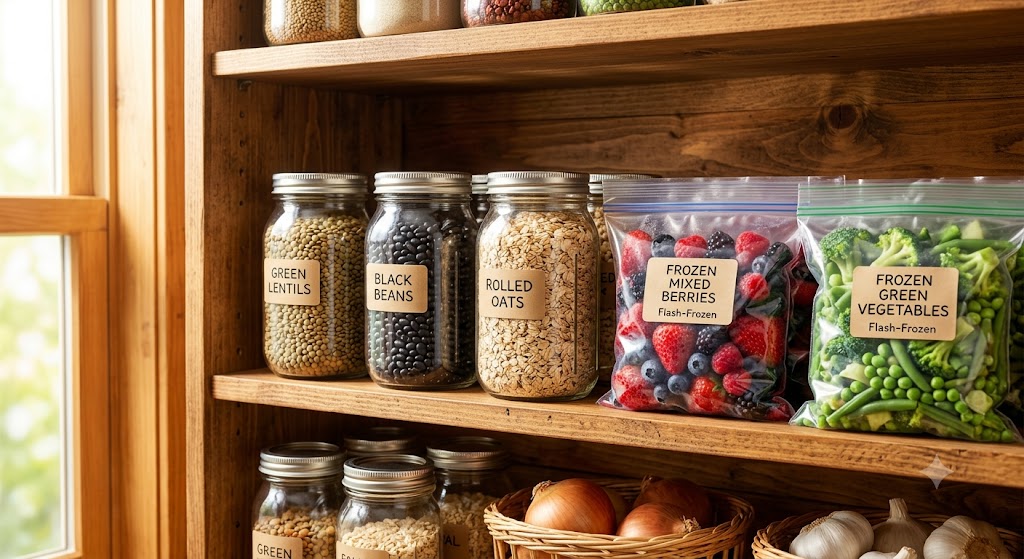
A frequent worry about cutting out ultra-processed food is the potential grocery bill. While fancy specialty products and pre-packaged organic snacks come with steep markups, foundational whole foods are often far more economical than processed foods.
Packaged snacks may seem inexpensive at the checkout counter, but they offer poor nutritional return. Because their lack of intact fiber and protein causes you to eat roughly 500 extra calories a day, you end up buying more food overall just to stay full.
You can build an economical whole-food kitchen using straightforward staples:
Buy Bulk Dried Legumes: Dried black beans, green lentils, pinto beans, and chickpeas cost under two dollars a pound and deliver abundant plant protein, potassium, and prebiotic fiber. Unlike processed fake meats packed with protein isolates, whole legumes keep your gut and heart healthy without industrial additives.
Rely on the Freezer Section: Flash-frozen broccoli, chopped spinach, green beans, and mixed berries are picked and frozen at peak ripeness. They retain as many vitamins as fresh produce, have extended shelf lives, and help prevent food waste.
Pick Budget-Friendly Animal Proteins: Skip pre-sliced deli cold cuts, bacon, and cured sausages, which Harvard researchers consistently tie to increased risks of heart disease and colorectal cancer. Opt instead for affordable whole proteins like pastured eggs, bone-in chicken thighs, and canned wild sardines.
Batch Cook Whole Grains: Simmering a big pot of brown rice, quinoa, or steel-cut oats on Sunday gives you ready-to-reheat bases for weekday meals at a fraction of the cost of boxed instant options.
Dietary Category | Common Ultra-Processed Convenience Choice | Economical Whole-Food Alternative | Estimated Cost Differential | Functional Nutritional and Metabolic Advantage |
Breakfast Carbohydrate | Branded boxed breakfast cereal | Bulk rolled or steel-cut whole oats | 60% to 75% Lower per dry ounce | Rich in beta-glucan soluble fiber; contains zero added sugars or synthetic stabilizers; smooth glycemic curve. |
Plant-Based Protein | Engineered frozen meat-substitute patties | Bulk dried green lentils or black beans | 80% to 85% Lower per gram of protein | Delivers an intact cellular matrix; free of isolated proteins, synthetic gums, and concentrated vegetable oils |
Animal-Based Protein | Packaged deli cold cuts, cured bacon, sausages | Whole pastured eggs; canned wild sardines; chicken thighs | 35% to 50% Lower per serving | Eliminates sodium nitrite preservatives; significantly reduces cardiovascular disease and mortality risks |
Convenience Snacks | Extruded potato chips, flavored corn chips | Home-popped whole corn kernels; raw carrot spears with hummus | 65% to 70% Lower per volume | Free of oxidized frying oils; contains zero synthetic flavor powders; provides natural resistant starches |
Beverages | Commercial diet sodas or sweetened bottled teas | Water infused with fresh lemon or cold-steeped herbal tea | 85% to 90% Lower per fluid ounce | Avoids synthetic artificial sweeteners, refined sugars, phosphoric acid, and artificial colorants |
Bottom Line: Real whole foods don't have to strain your wallet. Dried legumes, frozen vegetables, and batch-cooked whole grains cost far less per serving than packaged convenience foods.
The Long Game: Big Health Wins for Your Heart and Brain
Switching to a whole-food diet pays major health dividends over the course of your life.
Cardiovascular disease remains the leading cause of death in the United States. In a 30-year investigation published in The Lancet Regional Health-Americas, researchers evaluated the eating habits of over 200,000 adults.
The findings were clear: high overall consumption of ultra-processed foods was linked with higher rates of coronary heart disease and stroke. The worst culprits were processed meats and sugar-sweetened beverages.
The health benefits of kicking UPFs extend directly to your brain. Harvard analyses found that participants with the highest UPF intake had an 8% to 14% higher risk of death from neurodegenerative conditions like dementia. Chronic microvascular inflammation, repeated blood sugar spikes, and emulsifier-induced gut dysbiosis take a toll on cerebral blood vessels over time.
Transitioning to whole foods also helps trim visceral fat—the metabolically active fat that settles deep around your liver and abdominal organs. Reducing this hidden belly fat improves insulin sensitivity, supports arterial health, and protects cognitive clarity as you age.
Bottom Line: Rejecting ultra-processed staples—especially processed meats and sugary drinks—is one of the most effective lifestyle choices you can make to safeguard your heart and brain.
Stop Guessing, Start Speaking: Effortless Whole-Food Tracking with VoCal
There is one practical hurdle people run into when rejecting ultra-processed items: tracking home-cooked whole meals can feel exhausting.
Ultra-processed foods are easy to log because they come in pre-portioned packages with simple barcodes. But when you switch to cooking real food at home—making a colorful skillet of roasted chicken breast, sweet potatoes, broccoli florets, and a drizzle of olive oil—traditional calorie trackers can become frustrating.
Searching clunky databases for seven separate ingredients, fiddling with portion sliders, or building complicated custom recipes burns up time and leads to tracking fatigue. Meanwhile, camera-based apps often guess wrong: an optical scanner can't tell whether you cooked your vegetables in a teaspoon of butter or two tablespoons of olive oil, and it can't see the lentils tucked inside a home-cooked stew!
That is why VoCal is built around your voice.
Instead of spending minutes searching menus or taking photos of your plate, you talk to your phone just like you would to a nutritionist:
"VoCal, for lunch I had five ounces of grilled chicken breast, one cup of brown rice, a cup of sautéed zucchini, and one tablespoon of extra virgin olive oil."
VoCal's smart natural language engine parses your sentence in seconds:
The Protein: 5 oz grilled chicken breast.
The Whole Carb: 1 cup cooked brown rice.
The Veggie: 1 cup sautéed zucchini.
The Culinary Fat: 1 tbsp extra virgin olive oil.
You get instant, accurate calorie and macronutrient tracking without typing, database hunting, or photo frustration. It makes eating whole, scratch-cooked foods just as simple to track as scanning a processed barcode.
Bottom Line: Ditching UPFs means enjoying scratch cooking. Don't let clunky apps derail your progress—use VoCal to log whole meals in five seconds flat.
Frequently Asked Questions
What are the most important ultra-processed foods to cut out first?
Start with processed meats (such as hot dogs, cured bacon, and deli cold cuts) and sugar-sweetened drinks (like sodas and sweetened bottled teas). Harvard cohort studies show that these two specific categories carry the strongest links to cardiovascular disease and early mortality. Swapping soda for sparkling water and trading deli meat for hard-boiled eggs or canned tuna delivers an immediate health boost.
Can a plant-based or vegan diet still be ultra-processed?
Yes. Many commercial vegan meats, packaged dairy-free cheeses, and vegan snack bars fall squarely into Group 4 of the NOVA classification. They are often assembled from isolated soy or pea proteins, refined seed oils, synthetic texturizers, and emulsifying gums. For genuine wellness benefits, build plant-based meals around whole legumes, tofu, tempeh, nuts, seeds, and intact vegetables.
How long does it take for food cravings to subside after quitting UPFs?
Physical cravings usually peak between days two and five as your body clears quick-acting sugars and adjusts to stable blood glucose levels. By weeks three to four, taste receptors renew, and striatal dopamine $D_2$ receptors begin to normalize, making natural, unprocessed foods taste more satisfying and curbing compulsive snacking urges.
Do I have to eliminate 100% of ultra-processed foods to see health benefits?
Not at all. While complete elimination is great, nutrition science shows that reducing your overall intake makes a substantial difference. Dropping your UPF consumption from 60% down to 20% or less of your daily calories relieves pressure on your cardiovascular system, cuts down on empty calories, and lets your gut lining regenerate.
How does VoCal help when transitioning to a whole-food lifestyle?
When you cook whole foods from scratch, logging individual ingredients in traditional apps can feel like a chore. With VoCal, you simply speak your meal naturally into your phone. VoCal identifies the whole foods, portion sizes, and cooking oils automatically, giving you macros in seconds so you can focus on enjoying real meals.
Disclaimer: This is for informational purposes only. For medical advice or diagnosis, consult a professional.