
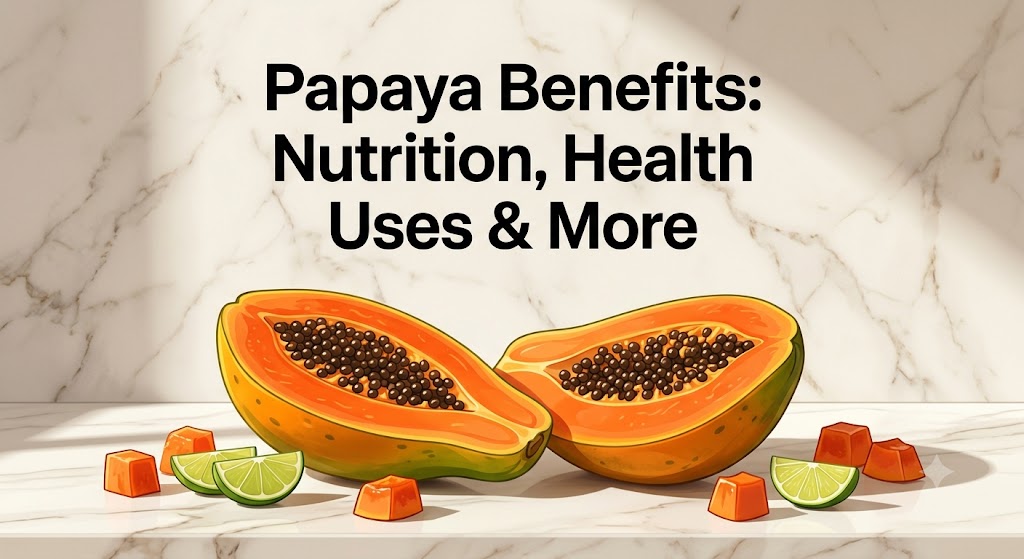
With its vibrant orange flesh, buttery texture, and sunny tropical flavor, papaya feels like a vacation on a spoon. Christopher Columbus famously referred to it as the "fruit of the angels," and modern science reveals he was definitely onto something.
Beyond brightening up your breakfast bowl, papaya (Carica papaya) packs a serious nutritional punch. From digestion-friendly enzymes to skin-loving antioxidants, this tropical powerhouse supports full-body wellness in ways you might not expect.
Here is everything you need to know about papaya nutrition, its top health benefits, and how to fit it effortlessly into your daily routine.
Papaya Nutrition: What’s Inside This Tropical Powerhouse?
Papaya delivers high nutrient density with very few calories. It is naturally composed of roughly 88% water, making it deeply hydrating and satisfying without weighing you down.
According to the USDA FoodData Central database, a 1-cup serving of fresh diced papaya (around 145 grams) provides just 62 calories. Over 90% of those calories come from natural carbohydrates, balanced by 2.5 grams of dietary fiber that helps steady your digestion.
Even better, a single cup delivers almost an entire day's worth of vitamin C (98% of your Daily Value!), alongside a healthy dose of folate, potassium, and protective carotenoids.
Nutrient Component | Amount per 1 Cup Diced (145 g) | % Daily Value (DV) | Why Your Body Loves It |
Calories | 62 kcal | 3% | Low-calorie density that fills you up |
Total Carbohydrates | 15.7 g | 6% | Wholesome energy with 13.2 g net carbs |
Dietary Fiber | 2.5 g | 9% | Promotes gut regularity and steady blood sugar |
Total Sugars | 11.3 g | 23% | Naturally occurring glucose and fructose |
Protein | 0.68 g | 1% | Minor plant amino acid contribution |
Total Fat | 0.38 g | 0% | Naturally fat-free tropical snacking |
Vitamin C | 88.3 mg | 98% | Primary immune defender and collagen booster |
Folate (Vitamin B9) | 53.7 mcg DFE | 13% | Vital for cellular repair and energy metabolism |
Potassium | 263.9 mg | 6% | Supports healthy blood pressure and muscle function |
Magnesium | 30.5 mg | 7% | Essential cofactor for cellular energy production |
Lycopene | 2,650.6 mcg | * | Potent antioxidant linked to cellular defense |
Beta-Cryptoxanthin | 854.1 mcg | * | Plant pigment your body converts to vitamin A |
Unlike raw tomatoes, where the antioxidant lycopene is trapped inside rigid crystalline cell structures, the lycopene in papaya is dissolved inside tiny lipid droplets. That means your body can absorb and utilize it easily without requiring heavy cooking or added heat.
Glowing Complexion: How Papaya Supports Skin Health

If you want a natural, dewy glow, papaya deserves a spot on your grocery list. It supports your skin through two distinct mechanisms:
Collagen Synthesis and Sun Defense
Papaya is loaded with vitamin C, an essential cofactor that your skin cells need to weave strong, supple collagen fibers. Combined with beta-carotene and lycopene, these antioxidants travel through your bloodstream to help defend skin cells against environmental oxidative stress and ultraviolet light.
Cellular Protection
Lab studies on human skin fibroblasts show that water extracts from papaya protect delicate dermal cells from hydrogen peroxide-induced oxidative damage. By helping cells maintain internal calcium balance and reducing cellular stress markers, papaya compounds keep skin structures resilient against premature aging.
Enzymatic Exfoliation
Ever seen papaya extract listed in luxury skincare masks? That is thanks to papain, a naturally occurring enzyme concentrated in the fruit. Papain gently breaks down dead surface proteins on the top layer of skin, supporting smooth cell turnover and unclogging pores without harsh physical abrasives.
Smooth Digestion: Taming Bloat with Natural Enzymes
Papaya has been a beloved digestive remedy across the tropics for generations.
Its secret weapon is once again papain, a specialized proteolytic enzyme that acts like biological scissors. Papain cleaves stubborn peptide bonds in dietary proteins—especially after protein-heavy meals—helping your stomach and small intestine break down food more smoothly.
In clinical research evaluating concentrated papaya preparations (such as Caricol), individuals experiencing functional digestive issues noted significant relief from chronic constipation, gas, and abdominal bloating. Pair that enzymatic power with 2.5 grams of gentle dietary fiber, and you have an easy, delicious recipe for gut comfort.
Whole Fruit vs. Papaya Juice: Which Fits Your Goals?

Juicing is quick, refreshing, and popular, but is sipping a glass of papaya juice the same as eating the freshly sliced fruit?
Not quite. When you press and strain papaya into juice, you discard almost all of its structural plant fiber. Without that fiber mesh to slow down digestion, the natural fruit sugars rush straight into your small intestine, leading to faster post-meal blood sugar bumps.
Feature | Whole Raw Papaya (1 Cup Diced) | Strained Papaya Juice (8 oz Glass) |
Dietary Fiber | 2.5 grams of intact fiber | Minimal to none (<0.5 g) |
Satiety & Fullness | High; physically expands in the stomach | Low; liquid calories bypass fullness signals |
Glycemic Response | Gentle curve (low glycemic load) | Rapid absorption and faster glucose rise |
Digestive Enzymes | Intact within natural cellular walls | Active, but can break down quickly in liquid |
Calorie Tracking Ease | Very consistent across diced cups | Varies widely based on water or added sugar |
The Takeaway: If your primary focus is satiety, steady energy, and weight management, stick with whole, fresh fruit slices. Save strained juices for occasional hydration or post-workout carb replenishment.
Papaya Leaf Extract: The Platelet Booster and Immune Ally
While we usually eat the sweet fruit, researchers have turned their attention to Carica papaya leaves.
Papaya leaf juice and standardized extracts are rich in protective flavonoids like quercetin and rutin. Clinically, their most established application is helping manage thrombocytopenia (critically low blood platelet counts) caused by viral illnesses like Dengue fever.
Studies show that papaya leaf extract works on several cellular fronts:
Gene Activation: Research reveals that foliar extracts upregulate key genes—specifically ALOX12 and PTAFR—which help megakaryocytes mature and release healthy platelets into circulation.
Viral Defense: Compounds in the leaves help inhibit dengue-specific protease enzymes, disrupting viral replication cycles.
Proven Clinical Outcomes: A systematic review and meta-analysis of clinical trials found that dengue patients receiving standardized papaya leaf extract experienced a significant acceleration in platelet recovery, shorter hospital stays (reducing admission by nearly two days), and reduced need for blood transfusions.
A word of caution: While standardized leaf capsules have a solid clinical safety track record, avoid boiling unregulated raw leaves at home. Crude leaves contain high levels of carpaine, an alkaloid that can cause sudden drops in heart rate and blood pressure if consumed in excessive doses.
Papaya Seeds for Men: Prostate Support and Fertility Facts
Those crunchy, peppery black seeds scooped out of the center are usually thrown into the compost. However, nutritional science shows they are packed with active glucosinolates, which convert into an active compound called benzyl isothiocyanate (BITC).
Prostate Health
In laboratory studies on human PC-3 prostate cancer cells, mature black papaya seed extracts demonstrated strong antiproliferative properties, cutting cancer cell viability roughly in half. BITC encourages cell cycle arrest at the G_2/M phase and triggers pro-apoptotic signaling genes like p53 and caspase-3. Interestingly, mature black seeds hold double the polyphenol content of immature white seeds—which showed no protective benefits.
The Reversible Male Contraceptive Effect
Here is where things get fascinating: multiple mammalian studies show that high doses of concentrated papaya seed extracts act as a potent, non-hormonal male contraceptive. The compounds temporarily disrupt Sertoli cell function, safely bringing sperm count down toward zero without lowering testosterone levels or libido. Once the extract is stopped, sperm counts bounce back to normal within a couple of months.
The Bottom Line for Men: A sprinkle of black seeds in a salad dressing is harmless, but men actively planning to conceive with their partner should avoid taking concentrated papaya seed powders or supplements.
Papaya Seeds for Women: Hormonal Balance and When to Steer Clear
Papaya seeds have a long history in traditional folk medicine as an herbal cycle regulator. Today, reproductive biology confirms that the phytochemicals in papaya seeds have potent interactions with female reproductive physiology.
Menstrual Modulation
In animal models, high-dose papaya seed extracts prolong the diestrus phase of the cycle and suppress pre-ovulatory surges of estrogen and luteinizing hormone.
Crucial Pregnancy Warning
Due to these exact properties, papaya seeds display notable anti-implantation and embryotoxic effects in early gestation. The bioactive compounds stimulate uterine prostaglandin production, which can cause powerful uterine muscle contractions.
Because of this, pregnant women or women actively undergoing fertility treatments should strictly avoid papaya seeds and concentrated seed extracts.
Safety, Allergies, and Who Should Be Careful
For the vast majority of healthy adults, ripe papaya is a refreshing, nutrient-dense treat. However, there are two important medical precautions to keep in mind:
1. Latex-Fruit Syndrome
If you have a known allergy to natural rubber latex, you need to be careful with tropical fruits like papaya, avocado, banana, and kiwi. Between 21% and 58% of latex-sensitive individuals experience cross-reactivity due to class I plant chitinases. These fruit proteins closely mimic the latex allergen Hev b 6.02, potentially triggering tingling in the mouth, hives, or in severe cases, anaphylaxis.
2. The Unripe "Green Papaya" Rule
While sweet, fully ripe yellow papaya is safe for everyone, unripe green papaya is not safe during pregnancy. Green papaya contains high concentrations of white, sticky plant latex rich in crude papain. When ingested, this concentrated latex triggers sharp, oxytocin-like spasms in uterine smooth muscle, which can trigger premature labor. If you are expecting, skip raw green papaya salads and stick to fully ripe, golden fruit.
How to Easily Track Papaya in Your Daily Routine with VoCal
Whether you are enjoying a cup of cold diced papaya for breakfast, blending it into a post-workout recovery shake, or crunching on a savory green papaya stir-fry, keeping tabs on your nutrition should not feel like homework.
Traditional calorie tracking apps make logging tropical fruit frustrating:
You have to type and scroll through dozens of database entries wondering if your papaya is "raw," "cubed," "mashed," or "commercial".
Mixed bowls with Greek yogurt, berries, or nuts require weighing every single piece.
Logging fatigue sets in, causing you to skip tracking on weekends or busy mornings.
That is where VoCal changes the game.
With VoCal, you log your food using your natural voice in your preferred language. Instead of typing, just tap and say:
"I had a cup of diced ripe papaya with a cup of Greek yogurt and a tablespoon of chia seeds."
VoCal's intelligent voice-processing engine recognizes the exact food, calculates the portion size, and automatically logs your calories and macronutrients in seconds. You can even snap a quick photo of your breakfast and speak the details to catch invisible ingredients like olive oil, honey, or protein powders.
By removing the friction of manual data entry, VoCal gives you clear daily nutritional insights so you can stay consistent with your health goals without the stress.
The Bottom Line
Papaya is far more than just a refreshing tropical snack. It delivers nearly a full day's supply of vitamin C in a single cup, promotes glowing skin, keeps your digestive tract calm, and offers unique bioactive compounds across its fruit, leaves, and seeds.
Whether you enjoy it diced with a squeeze of fresh lime or mixed into a morning smoothie bowl, staying on top of your portions and micronutrients has never been easier. Download VoCal today to log your meals with the sound of your voice and make consistent, healthy eating effortless!
Frequently Asked Questions
Is papaya good for weight loss?
Yes! Papaya has a very low caloric density (only 62 calories per cup) paired with high water and fiber content. It expands in your stomach to promote satiety hormones, making it an ideal choice to satisfy a sweet tooth on a calorie-controlled diet.
Can pregnant women eat papaya?
Fully ripe, golden-orange papaya is considered safe to enjoy in normal culinary amounts. However, unripe green papaya and papaya seeds must be strictly avoided during pregnancy, as their concentrated latex and enzyme content can cause uterine contractions.
Can you eat papaya seeds?
Yes, in small culinary amounts. Mature black seeds have a sharp, peppery flavor similar to watercress or black pepper. While they provide dietary fiber and unique antioxidants, large supplemental doses should be avoided by couples trying to conceive.
What is the best time to eat papaya?
You can enjoy papaya at any time of day, but many people find it especially beneficial on an empty stomach first thing in the morning or about 30 minutes before a high-protein meal to give its natural digestive enzymes a head start.
Disclaimer: This article is for informational and educational purposes only and does not substitute for personalized medical advice, diagnosis, or treatment. Always consult your physician or a qualified healthcare provider before introducing new herbal extracts, supplements, or dietary changes, especially if you are pregnant, nursing, taking prescription medications, or managing an underlying health condition.