
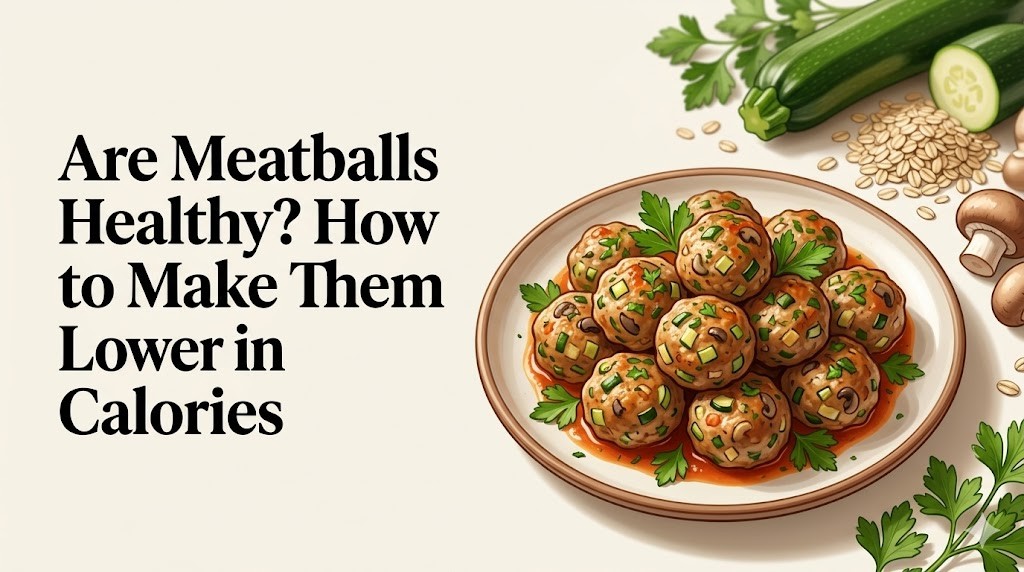
Ah, the humble meatball. Whether they are swimming in cozy marinara over a mountain of spaghetti, tucked snugly into a sub, or served on a toothpick at a party, meatballs are the ultimate comfort food champ.
But if you are keeping an eye on your weight or trying to eat a little cleaner, you might start asking some tough questions. Are these delicious little spheres of joy actually good for you, or are they secret calorie bombs?
The truth is, traditional meatballs can be surprisingly heavy on fat and refined carbs. Luckily, with a few clever kitchen swaps, you can easily transform them into a protein-packed, weight-loss-friendly feast.
Here is everything you need to know about making healthy meatballs low calorie, without sacrificing a single bit of flavor.
The Anatomy of a Traditional Meatball: Where the Calories Hide
To understand how to lighten up a meatball, we first have to look at what goes into a classic Italian-style recipe. Typically, grandma’s famous meatballs rely on a blend of ground beef, pork, and veal. While this trio makes them incredibly juicy, it also packs a heavy dose of saturated fat.
Saturated fat is something you definitely want to keep in check. The American Heart Association recommends that saturated fat make up no more than 5% to 6% of your daily calories. On a standard 2,000-calorie diet, that is a tight limit of about 13 grams per day. Just a couple of traditional pan-fried meatballs can easily push you over that daily budget.
On top of the high-fat meat, classic recipes use white bread or refined breadcrumbs as a binder. These refined carbs digest quickly, which can spike your blood sugar and leave you reaching for snacks shortly after dinner. Finally, frying them in a pool of oil or butter adds extra empty calories that can quiet your weight loss goals.
Bottom Line: Traditional meatballs are often loaded with saturated fat and refined carbohydrates. Frying them in oil adds extra calories, making them less ideal for active weight loss.
Beef vs. Turkey vs. Plants: The Ultimate Protein Showdown
When people decide to eat healthier, the first thing they usually do is swap ground beef for ground turkey. But is turkey actually the automatic winner?
Not necessarily! It turns out that the animal on the label matters far less than the lean-to-fat percentage printed next to it.
If you compare 90/10 lean ground beef to 93/7 lean ground turkey, their calorie and protein numbers are almost identical. Ground turkey's main advantage is that it naturally contains about 13% to 29% less saturated fat than beef. However, if you are looking to slash calories to the absolute minimum, 99% fat-free ground turkey is your golden ticket, offering a massive protein punch for very little fat.
For the plant-lovers out there, lentils and mushrooms make an incredible vegetarian base. Lentils bring plenty of plant-based protein, iron, and gut-friendly fiber to the table, while mushrooms keep things savory, juicy, and incredibly low in calories.
Take a look at how the different bases stack up per 100-gram cooked serving:
Protein Base (per 100g cooked) | Lean/Fat Ratio (%) | Calories (kcal) | Protein (g) | Total Fat (g) | Saturated Fat (g) | Primary Source |
Ground Turkey (99% Fat-Free) | 99/1 | 117 | 25.0 | 2.0 | 0.57 | |
Ground Beef (90/10 Lean) | 90/10 | 204 | 25.2 | 10.7 | 4.2 | |
Ground Turkey (93/7 Lean) | 93/7 | 213 | 27.1 | 11.6 | 3.0 | |
Ground Beef (85/15 Regular) | 85/15 | 232 | 24.6 | 14.0 | 5.3 | |
Ground Turkey (85/15 Regular) | 85/15 | 258 | 25.1 | 17.5 | 4.6 | |
Ground Pork Loin (Broiled) | N/A | 242 | 27.32 | 13.92 | 5.23 | |
Cooked Lentil & Veggie Base | N/A | 191 | 13.0 | 4.0 | 2.0 |
Bottom Line: The lean-to-fat ratio matters more than whether you choose beef or turkey. To cut calories, opt for 95/5 lean beef, 99% fat-free turkey, or a high-fiber plant base like lentils.
3 Simple Hacks to Make Meatballs Lower in Calories
You do not have to settle for dry, tasteless hockey pucks to eat healthy. By changing your binders, sneaking in some veggies, and upgrading your cooking method, you can keep your meatballs juicy and light.
1. Ditch the White Bread for Nutrient-Dense Binders
White breadcrumbs do not offer much besides empty calories. Instead, try these fiber-rich whole-food binders to keep your meatballs together:
Rolled or Quick Oats: Oats absorb moisture beautifully and contain soluble fiber, which slows down digestion and keeps you full for hours.
Soaked Bulgur Wheat: A staple in Mediterranean cooking, bulgur adds a wonderful texture and a healthy dose of complex carbs.
Ground Flaxseed: Flaxseed meal forms an excellent gel when mixed with water or egg, supplying heart-healthy fats along the way.
2. Sneak in Some Veggies (The "Volume Eating" Secret)
Want to eat more food for fewer calories? Start mixing finely shredded or minced vegetables right into your meat mixture. It is an easy way to add moisture without adding fat:
Shredded Zucchini: Squeeze out the excess water and fold it into lean turkey. It completely vanishes into the meatball and keeps it incredibly moist.
Finely Minced Mushrooms: Sautéed mushrooms blend seamlessly with ground meat, boosting that savory "umami" flavor while dropping the overall calorie count.
Chopped Spinach or Greens: Adding steamed spinach or kale infuses your meatballs with powerful plant antioxidants.
3. Upgrade Your Cooking Technique
Skip the frying pan! Frying in oil or butter can add hundreds of extra calories before you even take your first bite. Instead, try these healthier cooking methods:
Bake Them: Lay your meatballs out on a baking sheet lined with parchment paper at 375°F to 400°F. They will brown beautifully without any added oil.
Broil Them: Pop them under the broiler on high for 10 minutes. This gives them a gorgeous, crispy crust while letting any excess fat drip away.
Simmer Directly in Sauce: Drop your shaped, raw meatballs directly into a low-sodium, simmering marinara sauce. They will cook gently, soaking up flavor and staying ultra-tender.
Bottom Line: Swapping breadcrumbs for oats, mixing in shredded zucchini, and baking instead of frying will instantly slash fat and calories while keeping your meatballs amazingly juicy.
Tracking Your Masterpiece Effortlessly with VoCal
If you have ever tried tracking a homemade, multi-ingredient recipe in a traditional app, you know how frustrating it can be. Typing in "3 ounces of turkey, 1 tablespoon of oats, half an egg, and a splash of marinara" is enough to make anyone want to quit tracking altogether.
That is where VoCal makes life simple. Instead of searching through endless databases or weighing every single speck of seasoning, you can use your voice.
Simply tap the microphone in the VoCal app and say: "I had three homemade turkey-zucchini meatballs with a quarter cup of marinara sauce."
Using smart AI, VoCal instantly breaks down the ingredients, estimates the portions, and logs your calories and macronutrients in a matter of seconds. It removes the friction of food tracking so you can focus on enjoying your meal and reaching your fitness goals.
Frequently Asked Questions
Are turkey meatballs always lower in calories than beef?
No. Saturated fat and calorie counts are determined by the lean percentage of the meat, not just the animal. Regular 85/15 ground turkey actually has slightly more calories than 85/15 ground beef. Always look for packages labeled 93/7 or 99% fat-free if you want the lowest calorie option.
What is the best low-calorie substitute for breadcrumbs?
Quick-cooking oats or rolled oats are the best all-around replacements. They bind the meat together perfectly while adding digestion-friendly soluble fiber. For a low-carb alternative, riced cauliflower works wonders.
How do I stop lean meatballs from turning dry and tough?
The golden rule is to avoid over-mixing your meat, which compresses the proteins and makes them rubbery. To keep things tender and juicy, fold in moisture-rich veggies like squeezed shredded zucchini or sautéed minced mushrooms.
Disclaimer: This article is for informational purposes only and does not substitute for professional medical advice, diagnosis, or treatment. Always consult a healthcare professional before altering your dietary regimen.